Some microbes that travel with humans may be able to stay alive in protected areas near the lunar South Pole, according to a NASA-led study.
Some Earth Microbes May Survive in Lunar SheltersThe study, published Aug. 19 in Science Advances, examined whether selected microorganisms from Earth could tolerate conditions found around the Moon's South Pole.
Why the Moon's South Pole Is DifferentThe lunar surface is an extremely harsh environment for biological organisms, but conditions are not identical everywhere on the Moon.
What the Finding Means for Future Moon MissionsThe study does not show that the Moon can support a thriving microbial ecosystem.
That possibility becomes increasingly relevant as humans prepare for more extensive exploration of the lunar South Pole.
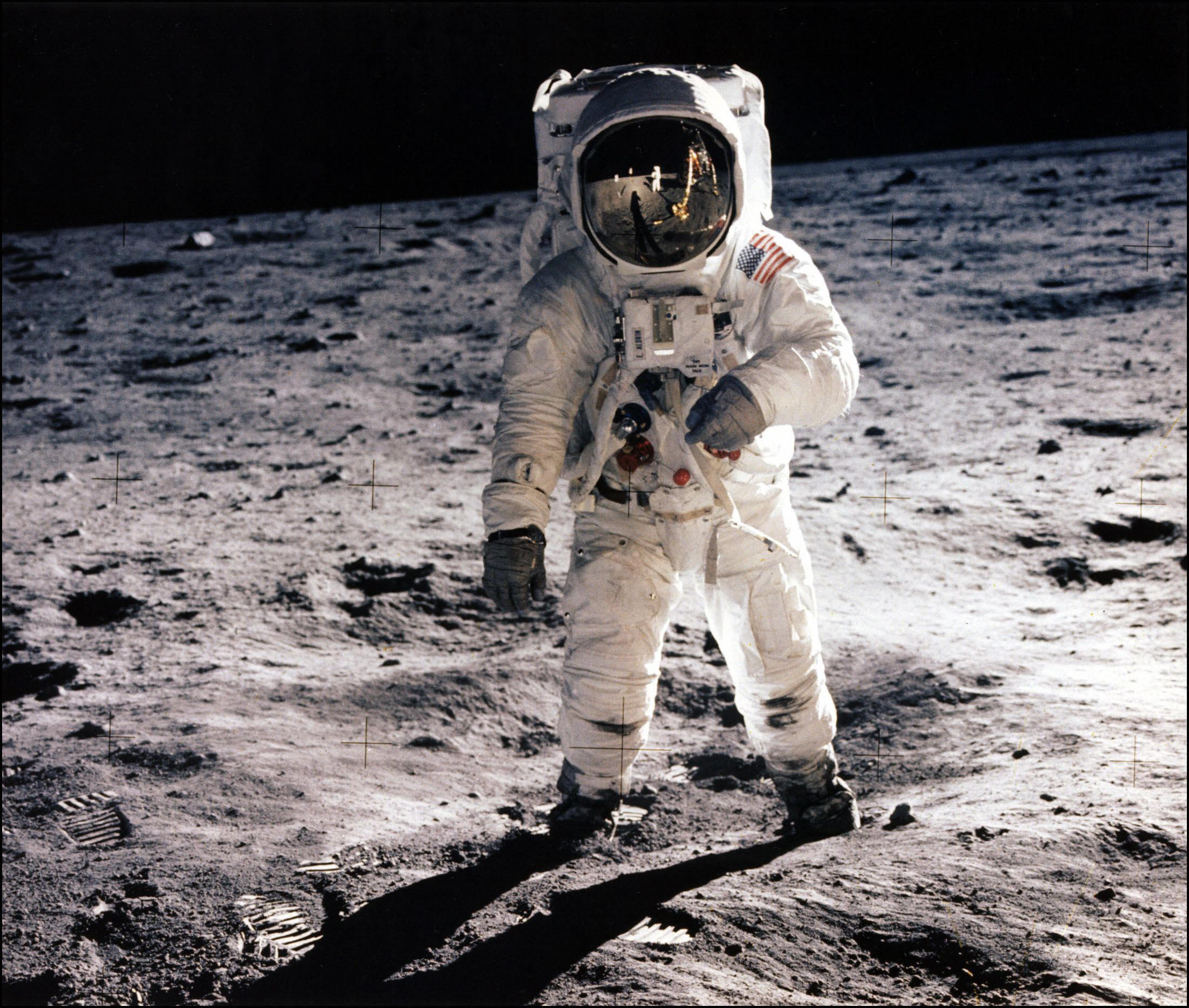
An astronaut could leave more than a footprint on the Moon.
Some microbes that travel with humans may be able to stay alive in protected areas near the lunar South Pole, according to a NASA-led study. Researchers found that certain bacteria and fungi could potentially survive the conditions in some sheltered parts of the region for at least one Earth day.
The finding does not mean the Moon can support microbial growth. Instead, it highlights an unexpected challenge of human exploration: astronauts naturally carry microorganisms, and some of those organisms may be able to withstand brief exposure to the lunar environment.
The research could also have implications for future planetary exploration, since scientists need to distinguish biological material brought from Earth from evidence that may originate on another world.
Some Earth Microbes May Survive in Lunar Shelters
The study, published Aug. 19 in Science Advances, examined whether selected microorganisms from Earth could tolerate conditions found around the Moon's South Pole.
Researchers focused on five groups of microbes: Aspergillus niger, Bacillus subtilis, Staphylococcus aureus, Deinococcus radiodurans and several species of Fusarium.
The organisms were selected because of their known resilience in spaceflight environments or their association with humans. Researchers compared previous measurements of each organism's tolerance to heat and ultraviolet radiation with environmental conditions modeled across three areas near the lunar South Pole: Nobile Rim, Connecting Ridge and de Gerlache Rim.
The simulations identified locations where some organisms could remain alive for at least one Earth day. The possible sheltered areas varied considerably in size, from portions of crater floors to spaces as small as an astronaut's boot print.
Why the Moon's South Pole Is Different
The lunar surface is an extremely harsh environment for biological organisms, but conditions are not identical everywhere on the Moon.
The Moon has very little axial tilt, which means the Sun remains low above the horizon when viewed from its polar regions. Elevated terrain can consequently block sunlight from reaching lower areas.
Crater walls, ridges, and other surface features can create pockets of shadow. Some locations can remain in prolonged or permanent darkness, shielding them from direct sunlight and some ultraviolet radiation.
That distinction matters because ultraviolet radiation can damage biological material. The researchers therefore considered both temperature and radiation when assessing where microbes might survive.
They used elevation and temperature information collected by NASA's Lunar Reconnaissance Orbiter, along with models of how radiation reaches the surface, to simulate conditions in the three South Pole regions.
One Fungus Was Particularly Resistant
Among the organisms studied, Aspergillus niger stood out for its resistance to ultraviolet radiation.
The fungus is commonly found on Earth, including in warm, damp environments such as household bathrooms and heating, ventilation, and air-conditioning systems. Astronauts have also detected it inside the International Space Station.
Its resilience makes it an interesting organism for studying how microbes associated with humans might respond to extreme environments.
In the researchers' simulations, A. niger could remain viable even in some locations that receive sunlight. Most of the other organisms required more protection from ultraviolet exposure.
The study also included Deinococcus radiodurans, a bacterium known for its ability to withstand unusually harsh conditions.
Surviving the Moon Does Not Mean Growing There
The word "survive" is important to the study's findings.
Researchers defined survival as a microbe remaining alive for at least one Earth day under the modeled conditions. They did not demonstrate that the organisms could establish colonies, reproduce or create a self-sustaining population on the Moon.
NASA says there is no evidence that the Moon contains the key ingredients needed to support microbial growth and replication. One major obstacle is the lack of liquid water on the lunar surface under conditions that would allow sustained microbial activity.
The study therefore points to temporary microbial persistence under certain conditions, rather than the establishment of a lunar ecosystem.
Astronauts Inevitably Carry Microbes
The contamination concern comes from a simple fact: humans naturally carry microorganisms wherever they go.
NASA estimates that people have about 1 million bacteria on a patch of skin roughly the size of a pencil eraser. Some of these organisms can escape from spacesuits and habitats.
Robotic spacecraft can undergo aggressive sterilization procedures before launch. NASA notes that spacecraft can be heated to temperatures above 400 degrees Fahrenheit to reduce the number of surviving organisms.
That approach cannot be used on living astronauts.
As crewed missions become more common, microorganisms associated with people could therefore reach parts of the lunar surface that have had little or no direct human contact. Some may encounter the sheltered conditions identified in the study.
Contamination Could Complicate Future Lunar Research
The concern is not simply whether microbes can make the journey to the Moon. Scientists also need to know what was present before humans arrived.
Future lunar research could examine the Moon's chemistry for clues about its geological history and other scientific questions. If Earth organisms are introduced into these environments, researchers could have greater difficulty determining whether a biological or chemical signal originated naturally or was the result of human activity.
That is why understanding and tracking contamination could become increasingly important as human exploration expands.
The issue also extends beyond the Moon. When researchers eventually search Mars for possible evidence of life, they will need to determine whether a biological signal is genuinely extraterrestrial or was introduced from Earth.
The Moon Could Also Become a Microbial Laboratory
There may also be a scientific opportunity in understanding how Earth organisms behave under lunar conditions.
The Moon's naturally sheltered areas could provide real-world environments for studying microbial survival under extreme cold, radiation and other stresses. These conditions are difficult to reproduce in exactly the same combination in terrestrial laboratories.
NASA scientists involved in the research therefore see microbial contamination as more than something that needs to be controlled. It could also provide an opportunity to study the limits of life under extreme conditions.
Such observations could help researchers better understand how microorganisms respond when exposed to environments beyond Earth and inform future exploration missions.
What the Finding Means for Future Moon Missions
The study does not show that the Moon can support a thriving microbial ecosystem. It shows that certain organisms brought from Earth may remain viable when the lunar terrain provides sufficient protection from harsh conditions.
That possibility becomes increasingly relevant as humans prepare for more extensive exploration of the lunar South Pole.
Scientists will need to consider not only where astronauts can safely operate, but also what microscopic traces their missions might leave behind. Establishing what was present before human activity changes the environment could become an important part of future lunar research.
For scientists studying the Moon, knowing what humans bring with them may become just as important as understanding what was already there.