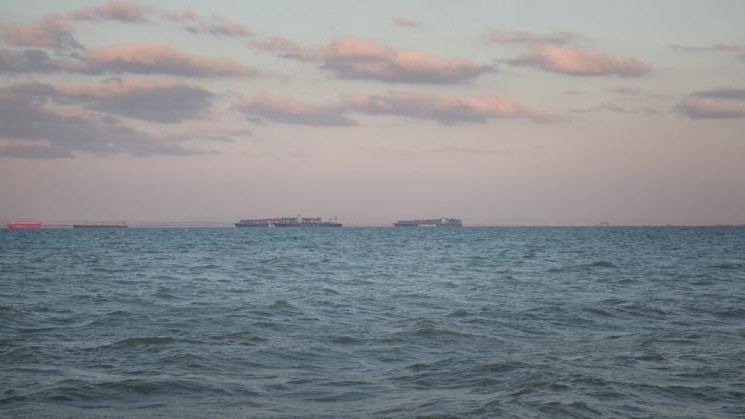
The Yemeni Houthis are planning to seize land along the Yemeni coast in the Bab el-Mandeb Strait, tightening their control of the chokepoint.
This, according to the Yemeni official, will significantly strengthen the Houthis’ control over the waterway.
The Houthi rebels are seeking to tighten their grip on the Bab el-Mandeb chokepoint.
Saudi Arabia is fighting the Houthis with the Yemeni government forces, while the Houthis have ties with the Iranian state.
The Yemeni group already disrupted traffic in the Red Sea strait a couple of years ago in a bid to force Israel to stop bombing Gaza.
The Yemeni Houthis are planning to seize land along the Yemeni coast in the Bab el-Mandeb Strait, tightening their control of the chokepoint. The information comes from the minister of information in the government that the Houthis are fighting in Yemen and suggests further disruption to marine traffic on one of the world’s busiest trade routes.
“The Houthi militia... is working to create the conditions for seizing control of the Bab al-Mandab Strait by expanding its presence along the western coast and attempting to control strategic Yemeni islands in the Red Sea,” Moammar al-Eryani told AFP. The agency noted that three Houthi sources had confirmed the plans.
Al-Eryani also said that the group was seeking to establish control over the port city of Mokha, the coastline around it, the Hanish islands and the island of Mayuun, which sits in the Bab el-Mandeb. This, according to the Yemeni official, will significantly strengthen the Houthis’ control over the waterway.
The Houthi rebels are seeking to tighten their grip on the Bab el-Mandeb chokepoint. Control over Mokha, the surrounding coastline, the Hanish Islands, and Mayun could significantly expand their leverage over the strategic waterway and make them an even more formidable threat to… pic.twitter.com/tkprajD6CZ — OilPrice.com (@OilandEnergy) August 19, 2026
The Houthis, which control parts of Yemen and fight the previous government’s forces for full control of the country, earlier this year announced a blockade on Saudi vessels in the Red Sea, threatening Saudi Arabia’s alternative oil export route after Iran shut down the Strait of Hormuz in March. Saudi Arabia is fighting the Houthis with the Yemeni government forces, while the Houthis have ties with the Iranian state.
The Yemeni group already disrupted traffic in the Red Sea strait a couple of years ago in a bid to force Israel to stop bombing Gaza. What effectively amounted to a blockade, since the Houthis fired at any vessel whose ownership was either Israeli or Western, caused havoc in international trade and pushed oil prices higher because ships had to take the longer Asia-Europe route around Africa. Now, the Yemeni group is targeting tankers specifically—and it is also firing missiles at a Saudi Arabian refinery. Related: China Is Squeezing India Out of Russia’s Oil Trade
Several Saudi tankers have been struck by the Houthis in the past couple of weeks, prompting shippers to once again start avoiding the Bab el-Mandeb strait and going the long route from Asia to Europe. Meanwhile, the Yemeni group has attacked the Jazan refinery three times in the past month, prompting its closure at the end of July.
Because of the Houthi attacks, Saudi Arabia was forced to reroute part of its oil exports from Yanbu on the Red Sea to the Suez Canal and the Egyptian port of Sidi Kerir on the Mediterranean. This has added time and costs to its oil exports. The move is not only Saudi’s only alternative to the Red Sea route but a response to requests from some Asian oil buyers of Saudi crude, according to recent reports. Per those reports, some Asian refiners had asked Aramco if they could pick up its crude oil cargoes at Sidi Kerir as vessel owners are increasingly reluctant to pass through the Bab el-Mandeb Strait to enter the Red Sea.
The Houthis themselves recently reported they had carried out 31 attacks on Saudi targets, including eight tankers, of which five were in the Red Sea and three in the Gulf of Aden and the Arabian Sea, Anadolu Agency reported, citing Houth spokesman Ameen Hayyan. The group has warned that it was ready to escalate further, citing escalations by Riyadh.
What the situation suggests is that marine traffic around the Middle East is unlikely to normalize anytime soon. Still, a lot more tankers appear to be passing through the Bab el-Mandeb Strait than Hormuz, with Marine Traffic reporting a total of 254 confirmed crossings in the week to August 16, up from 238 in the previous week. Daily crossings ranged between 27 and 43. Compared to Hormuz, this is a lot. Yet the fact remains that if the Houthis do take control over the territories they are targeting, this will allow them to apply stronger pressure to their regional and global opponents.
By Irina Slav for Oilprice.com
More Top Reads From Oilprice.com