The glucagon-like peptide-1 receptor agonist semaglutide improves symptoms in heart failure with preserved ejection fraction (HFpEF) through unclear mechanisms.
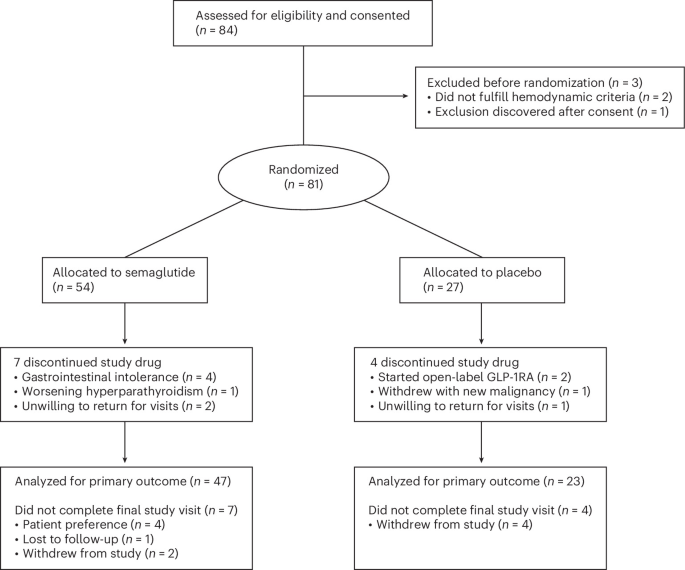
Here, in this double-blind, placebo-controlled trial, we randomly assigned 81 patients (47 women) with HFpEF and obesity to semaglutide (2.4 mg weekly) or placebo for 52 weeks.
Additional mechanistic outcomes included other hemodynamic measures and hemodynamic HFpEF remission (defined as normal PAWP under conditions of both rest and exercise at 52 weeks).
At baseline, PAWP was 17.5 ± 4.3 mmHg at rest and 31.7 ± 5.2 mmHg during exercise.
The results from this trial indicate that, in patients with HFpEF and obesity, treatment with semaglutide reduced left heart filling pressures during exercise and at rest and was associated with hemodynamic HFpEF remission in over half of treated patients.
The glucagon-like peptide-1 receptor agonist semaglutide improves symptoms in heart failure with preserved ejection fraction (HFpEF) through unclear mechanisms. Here, in this double-blind, placebo-controlled trial, we randomly assigned 81 patients (47 women) with HFpEF and obesity to semaglutide (2.4 mg weekly) or placebo for 52 weeks. The primary outcome was the change in invasively measured pulmonary artery wedge pressure (PAWP), a direct measure of cardiac congestion, during low-intensity exercise. Additional mechanistic outcomes included other hemodynamic measures and hemodynamic HFpEF remission (defined as normal PAWP under conditions of both rest and exercise at 52 weeks). At baseline, PAWP was 17.5 ± 4.3 mmHg at rest and 31.7 ± 5.2 mmHg during exercise. After 52 weeks, the mean change in PAWP during exercise was −9.8 (95% confidence interval (CI): −11.3 to −8.2) mmHg with semaglutide and +0.9 (95% CI: −1.3 to 3.0) mmHg with placebo (estimated difference, −10.6 mmHg; 95% CI: −13.3 to −8.0; P < 0.0001). As compared to placebo, semaglutide also decreased resting PAWP (estimated difference, −7.1 mmHg; 95% CI: −9.8 to −4.4; P < 0.0001), and semaglutide-treated patients were more likely to experience hemodynamic remission (53.7% versus 7.4%, odds ratio = 14.1, 95% CI: 3.0−134.6, P < 0.001). The results from this trial indicate that, in patients with HFpEF and obesity, treatment with semaglutide reduced left heart filling pressures during exercise and at rest and was associated with hemodynamic HFpEF remission in over half of treated patients. ClinicalTrials.gov identifier: NCT05371496.