Image: AIStudy findingsWhy can extreme heat affect a teenager's mental health?
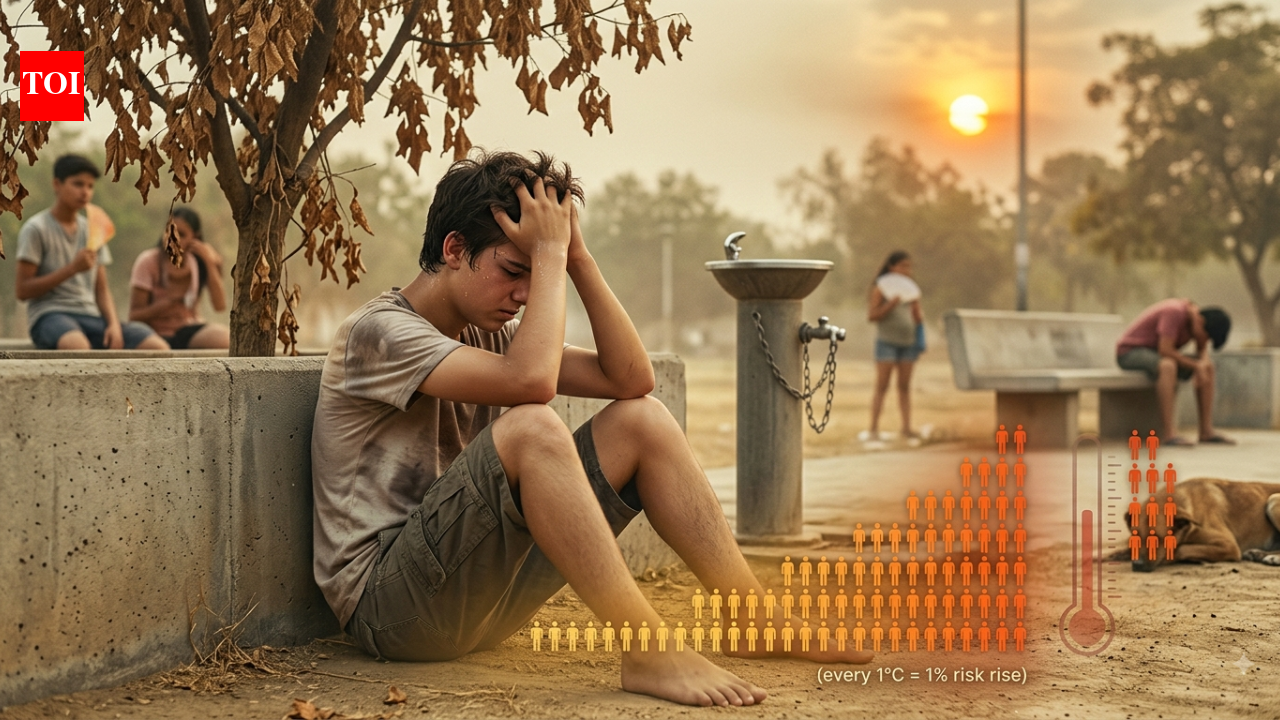
For every 1 degree Celsius the daily temperature climbs, adverse mental health outcomes in kids go up by almost 1 percent.
So this adds up fast.The review pulled together data from 23 studies from around the world, all looking at how temperature and heatwaves relate to mental health.
Adolescence is already a fragile window for mental health development on its own.
This study argues mental health needs a seat at that table too.
Image: AI
Study findings
Why can extreme heat affect a teenager's mental health?
When temperatures climb, most conversations around teenagers and heat tend to focus on dehydration, heat exhaustion and staying indoors. But new research suggests there may be another effect that deserves attention: what extreme heat does to young people's mental health.A new global review has found that rising temperatures are chipping away at the mental health of children and teens, and the numbers are hard to ignore. For every 1 degree Celsius the daily temperature climbs, adverse mental health outcomes in kids go up by almost 1 percent. That might sound small on paper. But temperatures aren't rising by fractions of a degree anymore, not in the summers we've been having. So this adds up fast.The review pulled together data from 23 studies from around the world, all looking at how temperature and heatwaves relate to mental health. And the group that stood out as most vulnerable was children and teenagers aged five to eighteen. Their risk of poor mental health outcomes jumped by 1.5 percent on hotter days, and by a striking 25 percent during actual heatwaves.That gap between "hot day" and "heatwave" matters. A single warm afternoon is one thing.Sustained heat, day after day with no real break, seems to hit young people's mental health a lot harder. It's not just sleepless nights and irritability either. Researchers tied the rise in heat to more emergency room visits, more anxiety, more depression, and in the most severe cases, more suicide attempts.One of the study's co-authors, Flinders University epidemiologist Jacqueline Stephens, pointed out that climate change is driving these more frequent and more severe heat events, not just in Australia where the study was based, but globally. So this isn't a problem confined to one country or one climate zone.Stephens explained that a lot of it comes down to social and developmental factors tied to how kids experience disrupted routines, like their outdoor activities, schooling, and general recreation getting thrown off during extreme heat. Adolescence is already a fragile window for mental health development on its own. Layer extreme heat on top of that, and researchers say teens become even more susceptible.There's also the physical side feeding into the mental one. Hot nights wreck sleep, and bad sleep messes with mood regulation in ways that compound over time. Add in family stress, since heatwaves tend to strain parents too, and you get a kind of ripple effect moving through the whole household.That doesn't mean every teenager exposed to a heatwave will experience a mental-health problem. These are population-level associations, not predictions about what will happen to an individual child. The researchers also point out that the available evidence has limitations.Still, the findings add another reason to take extreme heat seriously.The researchers behind this aren't just flagging a problem, they're pushing for a shift in how we think about climate response. Right now, most heat-related health planning focuses on physical safety, hydration stations, cooling centers, that sort of thing. This study argues mental health needs a seat at that table too. The recommendation is to build mental health support directly into climate adaptation plans, with interventions designed specifically for kids and young people, not just adults.Given how often summers are breaking records lately, that's not a small ask. It might be one of the more urgent ones on the list.