In fact, the best reason to recommend a Copilot+ laptop was for the Snapdragon chip, which reduced battery usage by a notable amount.
AI laptops really need that "head-turner" feature that elevates them from a gimmick to a must-have.
Now, Google's Magic Pointer feature is a great deal more respectful of the user's privacy than Recall.
Subscribe to the newsletter for Googlebook and AI laptop analysis Get the newsletter to unpack whether the Googlebook's AI-first pitch truly matters.
Expect focused coverage and practical analysis of AI laptops, hardware tradeoffs, privacy concerns like Magic Pointer, and what buyers should actually consider.
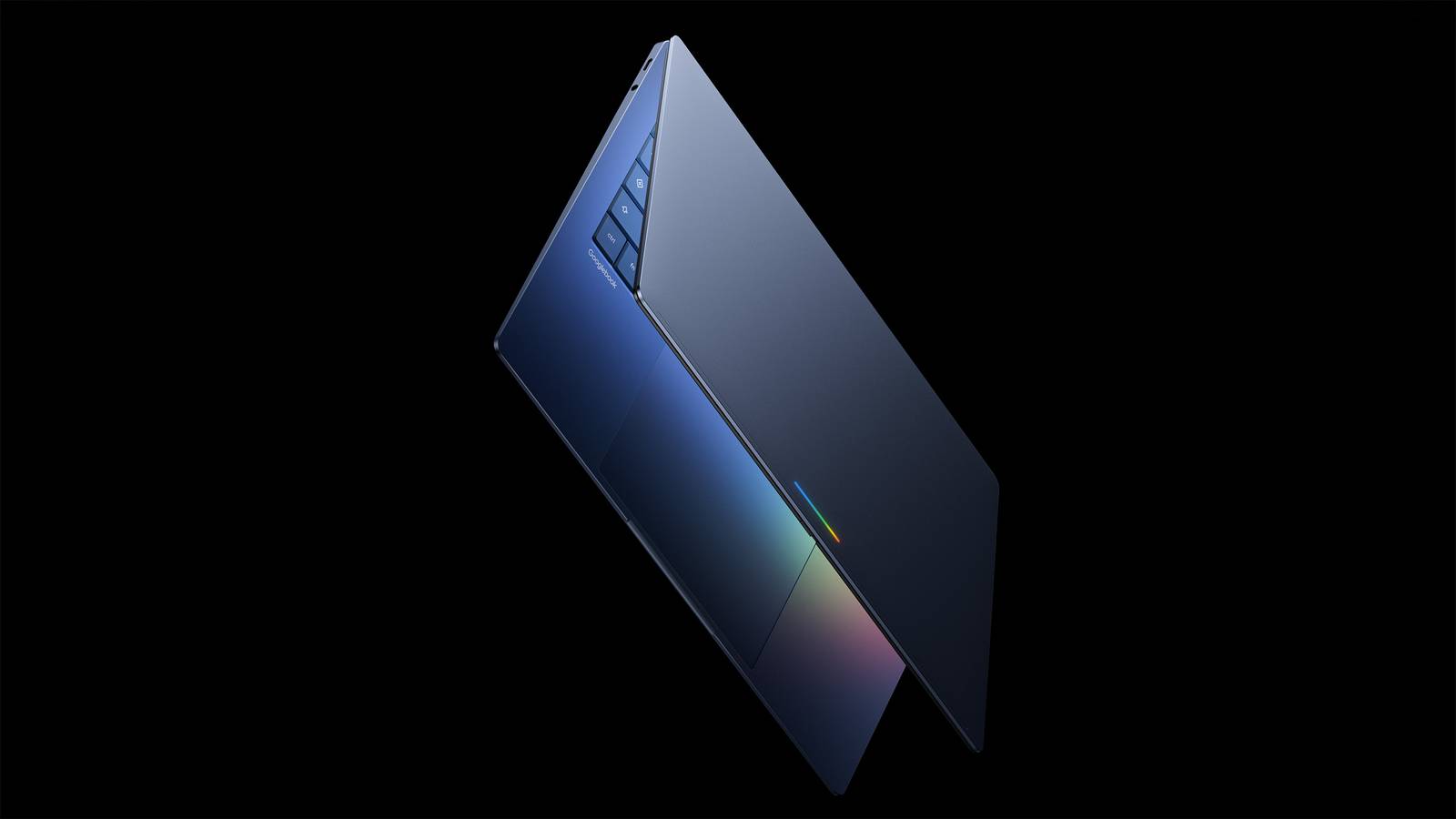
Google I/O 2026 has come and gone, and a huge focus was on AI this year. Part of that included a revision of the humble Chromebook, which is being succeeded by the newer and shinier Googlebook. The Googlebook earns its new name due to some key changes to Chromebook's DNA, the most important of which is an NPU that can hit an impressive 40 TOPS for a low-end device.
But as I was looking at the Googlebook, I had a nasty sense of deja vu. We've definitely seen a company axe its previous line of laptops to focus on an AI-centric model before, and it wasn't pretty. So, here's why I think the Googlebook is potentially sleepwalking into another Windows 11 Copilot+ problem.
The main draw for the Googlebook is the AI
There's not much else to celebrate with the upgrade
Credit: Google.
The main draw of the Googlebook is that it's kind of like a Chromebook, except it has mightier hardware under the hood. That includes a Neural Processing Unit (NPU) that's dedicated to running AI models locally. The idea is that you can use AI tools like Gemini without the need for the laptop to 'phone home' with Google's servers; it can do everything on the hardware itself.
This goes hand in hand with what we saw with Google I/O 2026. The company spent a lot of the keynote discussing AI. We saw it on Search, we saw it on Android, we saw its new Gemini agentic system; it was everywhere. And it seems that the Chromebook was not spared when it came to "Ai-ifying" Google's portfolio. The search giant seems very excited and very confident that we'll fall in love with AI soon.
The main drawback for the consumer is the AI
Google may like it, but we might not
The problem is, we haven't fallen in love with AI. Sure, AI is there, in our daily lives; we use it to talk things through, perform research, and do menial tasks at our jobs. But I really haven't seen many people begging for a laptop that allows them to, say, run Gemini-powered translation locally. Or perhaps churn over some data.
Nothing proves this more than Microsoft's Copilot+ initiative. If you're not up to speed, Microsoft basically unleashed a wave of AI-driven laptops two years ago. These had to come with 40 TOPS of processing power and allowed Copilot to run AI tasks locally, much like the Googlebook.
Unfortunately, the general public didn't really respond well to it, mainly because the Copilot+ angle didn't really offer anything that convinced people that it was the feature. In fact, the best reason to recommend a Copilot+ laptop was for the Snapdragon chip, which reduced battery usage by a notable amount. The laptop, designed to be a software powerhouse, was far more appealing for its hardware alone. The Copilot stuff was just bloatware, as far as some were concerned.
The Googlebook's killer feature doesn't compel me to buy one, just like Copilot+
There are some worrying parallels
The Googlebook could succeed if it did something genuinely different and worthwhile. AI laptops really need that "head-turner" feature that elevates them from a gimmick to a must-have. The problem is, I'm not really seeing that "wow factor" with the Googlebook; in fact, when I take a look at what it can do, I basically see the same things that Microsoft promised would revolutionise how we'd use PCs.
Take, for instance, how deeply the AI is embedded within the operating system itself. For Microsoft's Copilot+, the spotlight feature was Recall. The idea was that your laptop would take periodic screenshots of your screen and use them to create a history of how you used your computer. Recall then got hit with privacy issues (not once, but twice), which really took the wind out of Copilot+'s sails.
Now, we have the Googlebook's "Magic Pointer." The idea is that, if you want to invoke Gemini to analyze something on your screen, you can wiggle your cursor at it. Gemini will then pop up and analyze whatever it is you're shaking your mouse at. You can wiggle over a date and time, and Gemini will put it in your calendar. Cast your cursor over a data field, and Gemini will analyze it.
Now, Google's Magic Pointer feature is a great deal more respectful of the user's privacy than Recall. Not only does it not take screenshots of your entire desktop, but you can turn it off if you don't like it, something that you couldn't do with Recall when it was first released. But this is Google's big flagship feature, the one thing that it hopes will shift Googlebooks, and I'm just not impressed by it. And I don't think many other people are, either.
Subscribe to the newsletter for Googlebook and AI laptop analysis Get the newsletter to unpack whether the Googlebook's AI-first pitch truly matters. Expect focused coverage and practical analysis of AI laptops, hardware tradeoffs, privacy concerns like Magic Pointer, and what buyers should actually consider. Get Updates By subscribing, you agree to receive newsletter and marketing emails, and accept our Terms of Use and Privacy Policy . You can unsubscribe anytime.
The idea behind the Magic Pointer is that it's meant to cut down the number of clicks you make to invoke Gemini. Instead of, say, grabbing an image, pasting it into a Gemini chat window, and asking about it, you wiggle your cursor at the image like you're waving a magic wand, and Gemini will appear to aid you.
Is it cool? Sure. Does it make me want to toss my laptop in the trash and purchase a Googlebook on launch? Absolutely not. There's nothing about this feature that tells me that AI laptops are the future. In fact, I'm concerned that I'd find it more of an annoyance than a tool, especially if it keeps seeing false positives with my cursor movement, or if it totally misses what I wanted to share with it. And any flagship feature that causes users to go "Wow, that seems like it'd be a pain to use" is probably not a great flagship feature.
Google has made a stellar product for an audience that doesn't exist
Honestly, with how fast AI is going and all the hype it generates, I don't blame Google for going all-in on AI. However, I really don't think the Googlebook is what people are looking for. People are looking for the tipping point where AI laptops stop being a novelty and start changing how people use their PCs, and Magic Cursor is not that killer feature.