Google wants your old smartphone.
In a new research project focused on reducing the environmental impact of computing, Google has revealed its plans to repurpose retired smartphones into low-carbon computing clusters.
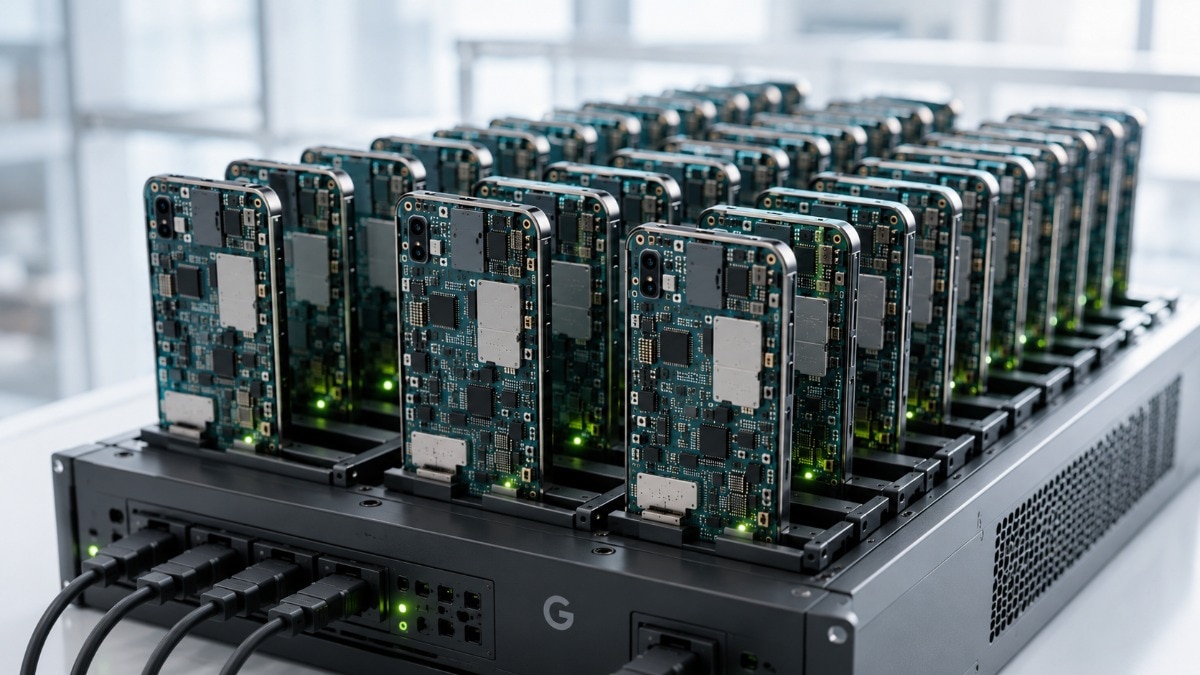
In simple terms, Google wants to take the chips, memory and storage inside old smartphones, connect thousands of them together and use them like a mini data centre.
Reusing existing smartphone hardware could help tackle that problem.
In other words, your old smartphone is not going to replace Nvidia's AI chips anytime soon.
Google wants your old smartphone. And now it does not want to refurbish it or sell it again. Instead the company believes it could help build mini data centres. In a new research project focused on reducing the environmental impact of computing, Google has revealed its plans to repurpose retired smartphones into low-carbon computing clusters.
Instead of letting old devices gather dust in drawers or sending them off for recycling, the company wants to extract their computing hardware and put it back to work powering cloud applications and research workloads. In simple terms, Google wants to take the chips, memory and storage inside old smartphones, connect thousands of them together and use them like a mini data centre.
Read Full Story
The initiative is being developed alongside researchers at the University of California San Diego, who are exploring how thousands of retired smartphones can be transformed into a new kind of computing platform. If successful, the project could eventually lead to a data centre built from around 2,000 retired Pixel smartphones.
How will this work?
The concept is called "phone cluster computing".
In its official blog post, Google explains that researchers remove unnecessary smartphone components such as displays, batteries, cameras and outer casings, leaving behind the motherboard, which contains the processor, memory and storage. These motherboards are then connected together and loaded with a Linux-based operating system. Post on X by Jeff Dean, Chief Scientist of Google DeepMind and Google Research.
Once linked, the devices can be organised into clusters and managed using Kubernetes, the same orchestration platform widely used across modern cloud infrastructure.
According to Google, a cluster of around 25 to 50 smartphones can deliver computing performance comparable to a modern server for certain workloads. By combining hundreds or even thousands of devices, researchers believe they can create a practical computing platform capable of running cloud-based services.
Why is Google interested?
According to Google the carbon footprint of computing comes from two major sources: the electricity consumed while systems are running and the emissions generated when new hardware is manufactured.
While the technology industry has spent years improving the energy efficiency of data centres, reducing manufacturing-related emissions remains a much bigger challenge. Reusing existing smartphone hardware could help tackle that problem.
The company notes that most consumers replace their smartphones every four years, despite the devices still containing powerful processors, memory and storage. Giving those components a second life could reduce electronic waste while also avoiding the environmental cost of manufacturing new servers.
This is not an Nvidia-style AI server
It is worth noting that Google is not proposing that retired smartphones replace the powerful GPU clusters used to train advanced AI models such as Gemini.
advertisement
The project is aimed at smaller cloud workloads rather than the massive infrastructure required for frontier AI development. In other words, your old smartphone is not going to replace Nvidia's AI chips anytime soon. Instead, Google sees these clusters as a more sustainable way to handle everyday computing tasks like educational and research workloads, web services, grading systems, cloud-hosted development environments and Jupyter notebook platforms used by universities.
Researchers at UC San Diego are planning a 2,000-phone computing cluster that will support computer science courses such as Systems Programming and Parallel Computing.
The deployment is also expected to help researchers study how consumer-grade hardware performs under sustained data-centre-style workloads.
- Ends