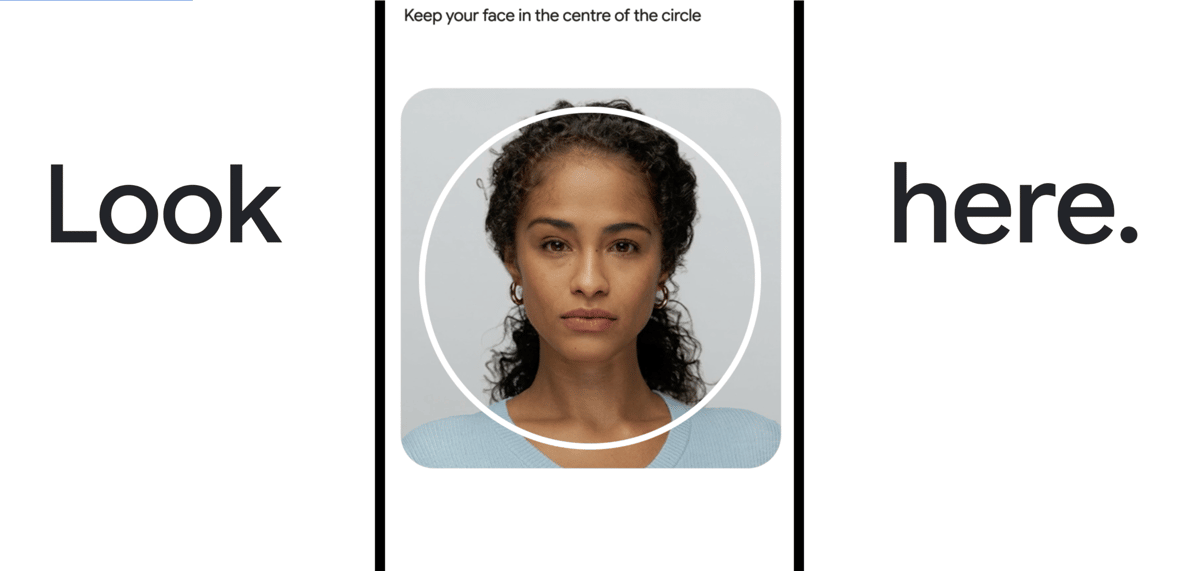
To enable the feature, users must first record a short selfie video through their Google Account settings.
If they later need to regain access, Google prompts them to record another selfie video.
"Our Google Account holds a lot of valuable information, from cherished photos to important emails and documents," Google said in its announcement.
Those who do not opt in will still be able to use selfie sign-in without contributing data for model development.
The selfie video option joins other recovery mechanisms already offered by Google, including passkeys, recovery contacts and backup codes.
Google is introducing a new account recovery option that allows users to verify their identity with a saved selfie video, expanding the range of sign-in methods available when they are unable to access their usual device or credentials.
The new feature is designed as a backup authentication method rather than a replacement for passwords, passkeys or other recovery tools. It is aimed at users who find themselves locked out of their Google Account because they have misplaced a trusted device or cannot remember their sign-in details.
To enable the feature, users must first record a short selfie video through their Google Account settings. During the setup process, they are asked to perform a series of guided head movements so the camera can capture their face from different angles. The encrypted recording is then stored securely within their account.
If they later need to regain access, Google prompts them to record another selfie video. The fresh recording is compared with the original enrolment video, while additional checks verify that the person is physically present rather than using a photograph, pre-recorded clip or AI-generated deepfake.
Google says the verification system combines facial matching with liveness detection, requiring users to complete simple movements during authentication. The company also continues to apply its existing security systems to identify unusual or suspicious login attempts, meaning a selfie alone may not always be enough if the account activity appears high-risk.
"Our Google Account holds a lot of valuable information, from cherished photos to important emails and documents," Google said in its announcement. "We always want to make sure that information is private, secure, and readily available to you, which is why we recommend setting up multiple sign-in methods."
The company described selfie video as another recovery option for situations where users no longer have access to the phone or computer they normally use to sign in.
Privacy has been placed at the centre of the rollout, according to Google. The company says the recorded selfie video remains under the user's control and can be removed from the account at any time. By default, it is used solely for account sign-in.
Users are also given a separate, optional choice to allow Google to use their selfie videos and related data to improve technologies such as facial recognition, age estimation and other identity verification systems across its services. Those who do not opt in will still be able to use selfie sign-in without contributing data for model development.
The company says all stored selfie videos are encrypted while at rest, adding another layer of protection even when the files are not actively being used.
Google has experimented with facial verification in other parts of its ecosystem before. In some regions, the company works with third-party verification provider Private ID to confirm users' ages before granting access to age-restricted content. Such tools are expected to become increasingly relevant as governments introduce stricter online age verification requirements.
The selfie video option joins other recovery mechanisms already offered by Google, including passkeys, recovery contacts and backup codes. The company continues to recommend enabling more than one recovery method so users have multiple ways to regain access if they are locked out.
The feature is being rolled out gradually to eligible Google Accounts worldwide.