Among these regions, parts of Gujarat stand out with some of the highest probabilities.
A weather map made using multi-model weather forecasts.
Weather map made using multi-model climate forecasts.
EL NINO IS COMINGExperts often connect weaker monsoons to El Nino, a natural warming pattern in the Pacific Ocean that can shift global weather and reduce rainfall over India.
(Photo: PTI)The water shortage is already being felt in some regions as lack of rain has delayed the refilling of water reservoirs.
A new international forecast has raised concerns about India's upcoming rainy season, pointing to a higher chance of below-average rainfall across large parts of the country this July, August, and September.
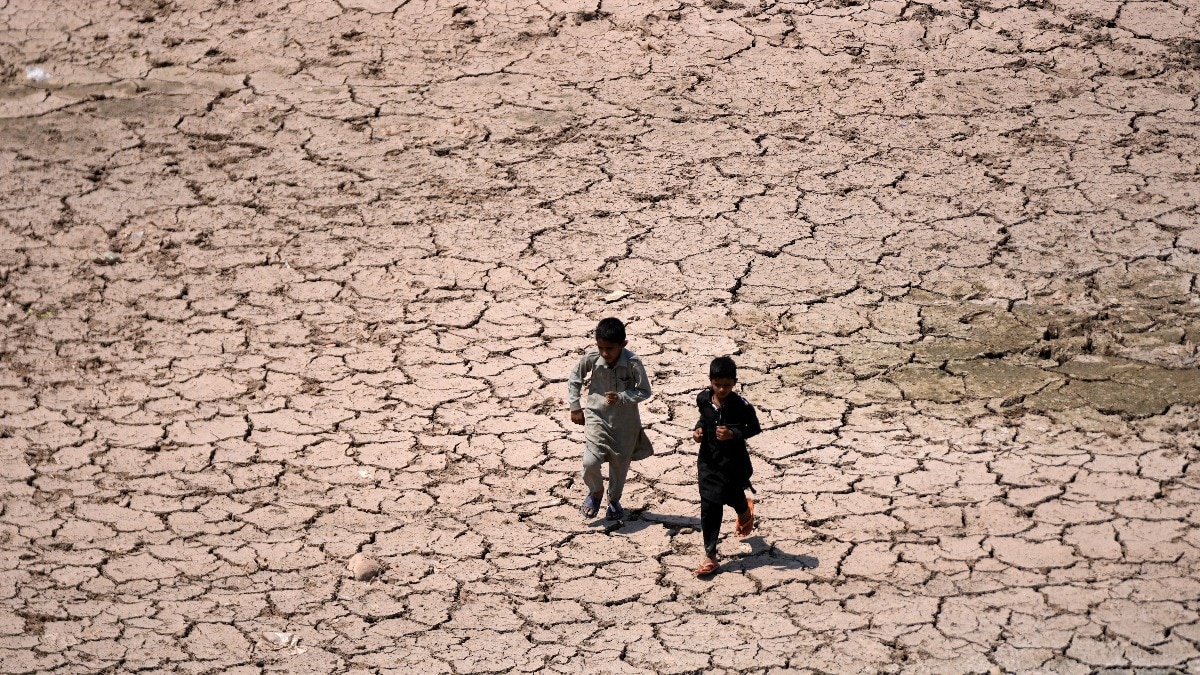
The European Union's Copernicus Climate Change Service (C3S) multi-model system combined predictions from several leading global weather centres and highlighted risks for farmers, water supplies, and daily life in a nation where the monsoon is essential for millions. The dried up Gandatal stream on the outskirts of Srinagar. (Photo: PTI)
Read Full Story
The weather maps focused on the probability of the driest conditions, and rung the alarm for India.
According to what the weather maps highlight, much of India, particularly western and central regions, shows higher chances of receiving less rain than usual. Among these regions, parts of Gujarat stand out with some of the highest probabilities. A weather map made using multi-model weather forecasts. (Photo: C3S)
Another weather map illustrated expected rainfall differences from the average, indicating deficits of 100-200 millimetres or more in several areas, with the biggest shortfalls projected over the Konkan and Goa region along the western coast.
This zone includes important agricultural and urban areas like parts of Maharashtra and Mumbai. Weather map made using multi-model climate forecasts. (Photo: C3S)
These forecasts come from a blend of international models and were issued with a start date in early June 2026.
EL NINO IS COMING
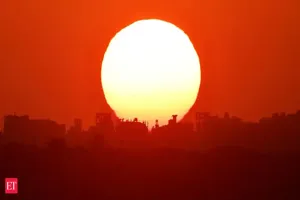
Experts often connect weaker monsoons to El Nino, a natural warming pattern in the Pacific Ocean that can shift global weather and reduce rainfall over India.
Recent updates from Copernicus and other agencies have noted strengthening signs of El Nino developing later this year.
India's own weather office, the India Meteorological Department (IMD), has already issued below-normal forecasts for the full June-September season, initially estimating around 92% of the long-term average, and then later revised it to 90%.
A drier monsoon could affect crop yields, especially for rice, pulses, and other rain-fed farming, which would push up food prices, and strain drinking water and reservoirs. A woman drinks water from a water tanker in New Delhi. (Photo: PTI)
The water shortage is already being felt in some regions as lack of rain has delayed the refilling of water reservoirs.
CONSEQUENCES ON THE GROUND
For ordinary Indians, the problem will be felt acutely, even on a regular day.
Farmers in rain-dependent villages may need to plan for irrigation challenges or crop choices that use less water, and city dwellers in water-stressed regions could face tighter supplies.
There is, however, a silver lining, which is the fact that this forecast has been made weeks in advance, and forecasts this far out can shift.
advertisement
Furthermore, not every area across India is expected to see big shortfalls, with some eastern and northern pockets looking like they would fare better.
While this is just one set of models and actual rains can surprise us, the consistent signals from multiple sources suggest a drier-than-normal season is a real possibility.
- Ends