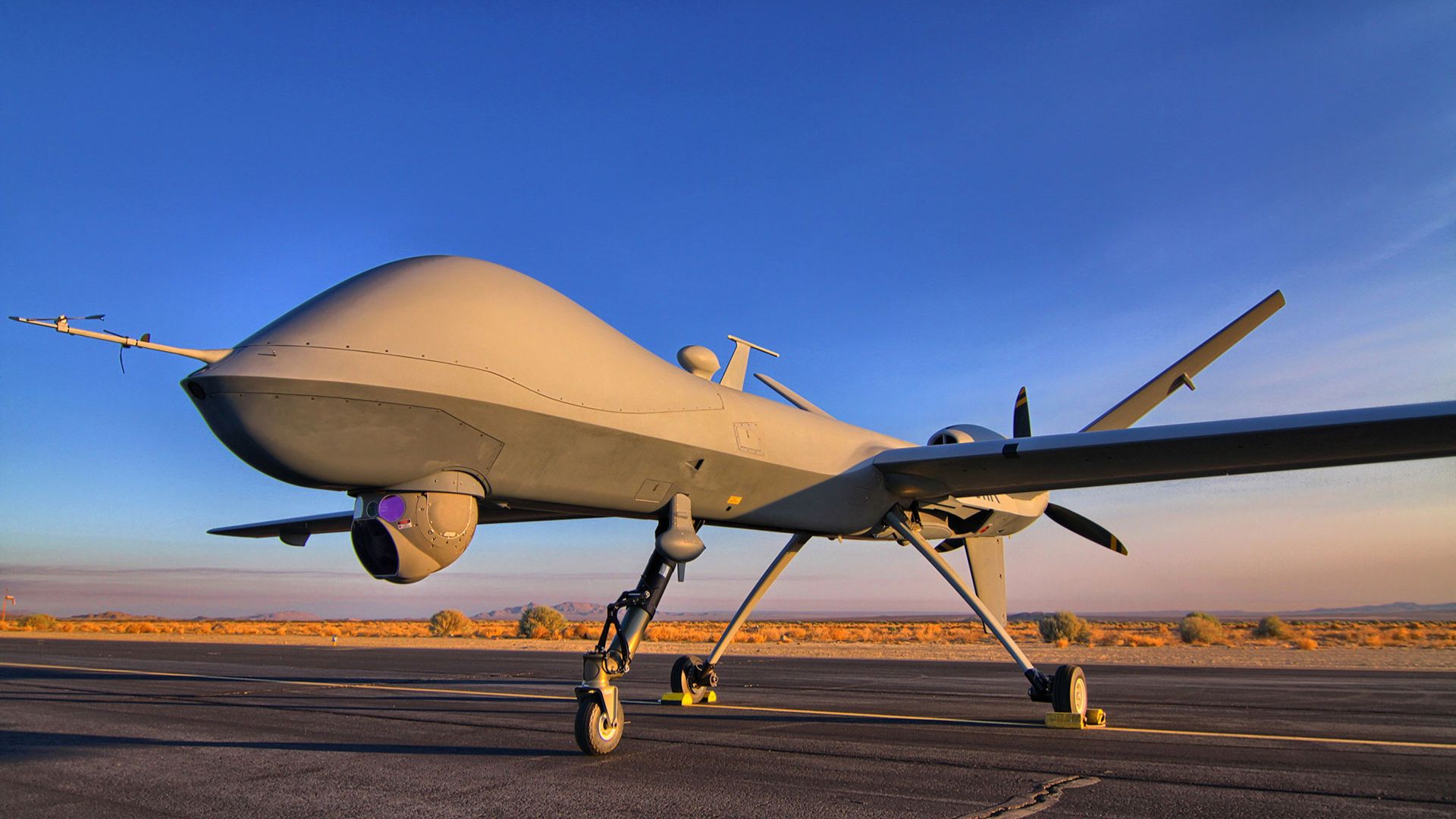
General Atomics spokesman C. Mark Brinkley told The War Zone that the company began by examining what could realistically be achieved with a next-generation unmanned platform.
Wildfire aims for more than just affordability General Atomics, however, has pushed back against describing MMA simply as a replacement for the Reaper.
Wildfire appears to be General Atomics‘ vision of that future platform.
General Atomics has submitted Wildfire to the MMA competition, but Brinkley told The War Zone that the aircraft is not dependent on winning the program.
But its arrival highlights how the U.S. military’s expectations for unmanned aircraft are changing.
General Atomics has unveiled plans for Wildfire, a new long-range unmanned aircraft concept that could represent the company’s answer to the changing demands of modern drone warfare and the eventual need for a successor to the MQ-9 Reaper. The new Unmanned Aerial System, or UAS, is General Atomics’ entry into the Pentagon’s search for a new class of medium-altitude, long-endurance aircraft capable of conducting intelligence, surveillance, reconnaissance, and strike missions. However, the company is pitching Wildfire as a platform that could go beyond the baseline requirements.
According to The War Zone, General Atomics is exploring a design with a 10,000-nautical-mile ferry range, the potential to carry up to four AGM-158C Long Range Anti-Ship Missiles (LRASM), and the ability to coordinate swarms of as many as 100 aircraft under semi-autonomous control. A new contender for the post-Reaper era Aviation Week was first to report the emergence of the Wildfire concept, while The War Zone subsequently reported that General Atomics had submitted the aircraft for the Pentagon’s new Massed Modular Aircraft (MMA) program. The initiative, led by the Defense Innovation Unit, is seeking a cost-effective, theater-range, modular unmanned aircraft that can operate in significant numbers and perform missions currently associated with the MQ-9A Reaper. The Pentagon’s requirements reflect a changing approach to airpower. Rather than relying exclusively on relatively small numbers of expensive, high-value aircraft, the MMA program is designed around the expectation that losses will occur in a high-end conflict.
DIU is seeking an aircraft with at least 2,800 pounds of payload capacity, an unrefueled combat radius of at least 2,300 nautical miles, and the ability to self-deploy more than 8,000 nautical miles one way. It must also support modular payloads, including full-motion video sensors, and potentially allow a single operator to control multiple aircraft. General Atomics spokesman C. Mark Brinkley told The War Zone that the company began by examining what could realistically be achieved with a next-generation unmanned platform. The resulting Wildfire concept combines long range, heavy payload capacity, networking and autonomy, according to the company. However, detailed specifications and images of the aircraft have not yet been released. Why the Reaper replacement question is becoming more urgent The MQ-9 Reaper has been a cornerstone of U.S. unmanned operations for decades, conducting surveillance and strike missions across multiple conflict zones.
But recent losses have highlighted the risks faced by relatively large, slow-moving drones operating in increasingly contested airspace. The Reaper fleet has suffered significant attrition in operations involving Iran and the Houthis, adding to concerns about the aircraft’s vulnerability in a future conflict against a more capable adversary. The MQ-9A is also no longer in production, complicating efforts to replenish the fleet. According to figures cited by The War Zone, the Air Force had 165 MQ-9As at the start of fiscal year 2026, down from 231 at the beginning of fiscal year 2025. By May, Air Force Lt. Gen. David Tabor told Congress that the fleet had fallen to 135 aircraft. The Pentagon’s MMA program is intended to address a longer-term need, with proposed systems expected to begin full-scale prototype flight testing within 21 months of contract award. The program is targeting an initial operating capability in fiscal year 2031.
Wildfire aims for more than just affordability General Atomics, however, has pushed back against describing MMA simply as a replacement for the Reaper. The company argues that the U.S. military needs both an immediate solution to replenish lost MALE drone capacity and a longer-term aircraft designed for future conflicts. Wildfire appears to be General Atomics‘ vision of that future platform. Its proposed ability to carry four LRASMs could give the drone a significant long-range anti-ship strike role, while the ability to coordinate large numbers of semi-autonomous aircraft points toward a future in which individual operators manage multiple unmanned systems. General Atomics has submitted Wildfire to the MMA competition, but Brinkley told The War Zone that the aircraft is not dependent on winning the program. For now, Wildfire remains a concept. But its arrival highlights how the U.S. military’s expectations for unmanned aircraft are changing.