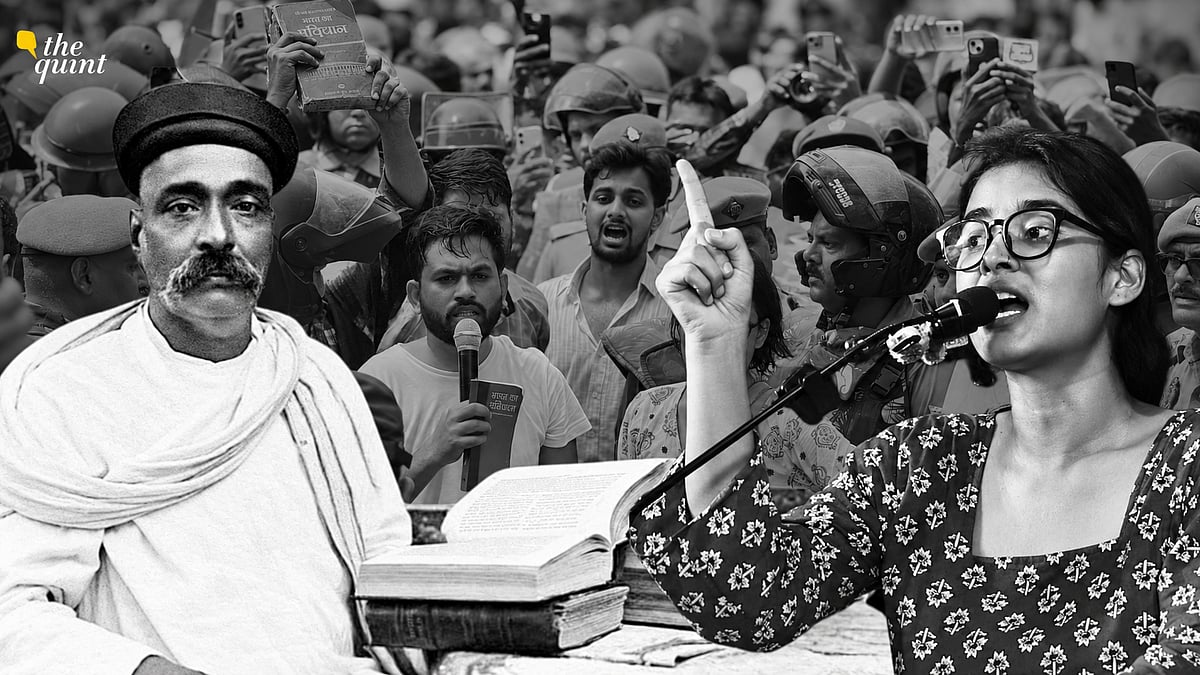
Exactly 110 years ago, in 1916, India was under British rule.
Bal Gangadhar Tilak was travelling across the country, making speeches, demanding a 'regime change', and advocating Swaraj.
Of course, the British government wasn't happy.
Tilak challenged the order in the Bombay High Court.
On 9 November 1916, a two-judge bench comprising British judge Stanley Batchelor and Indian judge Shah set aside the order and held that advocating Swaraj was not, by itself, unlawful.
Exactly 110 years ago, in 1916, India was under British rule. Bal Gangadhar Tilak was travelling across the country, making speeches, demanding a 'regime change', and advocating Swaraj. Of course, the British government wasn't happy. The authorities invoked a preventive provision of the Criminal Procedure Code that required Tilak to furnish a bond to "keep the peace", with two sureties of 10,000 rupees each, promising "good behaviour" for one year. Tilak challenged the order in the Bombay High Court. And guess who represented him?
Muhammad Ali Jinnah. Yes, the very same Jinnah who would later become the founder of Pakistan.
On 9 November 1916, a two-judge bench comprising British judge Stanley Batchelor and Indian judge Shah set aside the order and held that advocating Swaraj was not, by itself, unlawful.