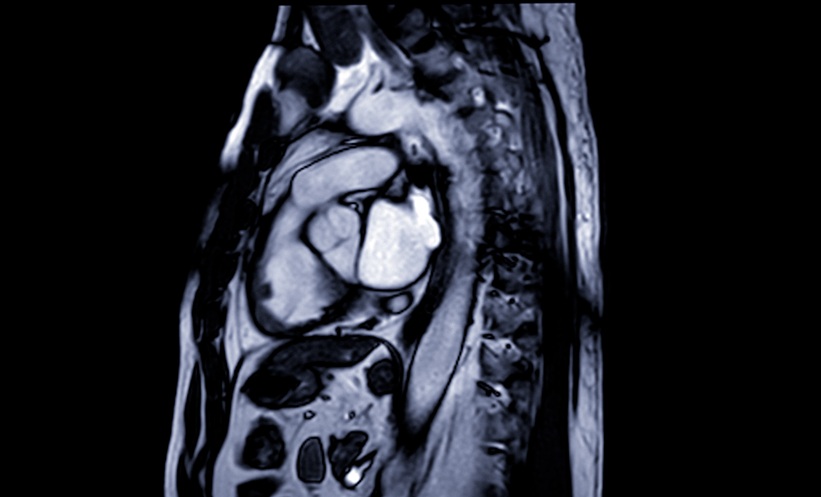
FERUMOXYTOL may serve as an effective contrast agent in 3D whole-heart cardiovascular magnetic resonance (CMR) imaging in paediatric and young patients even at a dose of 1 mg/kg, a new prospective study has found.13D Whole-Heart CMR and Ferumoxytol3D whole-heart imaging is a common CMR technique, widely adopted across clinical practice.2Ferumoxytol is an intravenous iron supplement that is often used off-label as a contrast agent in CMR scans.
Imaging ImplicationsIn patients with congenital heart disease, researchers reported, ferumoxytol-enhanced 3D whole-heart imaging provides robust diagnostic assessments across a range of contrast doses.
Findings showed that reducing the ferumoxytol dose to as low as 1-2 mg/kg does not compromise image quality, coronary artery visualisation, or overall diagnostic performance compared with higher doses of the contrast agent.
Ferumoxytol dose optimization for three-dimensional whole-heart magnetic resonance imaging in patients with congenital heart disease.
3D whole heart imaging for congenital heart disease.
FERUMOXYTOL may serve as an effective contrast agent in 3D whole-heart cardiovascular magnetic resonance (CMR) imaging in paediatric and young patients even at a dose of 1 mg/kg, a new prospective study has found.1
3D Whole-Heart CMR and Ferumoxytol
3D whole-heart imaging is a common CMR technique, widely adopted across clinical practice.2
Ferumoxytol is an intravenous iron supplement that is often used off-label as a contrast agent in CMR scans.
Reported doses range from 1 mg/kg to 7.5 mg/kg.3
Measuring Image Quality
Researchers examined 45 patients with congenital heart disease, who underwent ferumoxytol-enhanced 3D whole-heart CMR using sequential dose regimens: 1 mg/kg to 2 mg/kg or 2 mg/kg to 3 mg/kg.1
They analysed right coronary artery image quality and visible length, contrast-to-noise ratio, image quality of the cardiac chambers and great vessels, and diagnostic completeness.
No Differences Across 1 to 3 mg/kg
Across all doses, there were no significant differences observed in: contrast-to-noise ratio, right coronary artery length, image quality, or diagnostic completeness.
Imaging Implications
In patients with congenital heart disease, researchers reported, ferumoxytol-enhanced 3D whole-heart imaging provides robust diagnostic assessments across a range of contrast doses.
Findings showed that reducing the ferumoxytol dose to as low as 1-2 mg/kg does not compromise image quality, coronary artery visualisation, or overall diagnostic performance compared with higher doses of the contrast agent. The findings also support ongoing efforts to minimise contrast exposure while maintaining high-quality imaging for complex cardiovascular assessments.
Overall, researchers reported, optimised low-dose ferumoxytol protocols could improve the efficiency and practicality of contrast-enhanced CMR in paediatric and adult patients with congenital health disease.
References
1 Erdem S et al. Ferumoxytol dose optimization for three-dimensional whole-heart magnetic resonance imaging in patients with congenital heart disease. Pediatr Radiol. 2026;DOI:10.1007/s00247-026-06706-y.
2 Greil G et al. 3D whole heart imaging for congenital heart disease. Front Pediatr. 2017;5:36.
3 Vasanawala SS et al. Safety and technique of ferumoxytol administration for MRI. Magn Reson Med. 2016;75:2107–2111.
Featured image: samunella on Adobe Stock