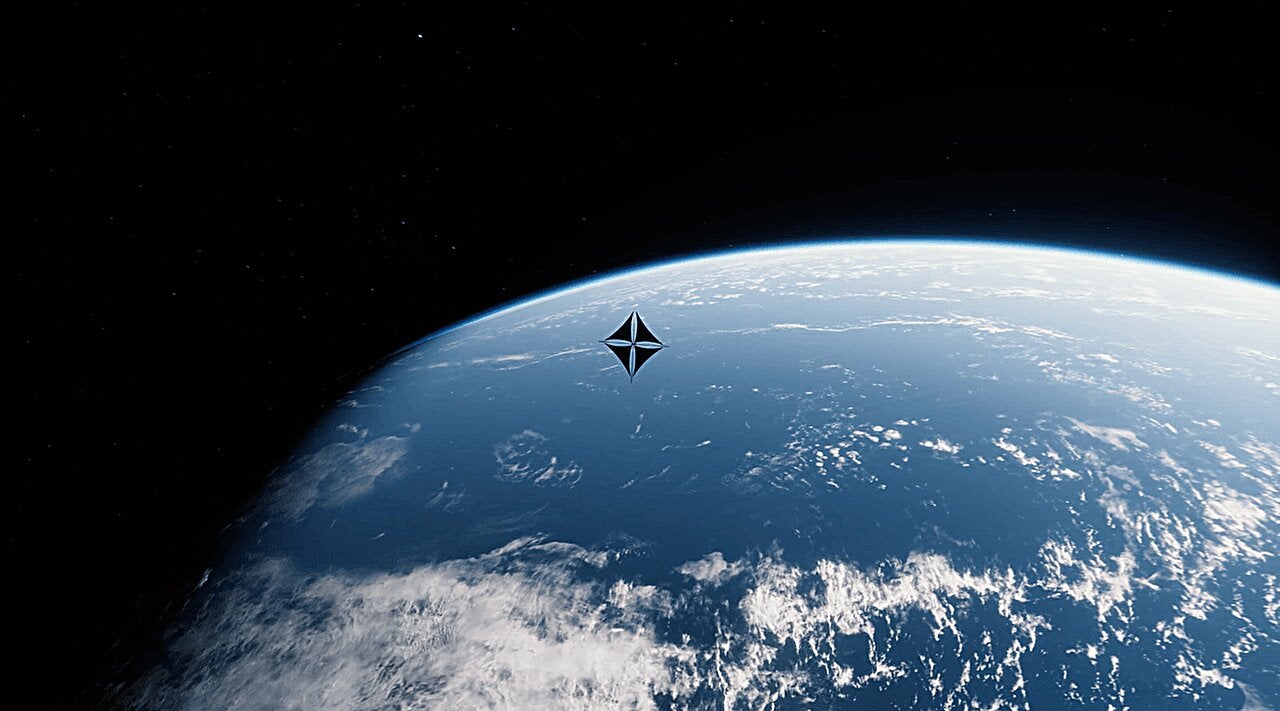
The FCC space mirror approval allows Reflect Orbital to test artificial sunlight despite warnings about astronomy and safety.
Reflect Orbital has described plans for more than 50,000 mirrors by 2035.
Reflect Orbital says the technology could extend solar power production after sunset, illuminate construction areas and assist rescue teams working in darkness.
Astronomers fear more than a bright streakOrdinary satellites already reflect sunlight, leaving trails across telescope images.
The original story "FCC approves giant space mirror as astronomers warn of risks to the night sky" is published in The Brighter Side of News.
The FCC space mirror approval allows Reflect Orbital to test artificial sunlight despite warnings about astronomy and safety. (CREDIT: Reflect Orbital)
Night may soon become something that companies can switch off, briefly and selectively, from hundreds of miles above Earth.
The Federal Communications Commission approved Reflect Orbital’s plan to launch Eärendil-1, an experimental satellite carrying an 18-meter-wide reflective surface. The mirror would redirect sunlight toward a targeted area after dark, producing a beam roughly five kilometers wide.
The July 9 authorization applies to one demonstration satellite, not the enormous constellation the California company eventually hopes to build. Reflect Orbital has described plans for more than 50,000 mirrors by 2035, creating what it calls “sunlight on demand.”
Supporters see possible uses in solar energy, agriculture, construction and emergency response. Critics see a system designed to brighten the night sky while regulators debate whether anyone has authority to consider its broader effects.
Reflect Orbital has described plans for more than 50,000 mirrors by 2035. (CREDIT: Reflect Orbital)
The decision has therefore opened a much larger argument. It is not simply about whether a mirror can work in orbit. It is about who decides how darkness, the atmosphere and low-Earth orbit may be used.
One satellite could test an enormous idea
Eärendil-1 would orbit about 625 kilometers above Earth. Its thin-film reflector would direct sunlight toward a designated location while the satellite moves rapidly overhead.
The illumination would last only a few minutes at one location before the mirror required repointing. Reflect Orbital says the technology could extend solar power production after sunset, illuminate construction areas and assist rescue teams working in darkness.
The company has also argued that reflected sunlight could provide temporary lighting without diesel generators or permanent ground infrastructure.
“We’re grateful to the FCC for recognizing the importance of testing novel technologies in space,” co-founder and chief executive Ben Nowack said after the approval. “This license is the first step toward rigorously testing our technology’s efficacy and the safeguards we have developed.”
Reflect Orbital says the first test would produce illumination comparable to a full moon across an area of several thousand acres. Later constellations could provide brighter and longer-lasting light by coordinating multiple mirrors.
The company has proposed dozens of satellites in the near term, thousands by 2030 and more than 50,000 by 2035. Those later stages would require separate approvals. The FCC emphasized that the current decision covers only one limited demonstration.
Astronomers fear more than a bright streak
Ordinary satellites already reflect sunlight, leaving trails across telescope images. Eärendil-1 differs because reflecting light toward Earth is its central purpose.
The American Astronomical Society asked the FCC to reject the application. It warned that the satellite could damage sensitive telescope equipment, temporarily blind pilots or drivers and create eye hazards for people viewing it through telescopes.
“AAS opposes the granting of a license to Reflect Orbital, because this application is fundamentally different from those for telecommunications satellites,” the organization argued before the decision. “The proposed satellite would be intentionally reflecting sunlight to Earth and is designed to be as bright as possible, making impacts on astronomical research extremely challenging to mitigate.”
After approval, the society said it was “dismayed” and remained concerned about a future constellation of 50,000 mirrors.
Astronomers rely on faint light that has traveled across space for millions or billions of years. A bright moving object can overwhelm part of an image, interfere with measurements or force observatories to discard valuable exposure time.
Reflect Orbital team in Hawthorne, California. (CREDIT: Reflect Orbital)
Wide-field telescopes are particularly vulnerable because they photograph large portions of the sky at once. A constellation of highly reflective satellites could create far more interference than a single test vehicle.
The company says it will avoid observatories and other sensitive locations. Critics say light does not remain perfectly confined after entering Earth’s atmosphere. Air molecules, moisture and particles scatter photons beyond the intended target.
Darkness supports biological clocks
The objections extend beyond astronomy.
Plants, animals and humans use natural cycles of light and darkness to regulate sleep, feeding, migration, reproduction and other biological activity. Artificial light at night can disrupt those patterns, particularly when it appears unexpectedly or reaches areas that normally remain dark.
A five-kilometer beam would not illuminate only its paying customer. Scattered light could reach nearby communities, habitats and roads. The exact reach would depend on weather, atmospheric conditions, brightness and how the mirror is aimed.
Flashes created while a reflector changes direction could also distract pilots or drivers. Critics have asked how the system would prevent accidental illumination of aircraft, populated areas or people using optical equipment.
Early collimator prototype to focus sunlight in orbit. (CREDIT: Ben Nowack / Reflect Orbital)
Reflect Orbital says its satellites will precisely control brightness, location and duration. Nowack has said the company could refuse service when nearby residents object to receiving the light.
Those promises remain untested at orbital scale. Eärendil-1 is intended to gather the measurements needed to determine whether such control is technically possible.
The FCC drew a regulatory boundary
The FCC approved the mission because the satellite needs radio frequencies for tracking, commands and data transmission. Its order found that allowing the test would support innovation and American leadership in space technology.
The agency rejected requests to impose additional conditions based on optical astronomy. It said those concerns fell outside the scope of its review of the spacecraft’s radio operations.
That reasoning alarmed opponents. The United States lacks a single regulator responsible for evaluating every environmental, astronomical and public-safety effect of commercial spacecraft.
The approval received nearly 2,000 public comments, according to reporting on the decision. Many raised concerns involving light pollution, aviation, wildlife and the night sky.
The dispute reveals a gap between what satellites now do and the system created to regulate them. Communications agencies can approve radio use, but a spacecraft may also alter the optical sky, atmosphere and orbital environment.
Practical implications of the deployment
Eärendil-1 could provide the first real measurements of how accurately an orbital mirror can aim sunlight, how widely that light scatters and whether predicted safety systems work.
Those results could guide decisions about future licenses. They may also reveal whether existing agencies can adequately judge projects whose largest effects have little to do with radio communication.
For astronomy, the test may help observatories measure detector risks and develop avoidance procedures. For environmental researchers, it could provide evidence about how artificial orbital lighting spreads through the atmosphere and reaches surrounding habitats.
The broader challenge will remain even if Eärendil-1 performs as intended. Low-Earth orbit is becoming a limited industrial environment, shared by communications satellites, scientific instruments, crewed spacecraft and proposed commercial systems.
Reflecting sunlight may prove useful during emergencies or at isolated energy facilities. It may also establish a precedent in which access to natural darkness becomes something a company can sell, redirect or withhold.
The original story "FCC approves giant space mirror as astronomers warn of risks to the night sky" is published in The Brighter Side of News.
Related Stories