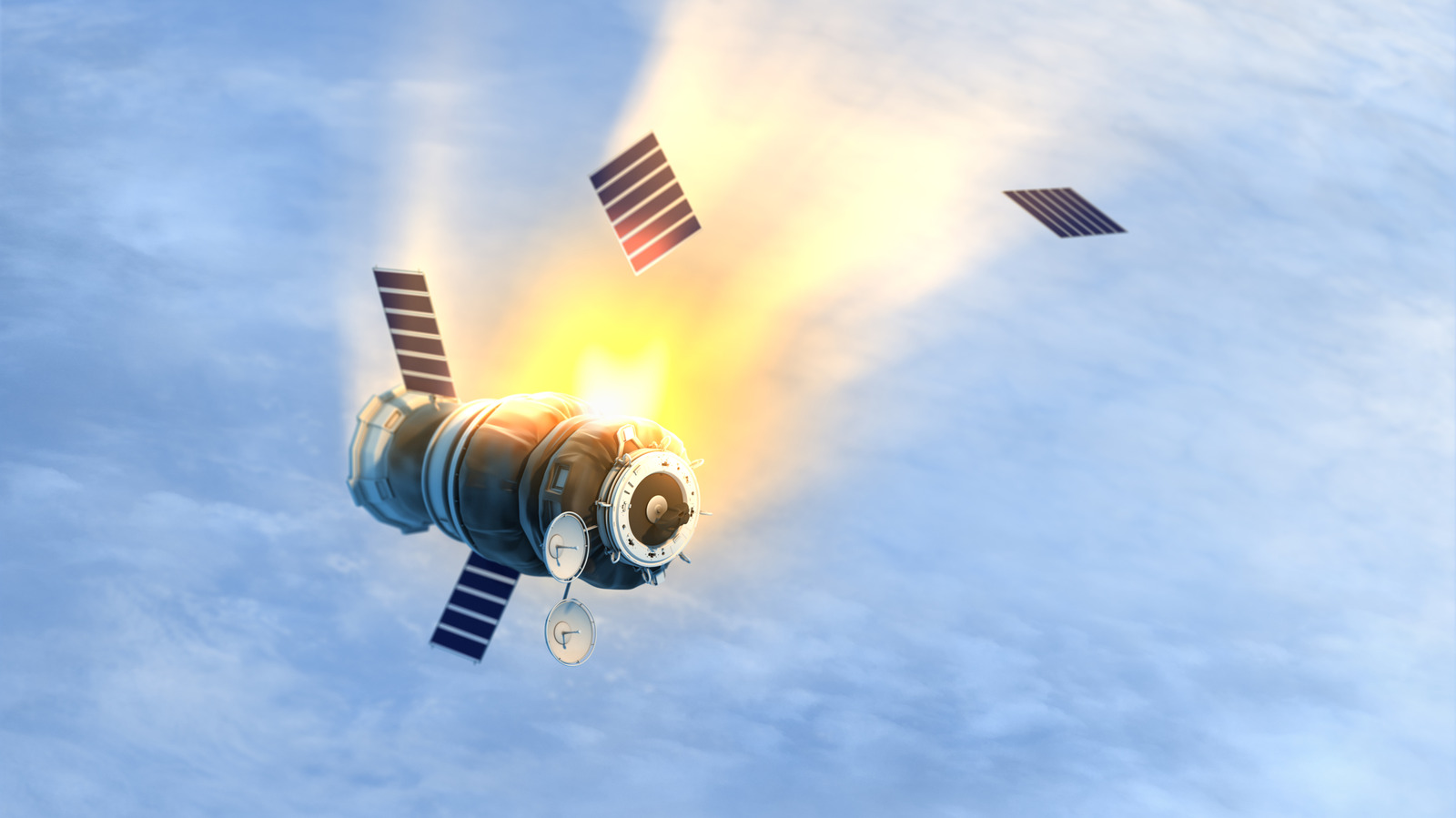
When it falls back to Earth and burns up, all of that aluminum doesn't just vanish into the ether; it's burned down into microscopic aerosol particles called alumina.
A few alumina particles aren't a big deal, but as more satellites get sent up, higher concentrations of alumina are finding their way into the atmosphere.
In 2022, the United States Government Accountability Office estimated that, by 2040, there could be well over 60,000 satellites in low Earth orbit, each with a reduced lifespan of just five years.
That's assuming they aren't knocked down prematurely, like Starlink satellites have been due to solar storms.
If those satellites all started falling back to Earth at around the same time, we could see burning satellites in the sky on a daily basis, each one depositing alumina into the atmosphere.
A typical satellite is mostly made of aluminum. When it falls back to Earth and burns up, all of that aluminum doesn't just vanish into the ether; it's burned down into microscopic aerosol particles called alumina. A few alumina particles aren't a big deal, but as more satellites get sent up, higher concentrations of alumina are finding their way into the atmosphere. As of February 2026, there are around 14,000 active satellites in low orbit, a large number of which are from Starlink, with well over a million more currently in the planning stages. In 2022, the United States Government Accountability Office estimated that, by 2040, there could be well over 60,000 satellites in low Earth orbit, each with a reduced lifespan of just five years. That's assuming they aren't knocked down prematurely, like Starlink satellites have been due to solar storms.
If those satellites all started falling back to Earth at around the same time, we could see burning satellites in the sky on a daily basis, each one depositing alumina into the atmosphere. According to a 2025 study published in Journal of Geophysical Research: Atmospheres, such a dense concentration of alumina could have effects on atmospheric phenomena, including speeding and slowing polar winds or heating up parts of the mesosphere. Not only that, but the particles would likely linger in the stratosphere for several years, which means any environmental effects could be dangerously sustained.
Currently, there's a lack of data on the effects of alumina on ozone, so what effects all of this would have on our way of life, if any, are unknown, and there's little more frightening in science than an unknown variable.