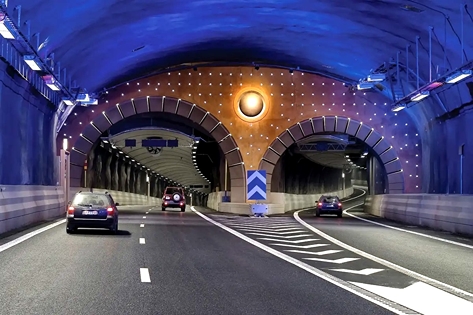
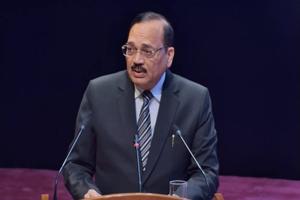
Maharashtra Chief Minister Devendra Fadnavis on Thursday (19 Novemmber) gave in-principle approval to Mumbai's Rs 53,928.2 crore underground road network, dubbed Pataal Lok, aimed at easing traffic on the city's busiest corridors.
The project envisages a 31-km tunnel network in each direction, to be built in two phases.
In the first phase, a central section beneath the Mithi River, between Bandra-Kurla Complex (BKC) and Dharavi, will branch into four arms.
The second phase will extend east beneath Andheri East localities such as Asalpha and Sakinaka, surfacing near the Eastern Express Highway at Ghatkopar.
Most of the tunnelling will be done with tunnel boring machines, while ramps and remaining sections will use cut-and-cover and U-trough methods.
Maharashtra Chief Minister Devendra Fadnavis on Thursday (19 Novemmber) gave in-principle approval to Mumbai's Rs 53,928.2 crore underground road network, dubbed Pataal Lok, aimed at easing traffic on the city's busiest corridors.
The project envisages a 31-km tunnel network in each direction, to be built in two phases.
In the first phase, a central section beneath the Mithi River, between Bandra-Kurla Complex (BKC) and Dharavi, will branch into four arms.
These will lead to the Bandra-Worli Sea Link and Coastal Road, to Dharavi, to BKC's G Block with an exit at Chunabhatti on the Eastern Express Highway, and north to the airport's Terminal 2 along the Western Express Highway, passing beneath Bandra East, Vakola and Vile Parle.
The second phase will extend east beneath Andheri East localities such as Asalpha and Sakinaka, surfacing near the Eastern Express Highway at Ghatkopar.
In a press note, the Chief Minister's Office said, “The project is planned to connect the Bandra-Worli Sea Link, the bullet train station at BKC, Dharavi, Bandra-Kurla Complex, Mumbai Airport, the Western Express Highway and the Eastern Express Highway through entry and exit routes.”
The tunnels are designed for speeds of up to 80 kmph, against 15 to 20 kmph on several surface stretches.
With the approval in place, the Mumbai Metropolitan Region Development Authority (MMRDA) can appoint a general consultant, finalise funding, including possible foreign loans, obtain clearances and hire contractors. A construction timeline is yet to be announced.
The project will require around 20 no-objection certificates, besides Coastal Regulation Zone and environmental clearances for stretches near mangroves and the Mithi River.
Any mangrove removal will need permissions, including from the Bombay High Court where applicable.
Most of the tunnelling will be done with tunnel boring machines, while ramps and remaining sections will use cut-and-cover and U-trough methods.
Please click here to add Swarajya as your preferred and trusted news source on Google
Also Read: Maharashtra To Set Up Dedicated Water Company For Data Centres And Industries Amid Drought Concerns