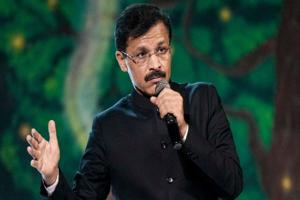
Maulana Syed Salman Hussaini Nadwi (1954-2026)Srinagar — Prominent Islamic scholar, author and educator Maulana Syed Salman Hussaini Nadwi, widely regarded as one of India’s leading contemporary Muslim scholars, passed away in Lucknow on Monday after a brief illness.
ADVERTISEMENTBorn in Lucknow in 1954 into a distinguished family of Islamic scholars, Nadwi traced his lineage to Imam Husayn ibn Ali, the grandson of Prophet Muhammad (Pbuh).
After graduating from Nadwatul Ulama in 1974, he co-founded Jamiat Shabaab ul Islam, an organisation aimed at engaging Muslim youth.
Returning to India, Nadwi joined the faculty of Darul Uloom Nadwatul Ulama and went on to serve for decades as Dean of its Faculty of Dawah and Shariah.
Funeral prayers in Maleehabad near Lucknow were attended by scholars, students and admirers from across the country.
Maulana Syed Salman Hussaini Nadwi (1954-2026)
Srinagar — Prominent Islamic scholar, author and educator Maulana Syed Salman Hussaini Nadwi, widely regarded as one of India’s leading contemporary Muslim scholars, passed away in Lucknow on Monday after a brief illness. He was 72.
His death triggered an outpouring of tributes from religious scholars, Islamic seminaries, educational institutions, former students and community leaders across India and abroad, who remembered him as an accomplished scholar, prolific author, influential teacher and fearless public intellectual.
ADVERTISEMENT
Born in Lucknow in 1954 into a distinguished family of Islamic scholars, Nadwi traced his lineage to Imam Husayn ibn Ali, the grandson of Prophet Muhammad (Pbuh). He received his early education at Darul Uloom Nadwatul Ulama, memorised the Holy Quran at a young age and later pursued advanced studies in Shariah and Islamic sciences.
After graduating from Nadwatul Ulama in 1974, he co-founded Jamiat Shabaab ul Islam, an organisation aimed at engaging Muslim youth. He obtained a master’s degree in Hadith from Nadwatul Ulama in 1976 before pursuing higher studies at Imam Muhammad ibn Saud Islamic University in Saudi Arabia, where he completed another master’s degree in Hadith studies in 1980 under renowned scholar Sheikh Abdul Fattah Abu Ghuddah.
Returning to India, Nadwi joined the faculty of Darul Uloom Nadwatul Ulama and went on to serve for decades as Dean of its Faculty of Dawah and Shariah. Over the years, he taught thousands of students from India and overseas and earned a reputation as one of the institution’s most influential scholars.
A prolific writer, Nadwi authored numerous books and scholarly works in Arabic and Urdu on Islamic theology, Hadith, jurisprudence, Islamic history and contemporary issues confronting Muslim societies. He also edited and co-edited journals published in English, Urdu, Arabic and Persian.
Beyond academia, he played a key role in establishing educational institutions across the country. He served as chairman of Dr Abdul Ali Unani Medical College and Hospital, Chancellor of Darul Uloom Syed Ahmad Shaheed, Katoli; and President of Jamiat Shabaab ul Islam. He was also associated with the establishment of several medical, engineering and information technology institutions.
Known for his outspoken views on religious and political affairs, Nadwi frequently commented on developments in the Muslim world and often criticised what he perceived as the inaction of several Muslim governments in the face of international crises.
He was also a vocal advocate of Shia-Sunni unity and interfaith harmony, arguing that sectarian divisions weakened the Muslim community. Several scholars paying tribute to him recalled his efforts to promote dialogue between different Islamic schools of thought as well as Hindu-Muslim understanding in India.
Read Also A Muslim Response To ISIS
In tributes shared after his demise, colleagues and students described Nadwi as a scholar of exceptional intellect who combined deep knowledge of the Quran, Hadith and Islamic jurisprudence with a keen interest in contemporary political and social issues. Many highlighted his command over both Arabic and Urdu, his eloquent oratory and his extensive writings.
ADVERTISEMENT
Several admirers also noted that Nadwi was known for expressing his opinions without hesitation, even when they generated controversy. They said he remained accessible to those who disagreed with him and was willing to engage in open debate while standing firmly by positions he believed were rooted in Islamic scholarship.
Nadwi’s independent views, however, also attracted criticism at various points in his public life. His critics questioned some of his political positions and religious opinions, leading to differences with certain organisations and institutions with which he had been associated.
Despite the controversies, scholars and students alike acknowledged his lasting contribution to Islamic education, scholarship and public discourse.
Condolence messages poured in from seminaries, universities and community organisations across India and abroad, with many describing his death as the end of an important chapter in contemporary Islamic scholarship.
Funeral prayers in Maleehabad near Lucknow were attended by scholars, students and admirers from across the country.