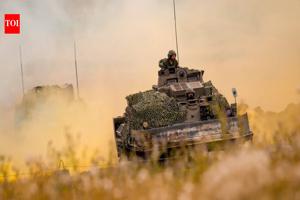
For decades, military power has been defined by the scale and sophistication of conventional arsenals — combat aircraft, tanks, artillery, warships, air-defence systems, precision-guided missiles, and other high-end assets.
In this environment, battlefield superiority belonged to armies with technologically advanced platforms and equipment, sophisticated intelligence networks, and large budgets.
Smaller militaries and non-state actors, by contrast, were largely confined to asymmetric tactics that relied on guerrilla warfare, ambushes, and other unconventional methods to offset their opponents’ superior firepower and operational dominance.
For decades, military power has been defined by the scale and sophistication of conventional arsenals — combat aircraft, tanks, artillery, warships, air-defence systems, precision-guided missiles, and other high-end assets.
In this environment, battlefield superiority belonged to armies with technologically advanced platforms and equipment, sophisticated intelligence networks, and large budgets. Smaller militaries and non-state actors, by contrast, were largely confined to asymmetric tactics that relied on guerrilla warfare, ambushes, and other unconventional methods to offset their opponents’ superior firepower and operational dominance.