"He said there was now greater clarity on the division of responsibilities, with DRDO focusing on cutting-edge research and prototyping, while production would be undertaken by both public and private industry.
Greater engagement with academia could also help accelerate the process, he added.Singh said there are different models for bringing private companies into defence development and production.
Under one model, private firms can come in as development-cum-production partners once a technology reaches a certain level of readiness.
"In drones we are probably going to need hundreds of drone makers making different types of drones.
Now we have multiple private sector enterprises with investing or already producing.
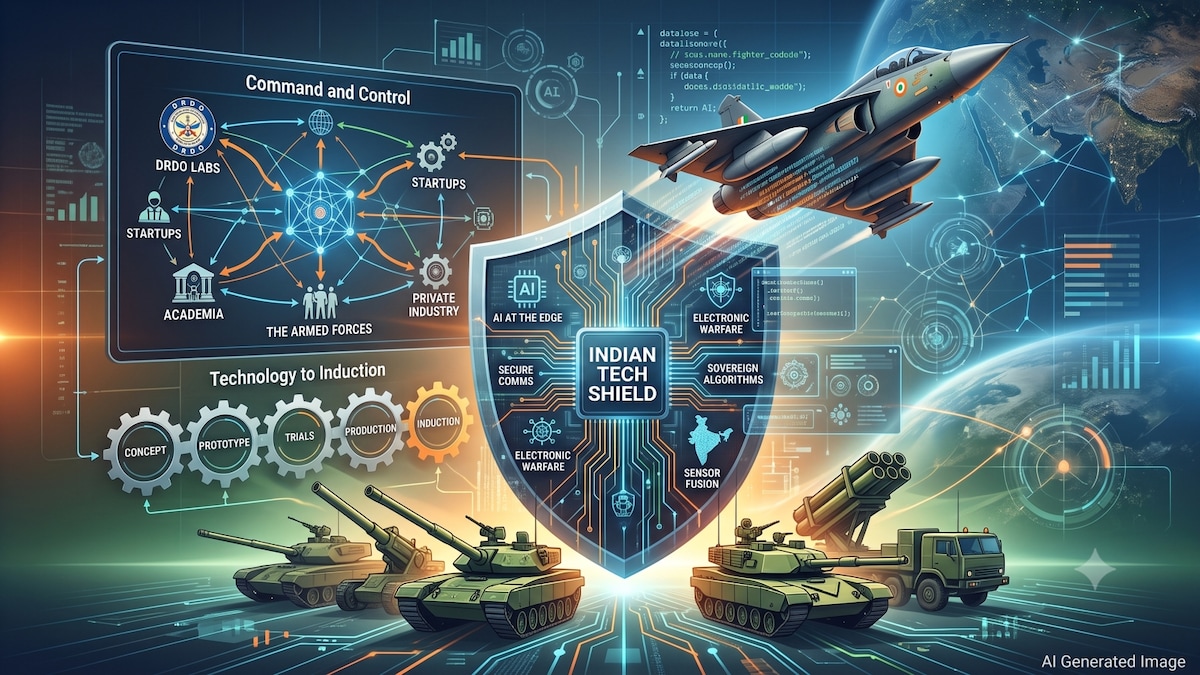
Defence Secretary Rajesh Singh said on Friday that the Defence Research and Development Organisation (DRDO) needs to sharpen its focus on cutting-edge technology and prototyping, with production increasingly handed over to industry.Singh said DRDO currently has 37 projects, which should ideally be brought down to around 10, allowing the organisation to concentrate on advanced research and technology development."DRDO were involved in too many things. They have 37 even now. Ideally we should bring it down to 10 or so. Concentrate on cutting edge technology only."He said there was now greater clarity on the division of responsibilities, with DRDO focusing on cutting-edge research and prototyping, while production would be undertaken by both public and private industry. Greater engagement with academia could also help accelerate the process, he added.Singh said there are different models for bringing private companies into defence development and production. Under one model, private firms can come in as development-cum-production partners once a technology reaches a certain level of readiness. He said this approach has already been used for some artillery and small arms systems that are under orders.Another model involves transferring mature technology to industry through technology transfer.For missiles, Singh said the government has now decided that private companies can take on entire system integration, rather than being restricted to sub-integration. This would allow them to compete with Bharat Dynamics Ltd (BDL), potentially improving BDL's performance as well as overall production rates.Singh said India needs to multiply production of drones, missiles and other defence equipment exponentially, with multiple players across key segments."In drones we are probably going to need hundreds of drone makers making different types of drones."He said the objective is to have at least two, if not three, fighter aircraft production lines, around half a dozen missile producers and hundreds of drone makers. Ammunition and propellant production, he added, also needs to move away from dependence on a single PSU.Singh said the government is seeking to accelerate this industrialisation through faster procurement, a level playing field for the private sector and removal of entry barriers."We have cleared entry barriers. Now we have multiple private sector enterprises with investing or already producing."He said India's defence industrial base currently comprises around 15 PSUs, 8-10 large private sector companies and about 16,000 MSMEs.Singh also pointed to India's growing ability to develop products with export potential, citing BrahMos as the most prominent example, with sales to or efforts to sell to certain Southeast Asian countries.He said DRDO technology-based products developed by the private sector in areas such as artillery and mounted guns have also been exported, with further demand emerging.The comments come as India seeks to expand domestic defence manufacturing, diversify production capacity and increase the role of private industry across the sector.