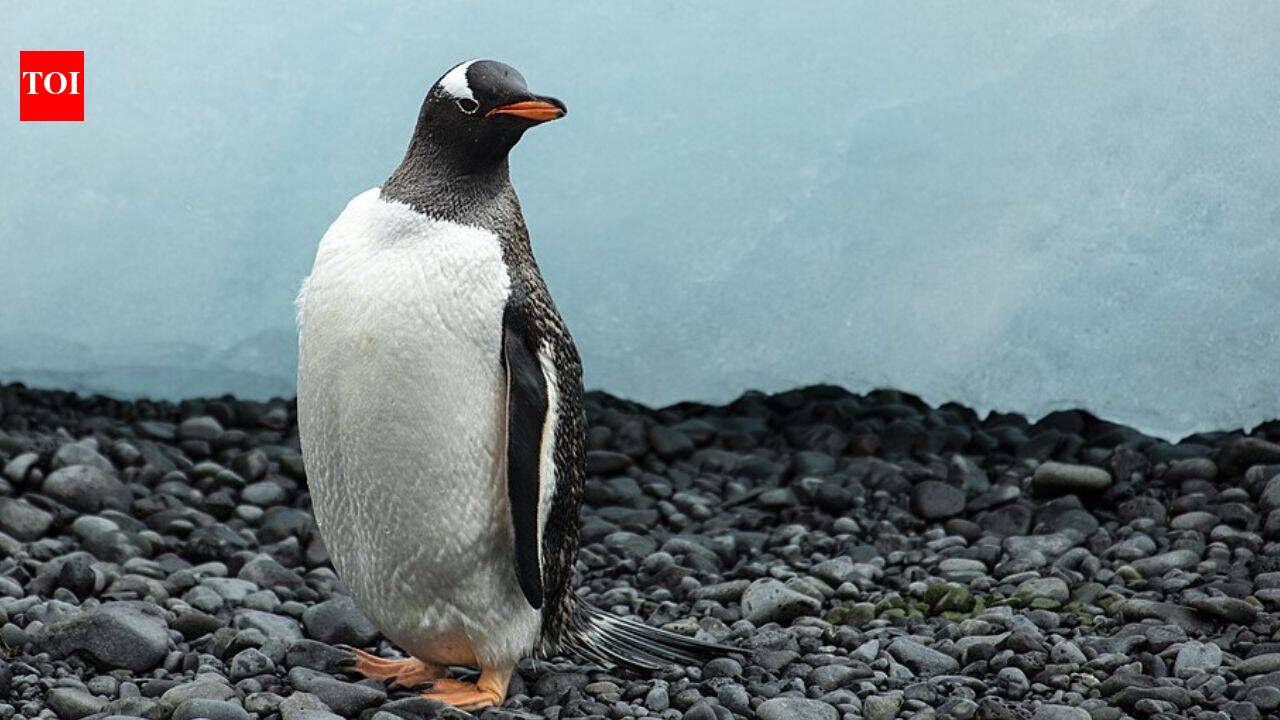
Their findings point to four distinct groups that are northern, southern, eastern and southeastern gentoo penguins.
The southeastern group, found on the Kerguelen Islands (Desolation Islands), has now been described as a new species called Pygoscelis kerguelensis.
Climate models for 2050 suggest that suitable habitat may shrink sharply for the northern, eastern and southeastern gentoo penguins under a moderate climate-change scenario.
Pygoscelis papua is the northern gentoo, P. ellsworthi is the southern gentoo, and P. taeniata is the eastern gentoo.
The newly described southeastern gentoo, P. kerguelensis, is centred on the Kerguelen Islands and has an ecological connection with nearby Heard Island.
PC: By Andrew Shiva/Wikipedia
What did the DNA study reveal about gentoo penguins
PC: Charlotte Kirchner/Wikipedia
What did scientists discover about the Kerguelen gentoo penguin
How are the four gentoo penguin species spread across the Southern Ocean
How might climate change affect gentoo penguin habitats
Researchers studied gentoo penguins from across much of their range and compared their DNA with differences in their bodies, behaviour and habitats. Their findings point to four distinct groups that are northern, southern, eastern and southeastern gentoo penguins. The southeastern group, found on the Kerguelen Islands (Desolation Islands), has now been described as a new species called Pygoscelis kerguelensis. The study also shows how living in different places and facing different environmental conditions may have pushed these penguins along separate paths over time.According to the research published in Communications Biology, titled ‘Integrative evidence reveals adaptive divergence and speciation in gentoo penguins ’ raises concerns about how climate change could affect these newly recognised species. Climate models for 2050 suggest that suitable habitat may shrink sharply for the northern, eastern and southeastern gentoo penguins under a moderate climate-change scenario. The southern gentoo, however, could see its suitable habitat increase by about 9 per cent.Researchers studied 64 gentoo penguins from colonies across the Falkland/Malvinas Islands, Martillo, South Georgia, Antarctica, Kerguelen, Crozet, Marion and Macquarie.They analysed their genomes and also examined museum specimens to compare physical features. The genetic analysis revealed four distinct lineages. These groups also showed differences in their bodies and habitats, while earlier research has found differences in their behaviour. The researchers found that distance between colonies and limited movement between populations helped drive these differences over time. They also identified links between genetic changes and environmental factors such as temperature, sea ice, salinity and primary productivity.The biggest change involves the gentoo penguins of the Kerguelen Islands. Researchers describe this southeastern group as a new species, Pygoscelis kerguelensis. Genetic samples from Kerguelen supported its distinct status, while satellite tracking has also recorded young gentoo penguins travelling to nearby Heard Island, which points to a connection between the two regions. The new species has a medium-sized body and physical features that distinguish it from other gentoo penguins. The study also places the remaining populations into three other species. Pygoscelis papua is the northern gentoo, P. ellsworthi is the southern gentoo, and P. taeniata is the eastern gentoo. South Georgia is classified as a subspecies of the southern gentoo, while Macquarie Island falls within the eastern species.The revised classification divides gentoo penguins into four species based on where they live and how their populations evolved. The northern gentoo, Pygoscelis papua, is found on the Falkland/Malvinas and Martillo Islands. The southern gentoo, P. ellsworthi, ranges across the Antarctic Peninsula, South Orkneys, South Shetlands and South Georgia. The eastern gentoo, P. taeniata, includes populations on the Crozet, Marion and Macquarie islands. The newly described southeastern gentoo, P. kerguelensis, is centred on the Kerguelen Islands and has an ecological connection with nearby Heard Island. South Georgia is classified as a subspecies of the southern gentoo because its population is less genetically distinct than the four main species. Macquarie Island, meanwhile, belongs to the eastern gentoo.The findings also point to possible challenges for gentoo penguins as the climate changes. Researchers used the moderate RCP4.5 climate scenario to model how suitable habitat could change by 2050. The models considered factors including temperature, salinity, pH, and primary productivity. They suggest that suitable habitat could shrink sharply for the northern, eastern and southeastern species, with large parts of their current ranges becoming less suitable. The southeastern gentoo could still retain suitable areas around Heard Island. The southern gentoo shows a different pattern, with suitable habitat projected to increase by about 9 per cent around the Western Antarctic Peninsula.