Scelidosaurus : An early member of the armoured dinosaur story9.
Stenonychosaurus: A small dinosaur with a relatively large brainWhat these S-named dinosaurs tell usImagine walking along the edge of a prehistoric river.
This herbivorous dinosaur had a heavily armoured body and large spines around its shoulders.
Stenonychosaurus was a relatively small, two-legged dinosaur from Late Cretaceous Canada, measuring around 2.5 metres long.There is also a fascinating twist in its scientific history.
The classification of Troodon itself remains debated because the fossils currently assigned to that name are limited.The dinosaurs beginning with S are a reminder of how varied prehistoric life really was.
1. Spinosaurus: The dinosaur that may have hunted in water
2. Stegosaurus : The dinosaur with plates nobody can fully explain
3. Styracosaurus : A crown of horns around its head
4. Suchomimus : The crocodile mimic
5. Sinosauropteryx : The dinosaur whose colours left a clue
6. Saltasaurus : The long-necked dinosaur with body armour
7. Sauropelta : An armoured plant-eater with shoulder spikes
8. Scelidosaurus : An early member of the armoured dinosaur story
9. Shunosaurus: A long-necked dinosaur from China
10. Stenonychosaurus: A small dinosaur with a relatively large brain
What these S-named dinosaurs tell us
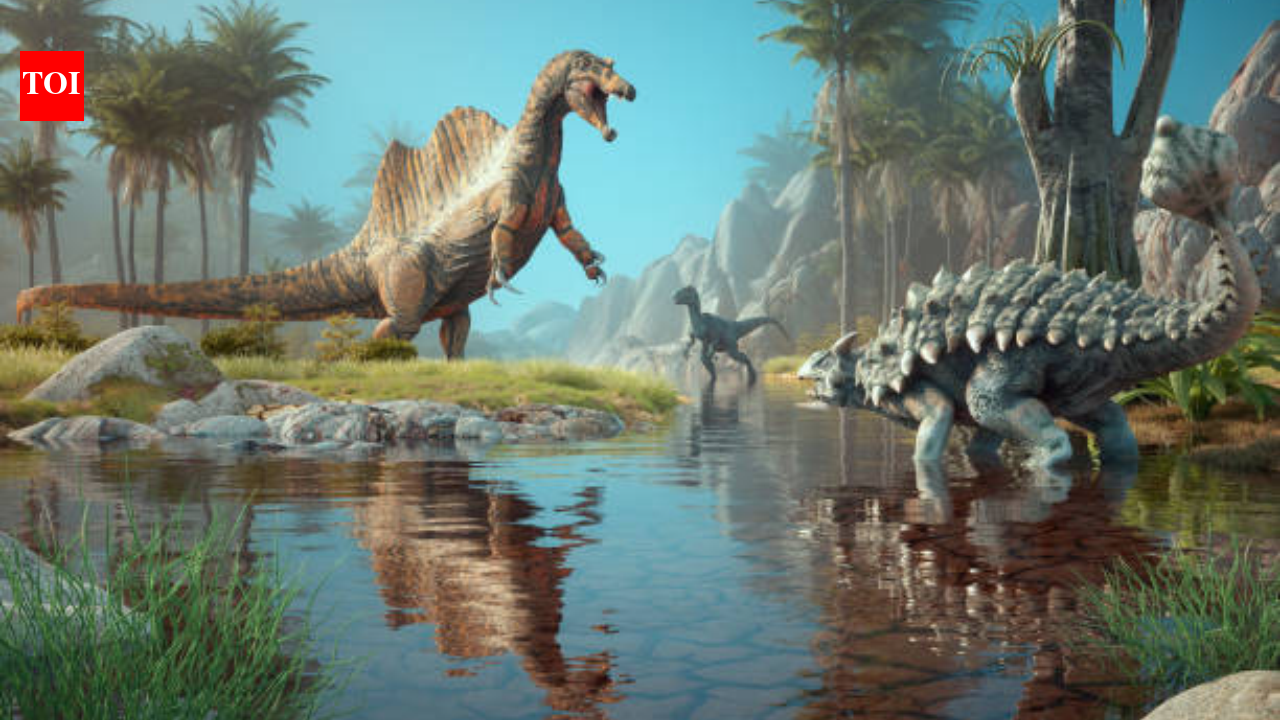
Imagine walking along the edge of a prehistoric river. Something moves beneath the water. A long snout appears, lined with conical teeth. Then a huge tail sweeps through the shallows, followed by the unmistakable outline of a dinosaur with a towering sail on its back. It looks almost like a crocodile crossed with a giant fish, but this is no creature from a fantasy film. It is Spinosaurus, one of the strangest dinosaurs ever discovered.Not every dinosaur was built like a Tyrannosaurus rex, and not all of them were enormous meat-eaters. Some wore armour, some carried elaborate horns, and at least one left scientists with clues about the colour of its feathers. The letter S offers a surprisingly varied collection of prehistoric animals, each with a feature that makes it worth a closer look.With its elongated snout, conical teeth and enormous sail-like structure on its back, Spinosaurus hardly looked like a typical meat-eating dinosaur. It lived in what is now North Africa around 99 to 94 million years ago and was equipped with features suited to catching fish.Its short hind legs and broad, paddle-like tail have led scientists to investigate how much time it spent in water. The tail, in particular, changed the debate. Research published in Nature in 2020 described it as an unusually specialised structure for movement in water.Exactly how aquatic Spinosaurus was remains a subject of scientific discussion, but it certainly challenges the familiar image of giant predators as land-bound hunters.Stegosaurus is instantly recognisable because of the two rows of large plates running along its back and the pointed spikes at the end of its tail. The tail was a formidable defence against predators, but the plates have proved harder to explain.Scientists have suggested that they may have helped regulate body temperature, served as a display to attract mates or helped the animals recognise one another. The plates were embedded in the skin rather than attached directly to the skeleton. And despite its enormous body, Stegosaurus had a surprisingly small brain, roughly the size of a plum.If a dinosaur could wear a crown, Styracosaurus would have had one of the most dramatic. This plant-eater had a large nose horn and several long spikes projecting from the bony frill around its neck. It lived in North America around 76 to 75 million years ago.The spikes may have helped defend it against predators, although scientists also consider the possibility that such elaborate headgear played a role in display. Fossils found together suggest Styracosaurus may have lived in groups. Its impressive appearance did not make it invincible: large meat-eaters lived in the same landscape.Its name gives away the resemblance. Suchomimus means 'crocodile mimic', a reference to its long, narrow snout. This large meat-eating dinosaur lived in what is now Niger during the Early Cretaceous, around 121 to 112 million years ago.It belonged to the spinosaur family, a group known for elongated jaws and teeth suited to catching fish. Suchomimus shared some features with better-known relatives such as Spinosaurus and Baryonyx. Its appearance is a reminder that prehistoric predators did not all rely on the same hunting equipment.One of the most fascinating things about Sinosauropteryx is that scientists have been able to reconstruct part of its appearance beyond its bones. This small, meat-eating dinosaur from China was covered in primitive, hair-like feathers.Researchers studying pigment-bearing structures called melanosomes found evidence that its tail had dark bands. The pattern has been interpreted as reddish-brown or chestnut-coloured stripes. It was an important discovery because it offered evidence of colour in a non-avian dinosaur rather than relying entirely on artistic imagination. Sinosauropteryx was also the first feathered dinosaur discovered that was not directly related to birds.Long-necked sauropods are usually imagined as enormous, largely unprotected plant-eaters. Saltasaurus complicates that picture. Fossils show that this South American dinosaur had small bony nodules embedded in its skin, providing evidence that at least some titanosaurs carried armour.It lived in Argentina towards the end of the Cretaceous Period, around 70 to 66 million years ago. The discovery helped establish that body armour was not limited to the familiar heavily plated dinosaurs. Even some long-necked giants had their own form of protection.Sauropelta was not a predator, but it certainly looked difficult to attack. This herbivorous dinosaur had a heavily armoured body and large spines around its shoulders. It lived in what is now the United States during the Early Cretaceous.Its name means 'lizard shield', an apt description for an animal whose body was built around protection. The shoulder spines gave it a particularly striking outline, making it one of the more unusual members of the armoured dinosaur group.Scelidosaurus lived in what is now England during the Early Jurassic, roughly 208 to 194 million years ago. It was a plant-eater and an early armoured dinosaur, belonging to a group whose members would later include some of the most heavily protected animals of the Mesozoic.It was around four metres long, much smaller than many of the giants that followed. Its place in the dinosaur family tree makes it interesting: armour was already part of dinosaur evolution long before the Late Cretaceous creatures that made it famous.Shunosaurus was a plant-eating sauropod that lived in China during the Middle Jurassic, around 170 to 160 million years ago. It reached roughly 10 metres in length.It may not have the fame of Diplodocus or Brachiosaurus, but it belongs to the same broad group of long-necked, four-legged herbivores that shaped the landscapes of the Jurassic.Not every dinosaur needed a massive body to stand out. Stenonychosaurus was a relatively small, two-legged dinosaur from Late Cretaceous Canada, measuring around 2.5 metres long.There is also a fascinating twist in its scientific history. Many fossils once attributed to a dinosaur called Troodon are now identified as Stenonychosaurus. The classification of Troodon itself remains debated because the fossils currently assigned to that name are limited.The dinosaurs beginning with S are a reminder of how varied prehistoric life really was. There were fish-catching predators, armoured plant-eaters, horned animals and feathered hunters whose colours can still be partly reconstructed from fossil evidence.The Natural History Museum's dinosaur directory lists 37 dinosaurs beginning with this letter alone. And every new fossil, or a fresh examination of one already discovered, can change what scientists think they know about these animals. The familiar names may dominate films and museum displays, but the less familiar ones often have equally remarkable stories to tell.