The sensing technology and the centralized Building Automation System (BAS) that controls it provide researchers and building managers with data that can help guide sustainable decision making.
A living modelEssential to developing a digital twin is the Building Information Model (BIM): a detailed 3D model, or blueprint, of how a structure is built.
In buildings, this static BIM provides the backbone of the digital twin.
The team connected the BIM to the BAS, which gathers measurements like temperature, humidity, ventilation, and indoor air quality.
Underpinning the research is the concept of urban metabolism (UM), or the flow of resources through a city.
Digital Twin Mascaro 2
“With this framework, we are moving beyond static snapshots, making steps toward a dynamic record of a building’s environmental footprint, from the materials in its structure to the air its occupants breathe,” said Federica Geremicca, a postdoctoral researcher in civil and environmental engineering at the Swanson School and first author of the paper.
An ideal case study
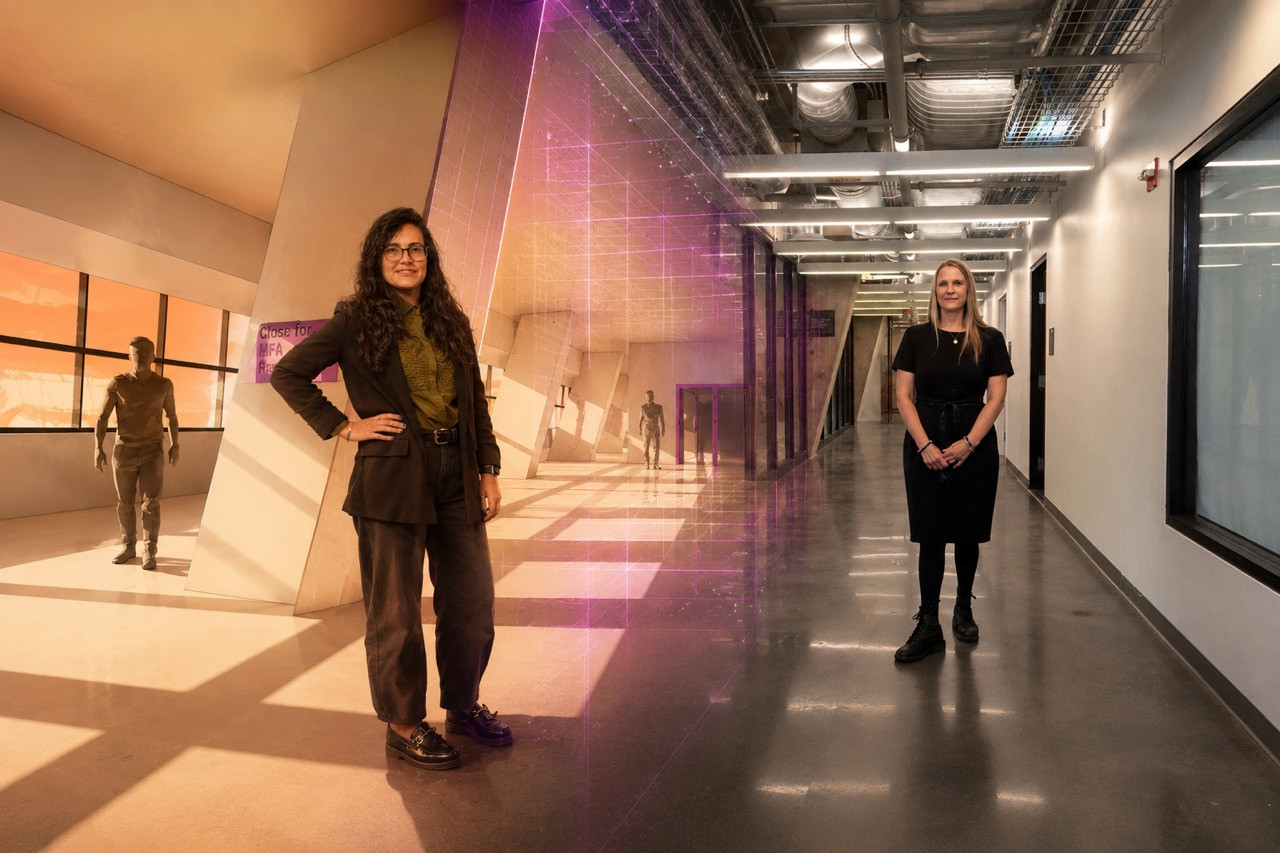
When it was built in 2009 as a hub of sustainable innovation on Pitt’s Oakland campus, the Mascaro Center for Sustainable Innovation (MCSI), a LEED Gold building, was equipped with sensors that monitor everything from energy consumption to air quality to Heating, Ventilation, and Air Conditioning (HVAC) flows. The sensing technology and the centralized Building Automation System (BAS) that controls it provide researchers and building managers with data that can help guide sustainable decision making.
“We’re collecting all this important data, but it hasn’t always been easy for researchers to access and can be siloed and inconsistent,” said Melissa Bilec, George M. and Eva M. Bevier Endowed Chair in Civil and Environmental Engineering and co-director of the MCSI. “We set out to develop a digital twin of the Mascaro Center that would transform how the data is processed and visualized, so we could better see how the building is functioning.”
The research began in the fall of 2023, after the team received a $735,872 National Science Foundation grant to develop new tools to enable climate adaptivity in vertical infrastructure.
A living model
Essential to developing a digital twin is the Building Information Model (BIM): a detailed 3D model, or blueprint, of how a structure is built. In buildings, this static BIM provides the backbone of the digital twin. The team connected the BIM to the BAS, which gathers measurements like temperature, humidity, ventilation, and indoor air quality. It also integrated sustainability methods: Material Flow Analysis (MFA), which tracks what materials go into, stay within, and leave a building over time; and Life Cycle Assessment (LCA), which estimates environmental impacts across the building life span.
Underpinning the research is the concept of urban metabolism (UM), or the flow of resources through a city. UM represents a city as a living thing, and just as a healthy metabolism is important in humans, so it is with a city or a single structure within it.