Didi's Fortress To Faction Factory: Why Trinamool Congress Seems More Fragile Than EverReported By :, Edited By:Last Updated: May 29, 2026, 10:42 ISTThe Trinamool Congress is not collapsing overnight.
(AFP)The public spat between senior Trinamool MPs Kakoli Ghosh Dastidar and Kalyan Banerjee, followed by Dastidar’s open dissent, once again exposes a contradiction that has long defined the Trinamool Congress from within.
Power, Panic and FragmentationThe factionalism inside the Trinamool Congress has repeatedly exploded into the public domain, especially during periods of political stress.
The Trinamool Congress was born out of a violent anti-Left movement fuelled by street mobilisation and cadre aggression.
News18 Newsletter Handpicked stories, in your inbox A newsletter with the best of our journalism submitFirst Published: May 29, 2026, 09:25 ISTNews india Didi's Fortress To Faction Factory: Why Trinamool Congress Seems More Fragile Than EverDisclaimer: Comments reflect users’ views, not News18’s.
Didi's Fortress To Faction Factory: Why Trinamool Congress Seems More Fragile Than Ever
Reported By :
, Edited By:
Last Updated: May 29, 2026, 10:42 IST
The Trinamool Congress is not collapsing overnight. But, for the first time since its birth, the party looks vulnerable not merely because of the opposition, but because of itself
Rapid Read
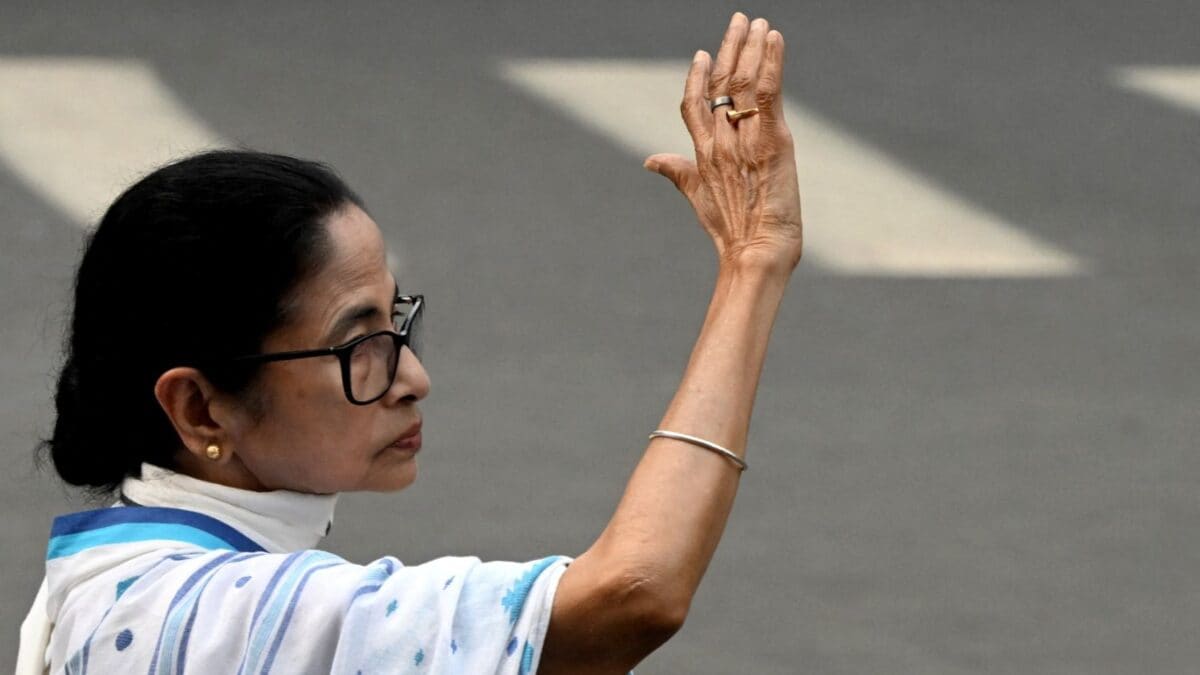
Despite Mamata Banerjee’s repeated national ambitions and other expansion plans, TMC never truly evolved into a durable national force. (AFP)
The public spat between senior Trinamool MPs Kakoli Ghosh Dastidar and Kalyan Banerjee, followed by Dastidar’s open dissent, once again exposes a contradiction that has long defined the Trinamool Congress from within. Since its inception, the party has been driven less by ideological coherence and more by convenience, patronage networks, corruption, money, shifting power equations, and an entrenched culture of sycophancy around the leadership.
What began as a regional movement against the Left has gradually evolved into a political ecosystem where loyalty is largely transactional, factions survive on access to influence, and internal rivalries inevitably erupt whenever the balance of power begins to shift.
Every time Trinamool leaders sensed a downturn for the party, whether after the 2019 Lok Sabha elections or in the run-up to the 2021 assembly polls, many chose defection over loyalty, gravitating instead toward perceived centres of power and political survival. And, after the first and massive defeat, the leaders and cadres now seem to be rapidly disappearing, instead of staying with their leader.
ALSO READ | 10 Days, 16 Big Moves: How Suvendu Adhikari Is Dismantling Mamata’s Legacy One Decision At A Time
Now, with insiders revealing that at least 11 more senior leaders, including four MPs and three former ministers, are weighing exit options, the party appears to be facing its deepest internal crisis since inception.
Power, Panic and Fragmentation
The factionalism inside the Trinamool Congress has repeatedly exploded into the public domain, especially during periods of political stress. From Sougata Roy openly criticising sections within the party to the bitter Mahua Moitra and Kalyan Banerjee confrontation, from the conflict between MP Sudip Banerjee and MLA Kunal Ghosh to Banerjee’s sharp exchanges with Kakoli Ghosh Dastidar, Trinamool’s internal fractures have repeatedly spilled into the public domain.
From Sukhendu Sekhar Roy and Santanu Sen, breaking ranks during the protests following the RG Kar rape and murder case, to former railway minister Dinesh Trivedi criticising the culture of political violence in the state—party leaders have increasingly turned on one another in full public view, at times even carrying their disputes into institutional forums such as the Election Commission and Parliament.
It also traces the deeper power struggle between Abhishek Banerjee’s emerging ecosystem and the old Mamata loyalist guard. The tensions between Mukul Roy and Abhishek Banerjee, Abhishek’s clashes with Suvendu Adhikari before his exit in 2020, and the widening distrust between younger strategists and veteran organisational leaders reveal a party where competing camps operated openly. The list of internal confrontations has become endless, exposing either Mamata Banerjee’s unwillingness or inability to fully control the growing fragmentation inside her party.
Post the 2026 election results, the churn began with national spokesperson Riju Dutta openly expressing discontent and has now reached one of the party’s most recognisable parliamentary faces, Dastidar. Her outburst has once again exposed the growing turmoil inside a party that, for decades, projected itself as a tightly controlled political machine under Mamata Banerjee.
Cracks Beneath Control
What makes Dastidar’s case politically significant is not merely the disagreement. It is a nuanced posturing. Dastidar and her husband, prominent gynaecologist Sudarshan Ghosh Dastidar, have been aligned with the Trinamool ecosystem for decades. They belonged to the old loyalist network that stood with Mamata Banerjee through the party’s rise from the anti-Left street movement days. Hours after Dastidar’s resignation, another prominent leader, Shantanu Sen, also resigned. When such faces begin showing visible discomfort, insiders believe the issue is no longer isolated factionalism but a deeper crisis of confidence.
ALSO READ | The 1-2-3-9 Equation: Deconstructing The Historic Numbers Behind Suvendu Adhikari’s Bengal Coronation
Sources in the party claim at least 11 more senior leaders are currently weighing political options, including four MPs and three former ministers. Some are maintaining backchannel communication with ruling party camps, while others are simply distancing themselves organisationally and waiting for the political climate to evolve. The anxiety within the Trinamool is palpable because this is unfolding immediately after the party’s first major political reverse in years, a moment when the aura of invincibility around the leadership has weakened.
The pattern is not new. Every time there was a setback, internal fissures have surfaced dramatically. After the 2019 Lok Sabha elections, when the BJP surged across Bengal and reduced the Trinamool’s dominance, defections became routine. The exodus started with Mukul Roy, once considered Mamata Banerjee’s most trusted lieutenant and the architect of the party’s organisational structure. Known widely within Bengal politics as the ‘father of factionalism’, Mukul Roy understood every layer of the Trinamool’s internal power network. His departure shook the party because he carried not just influence but institutional memory.
The Abhishek Factor
The simultaneous rise of Mamata Banerje’s nephew, Abhishek Banerjee, created a parallel power centre within the Trinamool. While the leadership publicly projected unity, many senior leaders privately complained of humiliation, exclusion and constant interference by younger political managers and consultant-driven teams.
The growing influence of strategists, data operators and the I-PAC ecosystem changed the party’s character. Veteran leaders who had built the organisation through agitation politics suddenly found themselves sidelined by presentation politics.
Several senior figures gradually exited. Dinesh Trivedi quit, accusing the party of abandoning democratic functioning. Mukul Roy and Suvendu Adhikari, once central to Trinamool’s rural expansion, revolted and crossed over to the BJP. Many ministers and senior leaders with multiple district-level strongmen either defected or became politically inactive. What disturbed many insiders was not merely the departures but the manner in which old loyalists were discarded once they ceased being politically useful.
To compensate, the Trinamool increasingly crowded the party with film stars, actors, celebrities and social media-friendly faces. While electorally useful in urban pockets, this created resentment among long-time organisational workers who believed ideological commitment and street-level struggle no longer mattered. The old guard felt replaceable.
ALSO READ | The INDIA Bloc Question After Mamata’s Bengal Debacle: Who Leads The Opposition Now?
Ironically, despite Mamata Banerjee’s repeated national ambitions and other expansion plans, the Trinamool Congress never truly evolved into a durable national force. Regional parties like the Janata Dal (United) and the Telugu Desam Party successfully negotiated national relevance over decades because they built ideological and organisational depth beyond personality cults. Trinamool, despite aggressive branding exercises, remained largely trapped within Bengal’s political ecosystem.
Absence of Ideology
The deeper crisis, however, lies in the party’s foundational structure. The Trinamool Congress was born out of a violent anti-Left movement fuelled by street mobilisation and cadre aggression.
Unlike the CPI(M), which despite electoral collapse retained ideological coherence and disciplined cadre behaviour, the Trinamool’s internal glue was often access to power. Convenience, patronage, local dominance and control over resources became stronger binding forces than ideology. That model works effectively when the party is electorally unbeatable. The moment vulnerability appears, the structure begins to fragment rapidly. This is precisely why every political setback produces disproportionate panic inside the Trinamool ecosystem.
Leaders who entered politics through networks of influence rather than ideological conviction naturally begin exploring safer options when power appears unstable. The current and an immediate turbulence reflects that structural weakness.
The violence allegations, corruption controversies, recruitment scams and constant factional turf wars have only accelerated the erosion. District units increasingly operate like competing camps rather than a unified political organisation. Even within the leadership, the trust deficit between older Mamata loyalists and the newer Abhishek-centric ecosystem has become difficult to hide.
The Trinamool Congress is not collapsing overnight. But, for the first time since its birth, the party looks vulnerable not merely because of the opposition, but because of itself.
News18 Newsletter Handpicked stories, in your inbox A newsletter with the best of our journalism submit
First Published: May 29, 2026, 09:25 IST
News india Didi's Fortress To Faction Factory: Why Trinamool Congress Seems More Fragile Than Ever
Disclaimer: Comments reflect users’ views, not News18’s. Please keep discussions respectful and constructive. Abusive, defamatory, or illegal comments will be removed. News18 may disable any comment at its discretion. By posting, you agree to our Terms of Use and Privacy Policy Loading comments...