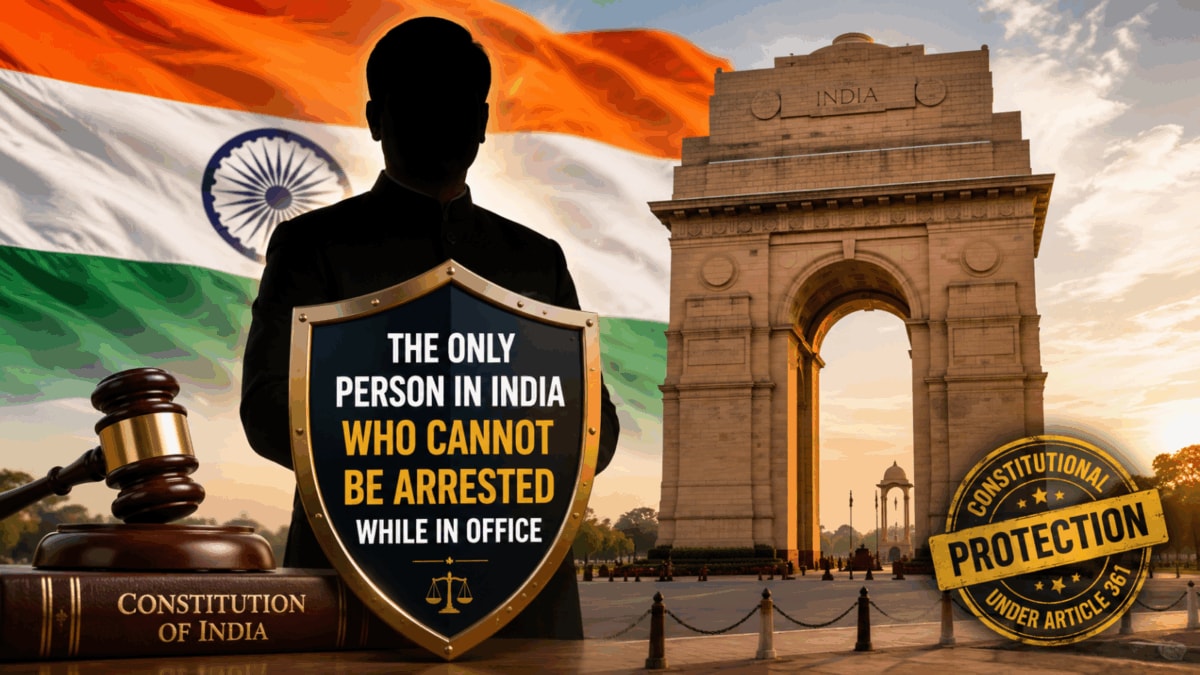
However, there is one constitutional office whose holder enjoys protection from arrest while serving in that role.
(Image-AI)2 / 6 Under Article 361 of the Constitution of India, the President of India is granted constitutional immunity during their term in office.
The same legal protection also extends to the Governors of states.
Once the President or Governor demits office, they become subject to the same legal process as any other citizen.
4 / 6 This constitutional protection is not available to other public office holders such as the Vice President, Members of Parliament (MPs), Members of Legislative Assemblies (MLAs), or judges.
Last Updated: June 27, 2026, 17:22 IST
1 / 6 In India, anyone accused of committing a crime is generally subject to investigation and legal action. However, there is one constitutional office whose holder enjoys protection from arrest while serving in that role. The provision often surprises many people, but it is clearly laid down in the Indian Constitution. (Image-AI)
2 / 6 Under Article 361 of the Constitution of India, the President of India is granted constitutional immunity during their term in office. The same legal protection also extends to the Governors of states. This safeguard is intended to ensure that these constitutional authorities can perform their official duties independently, without interference or undue pressure.
ADVERTISEMENT
3 / 6 It is important to note that this immunity is temporary, not permanent. Once the President or Governor demits office, they become subject to the same legal process as any other citizen. If required, criminal proceedings can then be initiated in accordance with the law.
4 / 6 This constitutional protection is not available to other public office holders such as the Vice President, Members of Parliament (MPs), Members of Legislative Assemblies (MLAs), or judges.
ADVERTISEMENT
5 / 6 Depending on the circumstances and applicable laws, they can face criminal prosecution and may also be arrested.