Delhi's air quality index, which runs from 0 to 500, rose from 117 on Saturday to 261 on Sunday.
By Monday morning the Central Pollution Control Board's (CPCB) hourly reading had crossed 300, the threshold for "very poor" air.
Most of the fires were lit in the evening, after the NASA satellite whose count is the standard measure of stubble burning had passed over the region.
The pollution came in by day On a bad morning in Delhi, pollution trapped overnight hangs low over the city.
Around midday on October 31, PM2.5 nearly doubled in three hours, the sharpest midday rise this season.
Delhi's air quality index, which runs from 0 to 500, rose from 117 on Saturday to 261 on Sunday. By Monday morning the Central Pollution Control Board's (CPCB) hourly reading had crossed 300, the threshold for "very poor" air. Monday's 4pm bulletin put the index at 324, the season's first very poor reading. The last very poor reading this year was on February 11.
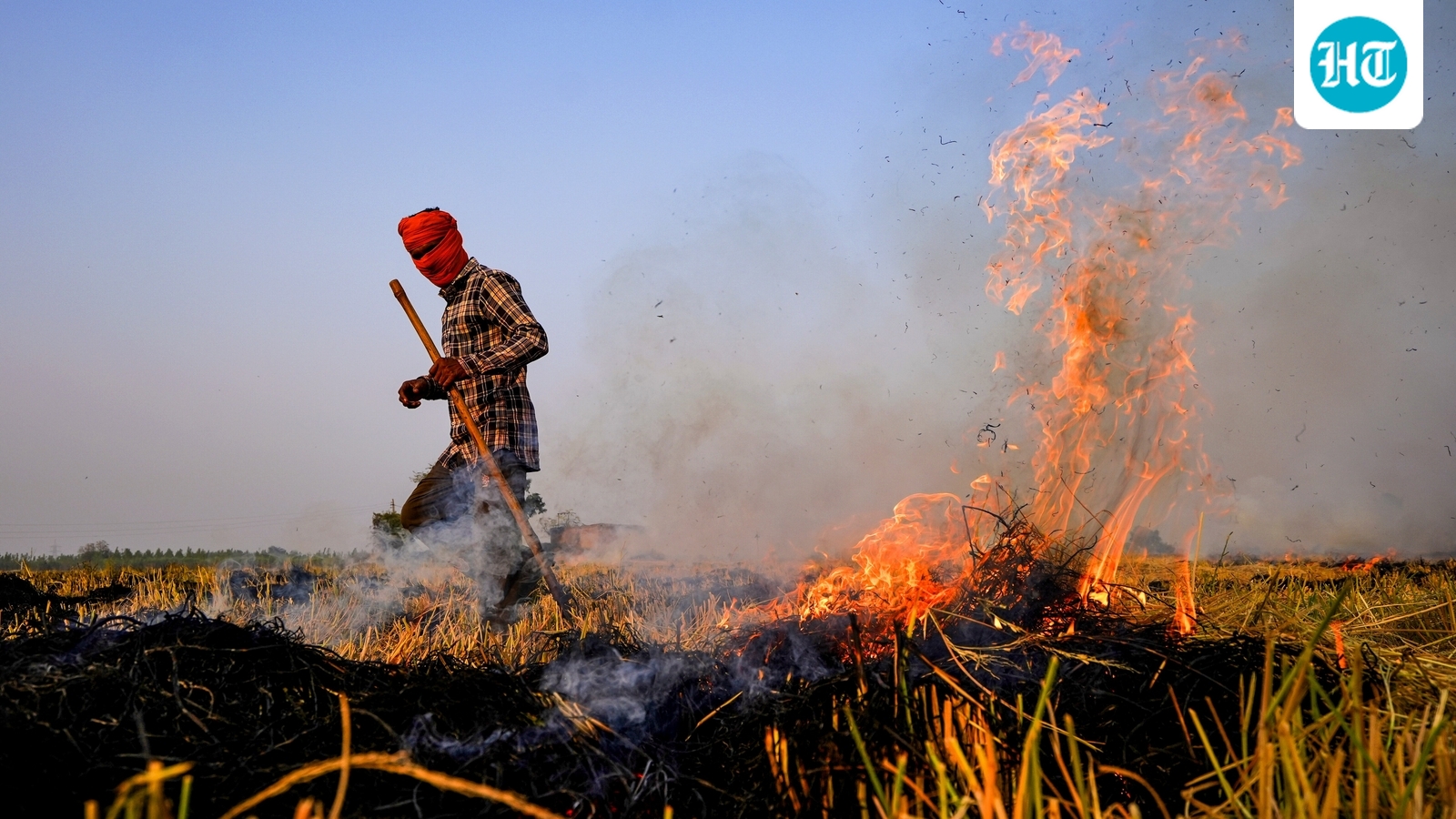
Smoke from farm fires in Punjab and Haryana drove the sharp rise in Delhi's pollution on Sunday, which pushed the air into the " very poor " range on Monday, an HT analysis of air-quality, weather and satellite data has found. Most of the fires were lit in the evening, after the NASA satellite whose count is the standard measure of stubble burning had passed over the region.
The weather in the run-up was poor, with little wind and a still night. But Delhi had the same weather on October 18 and 28, and the air on those nights was far cleaner. The clearest measure is PM2.5, the fine particles that do the most harm because they reach deep into the lungs. India's limit for PM2.5, averaged over a day, is 60 micrograms per cubic metre of air. On the night of November 1, from 10pm to 6am on Monday, it averaged 194, more than three times that limit. On the October nights it averaged 68 and 127.
HT compared November 1 with every night this season on three measures from the India Meteorological Department's weather balloon and the Safdarjung airfield: how well the afternoon wind cleared the air, how strong the dawn inversion was, and how still the night was. The inversion is a lid of warm air that stops air near the ground from mixing upwards.
On October 18 and 28, all three were as bad as on November 1, or worse. Both nights were fully calm, and the lid was at least as strong. Yet the air on the night of November 1 held nearly three times as much PM2.5 as on October 18, and about half as much again as on October 28.
Not a rebound from the rain Rain on October 29 and 30 washed the air, and the index fell to 60 on Friday. The index is an average of the past 24 hours, so as those clean hours dropped out of it, the index would have risen anyway.
The hourly readings, however, show that by the morning of November 1 the air was about as dirty as on the morning of October 28. The two days diverged after that.
The pollution came in by day On a bad morning in Delhi, pollution trapped overnight hangs low over the city. As the sun warms the ground, the air starts to churn, the pollution spreads upward, and readings at street level fall. Pollution from the city's own traffic, trapped overnight, thins out this way. On October 28, PM2.5 fell by nearly two-thirds by mid-afternoon. On October 18, it fell by more than half. On November 1, it did not fall at all: it was slightly higher in the afternoon than in the morning.
Readings hold steady only when the air higher up is as dirty as the air at street level, or when dirty air is blowing in. Either way, the extra pollution on November 1 came from outside Delhi.
It had begun to show a day earlier. Around midday on October 31, PM2.5 nearly doubled in three hours, the sharpest midday rise this season. It stayed high into Monday morning.
The extra pollution was also made up of the finest particles. On the night of November 1, they made up nearly six-tenths of all the particulate matter in the air by weight, against just over four-tenths on the October nights. Smoke is mostly fine; road and construction dust is coarse.