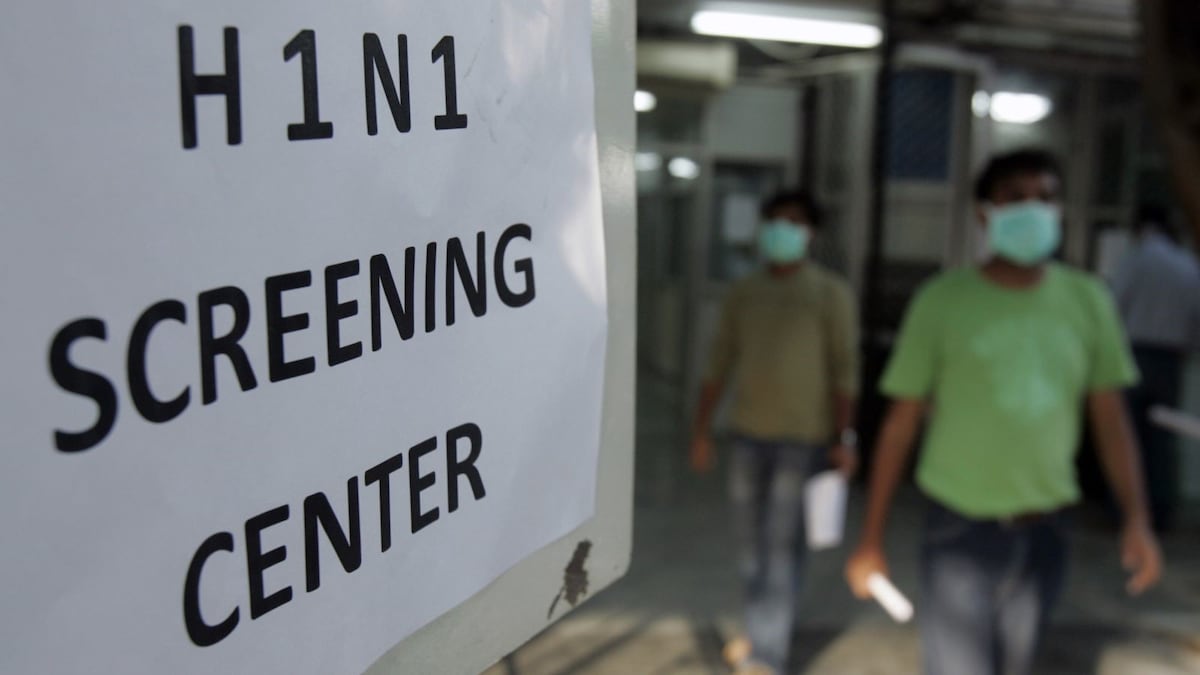
Delhi has reported a sharp rise in H1N1 cases this year, with infections climbing nearly six-fold compared to the same period last year.
A total of 1,344 H1N1 cases have been reported in Delhi so far this year as against 229 cases.
An AIIMS doctor said the monsoon and drop in temperature could create favourable conditions for influenza viruses to spread.The doctor said there has been a rise in patients with upper respiratory infections in the outpatient department in recent days.
Throat swab tests have also shown that some of these patients are positive for influenza, particularly H1N1 and influenza A.H1N1 is a type of influenza virus that causes a respiratory infection.
Children below five years of age are also more vulnerable.H1N1 can be prevented to some extent through annual flu vaccination.
Delhi has reported a sharp rise in H1N1 cases this year, with infections climbing nearly six-fold compared to the same period last year. A total of 1,344 H1N1 cases have been reported in Delhi so far this year as against 229 cases. An AIIMS doctor said the monsoon and drop in temperature could create favourable conditions for influenza viruses to spread.The doctor said there has been a rise in patients with upper respiratory infections in the outpatient department in recent days. Throat swab tests have also shown that some of these patients are positive for influenza, particularly H1N1 and influenza A.H1N1 is a type of influenza virus that causes a respiratory infection. It is commonly known as swine flu. The virus mainly affects the nose, throat and lungs and can spread when an infected person coughs, sneezes or comes into close contact with others.The common symptoms include fever, aching muscles, cough, sore throat, runny nose, watery or red eyes, tiredness, chills and sweats.Doctors are also being careful because H1N1 can cause symptoms similar to dengue and other seasonal infections. This can make it difficult to identify the exact cause of fever based on symptoms alone.According to an AIIMS doctor, elderly people, those with weakened immunity and people with conditions such as diabetes, hypertension, chronic kidney disease, chronic liver disease and cancer are at higher risk of influenza infection. Children below five years of age are also more vulnerable.H1N1 can be prevented to some extent through annual flu vaccination. The vaccine may not completely stop a person from getting infected, but it can reduce the risk of severe illness, complications and hospitalisation.Other precautions, such as washing hands regularly, covering your mouth while coughing or sneezing and avoiding close contact with sick people, can also help reduce the spread of the virus.