The body of the victim was strapped like an animal and dragged to the Chand Bagh Pulia.
Therefore, the barbarity with which this horrendous murder was committed is nauseatingly sickening,” it added.
Separate prison termsAll five convicts, Tahir Hussain, Nazim, Kasim, Javed and Anas, were sentenced to life imprisonment for murder under Section 302 read with Section 149 IPC.
The court also ordered payment of compensation to the victim’s family from the fines imposed on the convicts.
In March 2023, the trial court framed charges against 11 accused, including Hussain, for rioting, murder, abduction, criminal conspiracy and promoting enmity.
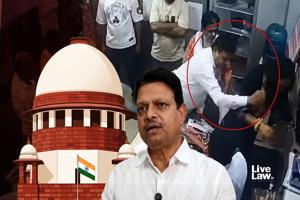
A Delhi court on Friday (July 31, 2026) sentenced former Aam Aadmi Party (AAP) Councillor Tahir Hussain, and four others to life imprisonment for the murder of Intelligence Bureau staffer Ankit Sharma during the 2020 North-East Delhi riots, describing the killing as one of “utmost brutality”. The court also observed that the victim was targeted “solely on account of his religion.”
“The present crime was committed during the communal violence that erupted in the wake of the protests against CAA/NRC. The manner in which it was committed was of the utmost brutality. The victim was sucked in by the murderous mob, baying for blood, solely on account of his religion,” Additional Sessions Judge Praveen Singh of the Karkardooma Court noted.
The judge added that the assault was so fierce, unrelenting, and from such close quarters that even in death, the body did not immediately slump to the ground.
‘Nauseatingly sickening’
“The savagery, however, did not end there. The body of the victim was strapped like an animal and dragged to the Chand Bagh Pulia. As if the hatred had still not been satiated, the dead body was thereafter thrown into the nala. Therefore, the barbarity with which this horrendous murder was committed is nauseatingly sickening,” it added.
Even as the court noted that the murder reflected “barbarity of immense magnitude” and hence satisfied the “crime test” for the “rarest of rare” category, it, however, declined capital punishment to the accused after finding that the prosecution had failed to establish that the convicts were beyond the possibility of reformation.
The court also held that although the prosecution had established the convicts’ guilt with the aid of Section 149 of the Indian Penal Code, no specific fatal act had been attributed to any individual accused during the murder.
The absence of an individually proved role, the court said, constituted a “huge mitigation” while considering whether the death penalty should be imposed.
The judge also rejected the prosecution’s attempt to rely at the sentencing stage on allegations that Hussain had instigated or led the mob, observing that those allegations had not been proved during trial.
The former AAP councillor had already been acquitted of conspiracy and abetment charges.
The court said sentencing had to rest on facts established by evidence rather than on suspicion or possibilities.
In another notable observation, the court treated the poor educational background of four of the five convicts as a mitigating circumstance in the specific context of the riots.
“...educational background of the convicts, particularly their susceptibility to manipulation in an atmosphere vitiated by misinformation and communal frenzy, constitutes a relevant mitigating circumstance while determining the appropriate sentence,” the court added.
Balancing the aggravating and mitigating circumstances, the court concluded that the convicts had not been shown to be beyond reformation and therefore did not deserve the death penalty. At the same time, it emphasised that they must face “the full force of the law” for the offences committed during the riots.
Separate prison terms
All five convicts, Tahir Hussain, Nazim, Kasim, Javed and Anas, were sentenced to life imprisonment for murder under Section 302 read with Section 149 IPC. They were also awarded separate prison terms for rioting, promoting enmity, unlawful assembly and abduction, with all sentences directed to run concurrently. The court also ordered payment of compensation to the victim’s family from the fines imposed on the convicts.
The case relates to the First Information Report registered at the Dayalpur police station on the complaint of Sharma’s father, who reported him missing after he failed to return home from a trip to buy groceries during the riots. Sharma’s body was later recovered from a drain near Chand Bagh Pulia and he was declared brought dead at the Guru Teg Bahadur Hospital. In his complaint, he named Hussain and others.
During the course of hearing which lasted for over six years, the prosecution examined 91 witnesses during the trial and relied on eyewitness accounts, forensic evidence and call detail records to establish its case.
In March 2023, the trial court framed charges against 11 accused, including Hussain, for rioting, murder, abduction, criminal conspiracy and promoting enmity.
Five of them were convicted on July 14, 2026.