News world ‘Declaration Of War On All Nations’: Iran’s Fiery Response To New US Sanctions, Warns Of ‘Colonialism’‘Declaration Of War On All Nations’: Iran’s Fiery Response To New US Sanctions, Warns Of ‘Colonialism’Published By :,Last Updated: August 22, 2026, 07:35 ISTIran warned other nations that US sanctions targeting Tehran threaten their sovereignty too, cautioning that yielding to such pressure could mark return to “full-scale colonialism”Rapid ReadEsmail Baghaei, from Iran's Foreign Ministry, has said that Trump's economic coercion efforts amount to a 'return of full-scale colonialism'.
Iran Says Sanctions Threaten Sovereignty Of All NationsBaghaei said secondary sanctions imposed by one country on entities in other sovereign states had no basis in international law.
Iran's Foreign Ministry spokesperson, Esmaeil Baghaei, has warned that new US sanctions could lead to a return to "full-scale colonialism" by threatening the sovereignty of all independent nations.
He stated that secondary sanctions imposed by one country on entities in other sovereign states lack a basis in international law.
What impact will this have on international trade relations?
News world ‘Declaration Of War On All Nations’: Iran’s Fiery Response To New US Sanctions, Warns Of ‘Colonialism’
‘Declaration Of War On All Nations’: Iran’s Fiery Response To New US Sanctions, Warns Of ‘Colonialism’
Published By :
,
Last Updated: August 22, 2026, 07:35 IST
Iran warned other nations that US sanctions targeting Tehran threaten their sovereignty too, cautioning that yielding to such pressure could mark return to “full-scale colonialism”
Rapid Read
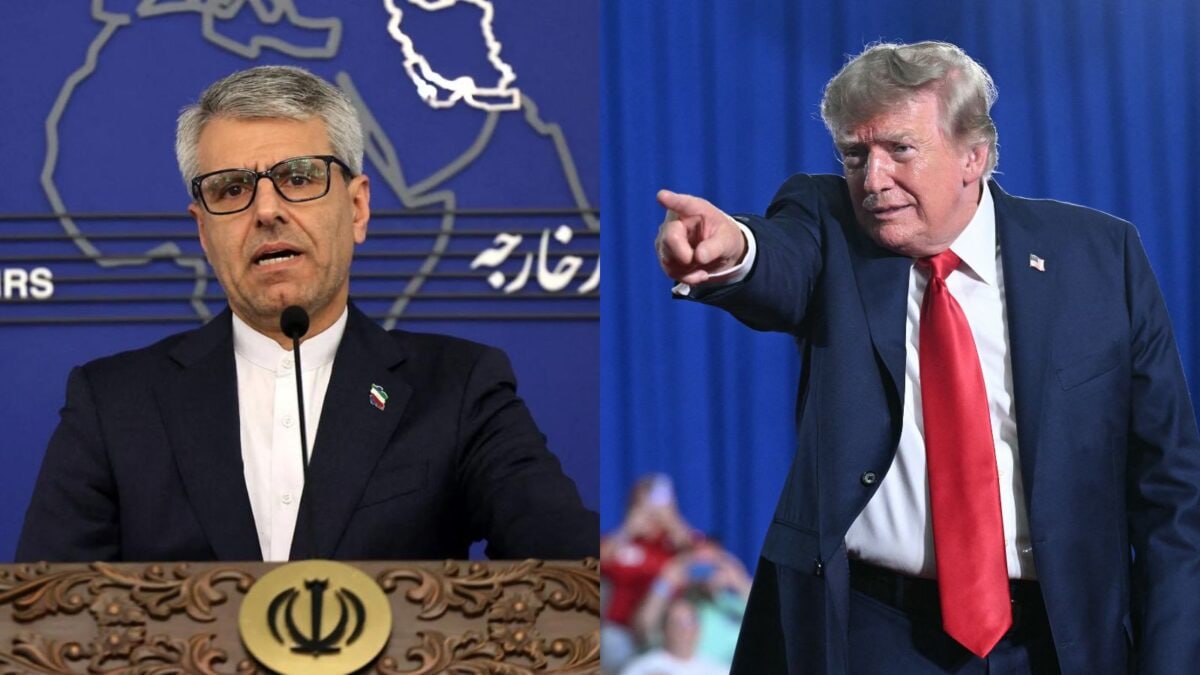
Esmail Baghaei, from Iran's Foreign Ministry, has said that Trump's economic coercion efforts amount to a 'return of full-scale colonialism'. (Image source: X/ @TheCradleMedia; AFP)
Iran has warned that new US sanctions targeting Tehran are not just an issue for Iran but threaten the sovereignty of all independent nations, with the country’s Foreign Ministry spokesperson Esmaeil Baghaei describing them as a possible return to “blatant, full-scale colonialism".
Baghaei said the measures went beyond an economic war against a single country. Instead, he said, they represented an attempt by the United States to extend its authority over other independent UN member states. The Iranian spokesperson said Washington was seeking to dictate how governments, banks, businesses and airports in other countries conducted trade with Iran.
“No government has the right to force foreign banks, enterprises, or airports, each operating under the exclusive jurisdiction of their own sovereignty, to refrain from engaging in legitimate trade with a third country," Baghaei said, according to Iran’s Fars news agency.
He warned that countries giving in to such pressure risked losing control over their own economic and political decisions.
The Oxford Dictionary defines colonialism as, “the policy or practice of acquiring full or partial political control over another country, occupying it with settlers, and exploiting it economically."
Iran Says Sanctions Threaten Sovereignty Of All Nations
Baghaei said secondary sanctions imposed by one country on entities in other sovereign states had no basis in international law.
“Such secondary sanctions have no basis in international law," he was quoted saying. He also said that they “violate the fundamental principle of sovereign equality enshrined in Article 2, Paragraph 1 of the UN Charter".
He described economic coercion as an “international offence and a wrongful act" and said the use of sanctions alongside a naval blockade would further threaten the sovereignty of other countries.
According to Baghaei, such measures could make the sovereignty of states conditional on the decisions of another power. He said this would be a broader threat to the international system, rather than merely a dispute between Washington and Tehran.
‘Total Erosion Of National Sovereignty’
Baghaei warned other countries against accepting what he described as US intimidation, saying compliance could eventually result in “the total erosion of national sovereignty".
He said the trend would amount to “a catastrophic return to blatant, full-scale colonialism". The remarks appeared aimed at framing the new US sanctions as an issue with consequences beyond Iran, with Tehran arguing that other nations could also face pressure over their trade and economic ties.
Iran has repeatedly opposed US secondary sanctions, which can target foreign entities doing business with sanctioned Iranian individuals, companies or sectors. Baghaei’s latest comments, however, sought to cast the measures as a broader challenge to the sovereignty and independence of all states.
News18 Newsletter Handpicked stories, in your inbox A newsletter with the best of our journalism submit
Key Questions Answered Powered by Ask News18 Will other nations support Iran's stance against US sanctions? While Iran has framed US sanctions as a threat to the sovereignty of all nations and a form of colonialism, aiming to garner international support, the sources do not explicitly state whether other nations will support Iran's stance. However, the US has warned allies and China that countries refusing to support its campaign could face consequences, and has threatened severe economic repercussions for any country, company, or institution that trades with or aids Iran's economy. Could these sanctions lead to a new form of global colonialism? Iran's Foreign Ministry spokesperson, Esmaeil Baghaei, has warned that new US sanctions could lead to a return to "full-scale colonialism" by threatening the sovereignty of all independent nations. He stated that secondary sanctions imposed by one country on entities in other sovereign states lack a basis in international law. What impact will this have on international trade relations? The United Arab Emirates (UAE) has suspended all trade, commercial exchanges, and financial transactions with Iran until further notice. This decision was made after the UAE accused Iran of launching two ballistic missiles towards its territory, and it raises concerns about regional security and global energy supplies. The Strait of Hormuz, a crucial oil shipping route, has already seen reduced traffic since the conflict began. Powered by Ask News18
Location : Tehran, Iran
First Published: August 22, 2026, 07:29 IST
Disclaimer: Comments reflect users’ views, not News18’s. Please keep discussions respectful and constructive. Abusive, defamatory, or illegal comments will be removed. News18 may disable any comment at its discretion. By posting, you agree to our Terms of Use and Privacy Policy Loading comments...