Filed by one of the petitioners in the matter, Dr Jaya Thakur, the plea invokes the ground of "reasonable apprehension of bias and propriety".
It states that after the pronouncement of the split verdict, the petitioner became aware of Justice SC Sharma's son's connection with ECI from a LiveLaw article titled 'Propriety Questions Emerge As Son Of Justice SC Sharma, Who Heard ECI & Medha Roopam Cases, Is Election Commission's Lawyer'.
It is further mentioned that the petitioner verified the claims made in the aforementioned article from the MP High Court website, and found that Justice SC Sharma's son is empaneled with ECI since July 10, 2024.
To recap, a 2-judge bench of Justice Dipankar Datta and Justice SC Sharma recently referred the petitions challenging the 2023 law to a larger bench.
While Justice Datta opined the Union's demand for a larger bench reference was unwarranted, Justice Sharma held otherwise.
A curative petition has been filed before the Supreme Court seeking recall of the September 23 split verdict on the validity of the Chief Election Commissioner and Other Election Commissioners (Appointment, Conditions of Service and Term of Office) Act, 2023.
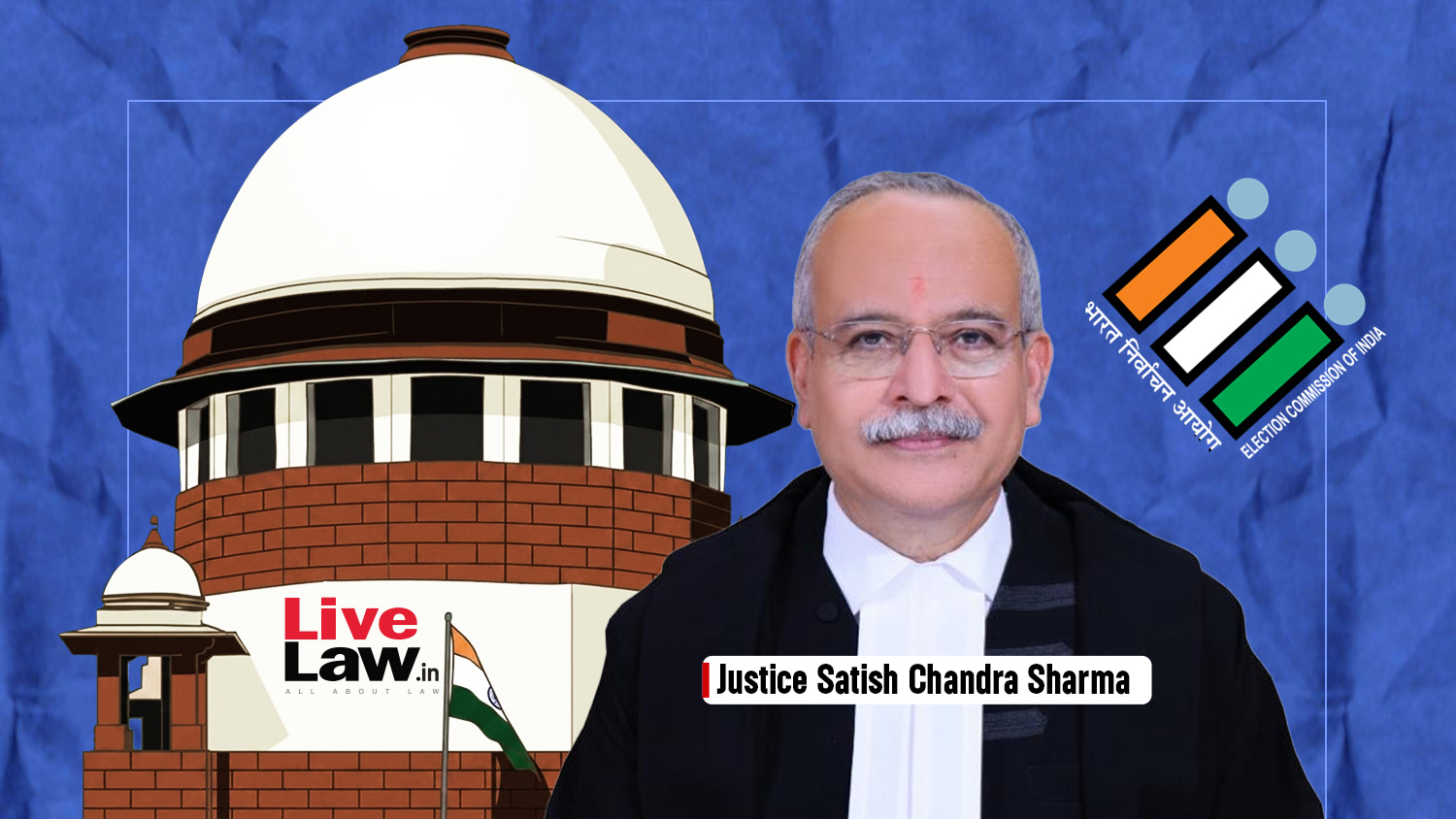
The plea comes in the wake of judicial propriety concerns arising from the discovery that the son of Justice Satish Chandra Sharma, who was part of the bench that delivered the split verdict, is Election Commission's standing counsel before the Madhya Pradesh High Court.
Filed by one of the petitioners in the matter, Dr Jaya Thakur, the plea invokes the ground of "reasonable apprehension of bias and propriety". It states that after the pronouncement of the split verdict, the petitioner became aware of Justice SC Sharma's son's connection with ECI from a LiveLaw article titled 'Propriety Questions Emerge As Son Of Justice SC Sharma, Who Heard ECI & Medha Roopam Cases, Is Election Commission's Lawyer'.
It is contended that the case is fully covered by the 'reasonable likelihood of bias' and 'real danger test' laid down by the Supreme Court and that Justice SC Sharma's presence on the bench vitiated the September 23 decision.
It is further mentioned that the petitioner verified the claims made in the aforementioned article from the MP High Court website, and found that Justice SC Sharma's son is empaneled with ECI since July 10, 2024.
"In the respectful submission of the petitioner, there is a direct conflict of interest in the professional duty of Mr. Siddharth Sharma on behalf of the Election Commission of India and adjudication of lis challenging the appointment of Election Commissioners by Hon'ble Mr. Justice Satish Chandra Sharma...Because justice should not only be done, but manifestly and undoubtedly be seen to be done. It is submitted that a Judge cannot decide a case in which a family member of the judge is representing one of the parties, may be in a different fora...the propriety demanded that Hon'ble Mr Justice Satish Chandra Sharma ought to have disclosed that his Lordship's son Mr. Siddharth Sharma is the standing counsel of Election Commission of India in the Madhya Pradesh High Court before the commencement of the proceedings", the petition states.
The petition has been filed, through Advocate-on-Record Varun Thakur, under the inherent jurisdiction of the Court under Article 32 read with Article 142 of the Constitution and Order 48 Rule 1 of the Supreme Court Rules, 2013 in terms of the guidelines laid down in Rupa Ashok Hurra v. Ashok Hurra .
The petitioner has sought exemption from first filing a review, arguing that it would be listed before the same bench and thus "no useful purpose would be served".
The petition has been certified by Senior Advocate Vijay Hansaria.
To recap, a 2-judge bench of Justice Dipankar Datta and Justice SC Sharma recently referred the petitions challenging the 2023 law to a larger bench.
Even though they disagreed on whether the matter should be referred, they ultimately ordered that the matter be placed before the CJI for the constitution of a Constitution Bench of appropriate strength, to avoid further delay.
The bench observed that referring the matter to a 3-judge bench on the preliminary point of reference would be a time-consuming exercise. While Justice Datta opined the Union's demand for a larger bench reference was unwarranted, Justice Sharma held otherwise.
Justice Datta also expressed concerns about the executive interference in the judges appointment process, while rejecting the Union's argument that the executive-laden body can pick ECs like the judges appoint judges.