One group of these packaging machines, the Brahma complex, ramped up in the diapause eggs.
Fuel for dormancyAlongside the chromatin changes, the diapause eggs also ramped up their RNA-processing machinery.
“This suggests that diapause eggs generate energy to sustain long-term survival,” said Shimizu.
One of the clearest brakes hit a growth-promoting pathway called TGF-beta signaling, which the diapause eggs shut off around 40 hours.
How the mother’s decision unfoldsTaken together, the findings show that the mother’s decision unfolds in stages.
A new study has found that cricket mothers set the developmental course of their offspring before the eggs are even laid, reading the length of the day to make the call.
Mothers that sense the shortening days of autumn lay eggs that pause partway through development and wait out the winter.
Meanwhile, mothers in long summer days lay eggs that develop straight to hatching.
The work shows how a parent’s read on the seasons gets written into a developing embryo weeks before that embryo can sense anything for itself.
The study also identifies genes behind a survival strategy shared by many crop pests, opening the door to new ways of controlling them.
Reading the seasons
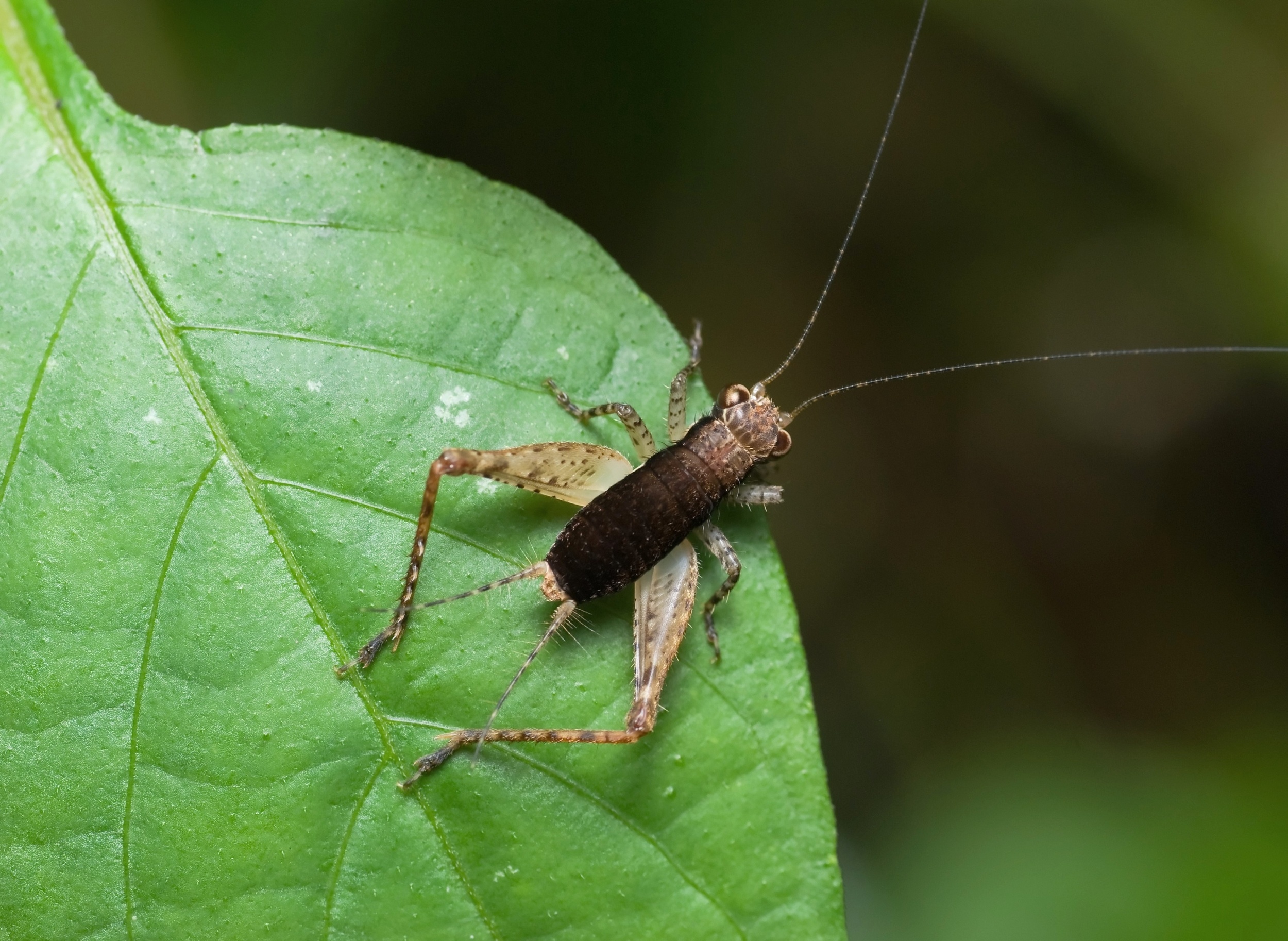
The animal at the center of the work is the band-legged ground cricket (Dianemobius nigrofasciatus), a common insect across Japan that fits two generations into a year.
Adults that mature in long summer days breed at once, and their eggs hatch within days.
Autumn is different. Crickets coming of age under its shorter days lay eggs that halt soon after being deposited and stay dormant until spring.
That winter pause is called diapause, a dormant state many insects use to survive seasons too harsh for growth.
A strikingly reliable signal
What sets the band-legged ground cricket apart is that the egg never senses the seasons.
The mother does, committing her offspring to one developmental path or the other based on the day length she experienced – an arrangement biologists call the maternal effect.
The signal was strikingly reliable. About 96 percent of eggs from short-day mothers entered diapause.
By contrast, only around 15 percent of eggs from long-day mothers did so, even though all the eggs were raised under identical conditions.
A team led by Professor Shin G. Goto of the Graduate School of Science at Osaka Metropolitan University (OMU) set out to trace how that maternal decision plays out inside the egg. They were after the steps, not just the outcome.
Genes begin to diverge
The researchers assembled the cricket’s full genome – about 1.45 billion base pairs and more than 20,000 genes.
They then tracked which genes switched on at five points across the first three days after laying. At each step, the team compared diapause-bound eggs against directly developing ones.
The researchers expected a sharp early split. Because the instruction comes from the mother, the team assumed the two kinds of eggs would already look molecularly distinct at the first reading, 12 hours in.
They did not. Barely 30 genes were behaving differently between the groups.
The differences grew gradually over time. Only about 120 genes were behaving differently after 24 hours, but by 72 hours nearly 2,000 genes had diverged as the two kinds of eggs finally began to look different.
Rather than being triggered by a single switch, diapause appears to develop step by step.
An early lockdown
The first real divergence appeared at 24 hours, and not where a developmental decision was expected. In the diapause-bound eggs, genes that control chromatin remodeling switched on.
Chromatin is the packaging that winds DNA around proteins, and how tightly a stretch is wound decides whether the genes there can be read.
One group of these packaging machines, the Brahma complex, ramped up in the diapause eggs.
When the team mapped which parts of the genome lay open or closed, the closed regions held genes for building nerves and dividing cells – the very machinery a growing embryo needs.
The timing carries the weight. This closing came a full day before the eggs showed any outward difference, and before the hormones that usually drive insect growth had changed.
The researchers read it as a pre-emptive move rather than a reaction to a signal already present.
When the real decision is made
Professor Goto, who led the study, told Earth.com that the real decision is made at the molecular level long before anything is visible.
The two egg types stay identical to the eye for their first 56 hours, yet the chromatin-remodeling genes come on as early as 24 hours after laying.
Professor Goto treats that epigenetic remodeling as the primary switch that locks the embryo into dormancy, well ahead of the arrest itself.
That same 24-hour window is also when a brief burst of warmth can still flip an egg’s fate from dormancy back toward direct development.
The overlap hints that this early chromatin step is where the decision stays changeable, and where it finally sets.
Similar chromatin rewiring also drives dormancy in other animals.
In a desert fish whose embryos can pause for months in dried mud, a study traced diapause to changes in which genes remain open and active.
Fuel for dormancy
Alongside the chromatin changes, the diapause eggs also ramped up their RNA-processing machinery.
These tools, which edit and finish genetic messages, reached full output around 24 hours, about 16 hours earlier than in directly developing eggs.
That is a 16-hour head start. Running early likely lets the egg stockpile stable messages that outlast the pause and let development restart quickly when winter breaks.
The larger change came later. From about 40 hours on, the diapause eggs reworked their metabolism – turning away from building tissue and toward breaking down amino acids and making sugar to burn.
Genes for that fuel-making route climbed through the final day, while the machinery for making and recycling proteins was turned down to save resources.
Energy to sustain survival
Dr. Yuta Shimizu, who co-led the work, sees the egg settling into a holding state that keeps it alive without moving forward.
“This suggests that diapause eggs generate energy to sustain long-term survival,” said Shimizu.
The eggs draw on raw materials their mother packed in, rationing the supply to last months rather than spending it on growth.
One of the clearest brakes hit a growth-promoting pathway called TGF-beta signaling, which the diapause eggs shut off around 40 hours.
Growth needs that pathway on. Cutting it is a known way for insects to halt development; in one moth, a paper showed that silencing it alone can drive the pupal form into dormancy.
How the mother’s decision unfolds
Taken together, the findings show that the mother’s decision unfolds in stages.
First, changes to chromatin shut down genes needed for growth. Then the egg shifts its metabolism to prepare for a long period of dormancy.
Throughout the process, the egg never has to sense the changing seasons for itself.
The most concrete payoff is in farming, where this cricket is harmless but the same dormancy program runs in species that are not.
“Understanding the genes and mechanisms that regulate diapause may lead to the development of novel insecticides and new pest management strategies, such as delaying pest emergence until after crop harvest,” said Goto.
Finding the missing signal
Speaking with Earth.com, Professor Goto cautioned that the research is still in its early stages.
The team has identified key regulators, including the Brahma complex, but they still do not know what signal mothers pass to their eggs or how those genes are controlled.
The newly assembled chromosome-scale genome will serve as a roadmap for finding those answers and, eventually, more precise targets for pest control.
Many pests rely on the same maternal trigger, he added, and experiments on several other insect species are already under way with promising early results.
The study is published in the journal Communications Biology.
—–
Like what you read? Subscribe to our newsletter for engaging articles, exclusive content, and the latest updates.
Check us out on EarthSnap, a free app brought to you by Eric Ralls and Earth.com.
—–