Now, researchers are turning their attention to another organ that quietly influences heart health: skeletal muscle.
He says healthy muscles also make the arteries more flexible and improve blood flow, contributing to better cardiovascular function.
“People with strong thigh and calf muscles are less likely to have heart attacks than those with weaker leg muscles,” says Dr Vijay.
Another study called the Copenhagen City Heart Study (2025) showed that maintaining good muscle health is an important component of maintaining heart health.
While walking remains one of the best exercises for heart health, experts say resistance training is equally important.
Traditionally, doctors said that preventing heart disease centred on lowering cholesterol, controlling blood pressure, and managing diabetes. Now, researchers are turning their attention to another organ that quietly influences heart health: skeletal muscle.
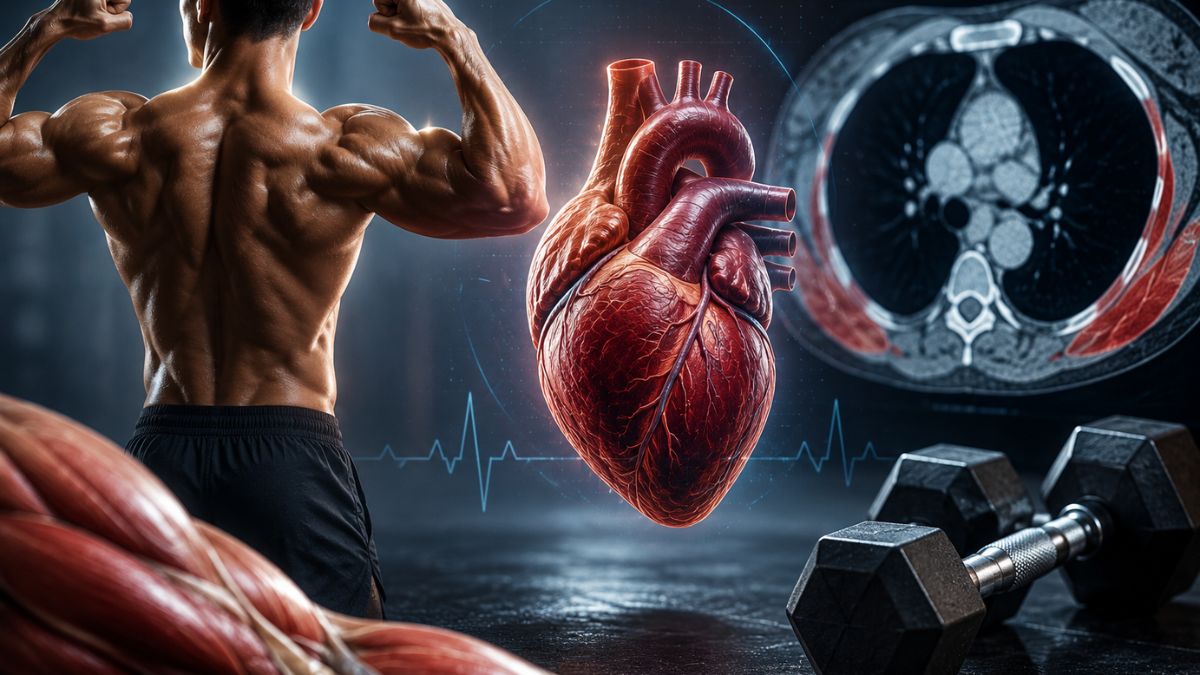
A study published in Radiology has found that people with healthier chest and back muscles are significantly less likely to suffer a heart attack or die over the next decade. Using artificial intelligence to analyse routine coronary CT scans, researchers discovered that muscle health was a powerful predictor of cardiovascular outcomes.
STORY CONTINUES BELOW THIS AD
The findings add to the already present evidence that muscles are far more than structures that help us move. They regulate metabolism, improve insulin sensitivity, reduce inflammation, and produce chemicals that protect the heart.
More than a marker of fitness
Dr K Srinath Reddy, eminent cardiologist and founder chairman of Public Health Foundation of India, says, “The higher mass in chest and back muscles may be protective against the risk of heart attack for several reasons: they indicate greater physical activity; lower total body fat and abdominal fat; greater lung volume and breathing capacity; better glucose tolerance and lipid profile.
Dr Vijaykumar D, Former Additional Professor – AIIMS, Delhi and Director – SV Ortho Care, Bengaluru, says the study is part of a broader story. “The chest, thigh and calf are the three major muscle groups in the body. Their health is an indirect marker of overall metabolic health and, therefore, heart health.”
STORY CONTINUES BELOW THIS AD
He says that, unlike fat tissue, skeletal muscle is metabolically active. Every time they contract, they consume glucose, helping regulate blood sugar and improve insulin sensitivity—both crucial for preventing diabetes and cardiovascular disease.
“These muscles are the body’s protein reserve. When they contract, they don’t just help us move—they consume glucose, improve insulin sensitivity and regulate metabolism,” Dr Vijaykumar adds.
People who regularly exercise also tend to have lower abdominal fat, healthier cholesterol levels, better lung capacity, healthier diets, and are less likely to smoke—factors that collectively reduce the risk of heart disease. “Persons who regularly exercise are also more health-conscious and consume healthier diets, while avoiding tobacco smoke exposure. Healthy habits tend to cluster together” Dr Reddy adds.
STORY CONTINUES BELOW THIS AD
Why muscles protect the heart
According to Dr Vijaykumar, the protective effect of muscle extends well beyond burning calories.
“When muscles contract, they release signalling proteins known as myokines,” he explains. “One of the important ones is interleukin-6 (IL-6), which is released during exercise. These molecules help regulate metabolism, reduce inflammation, improve blood circulation and decrease stress on the heart.”
Scientists increasingly recognise skeletal muscle as an endocrine organ that communicates with the heart, liver and other tissues through these chemical messengers.
He says healthy muscles also make the arteries more flexible and improve blood flow, contributing to better cardiovascular function.
Why the legs matter as much as the chest
Although the latest study focused on the chest and back, Dr Vijay says evidence supporting the importance of leg muscles, such as the calves and thighs, has been accumulating for years.
“The calf muscles are often called the body’s second heart because every time they contract, they help pump blood back towards the heart and improve circulation,” he says.
STORY CONTINUES BELOW THIS AD
He adds that the soleus, one of the major calf muscles, plays a particularly important role in maintaining healthy blood circulation throughout the day.
The thighs are equally important. As the body’s largest muscle group, they consume enormous amounts of glucose during exercise, improving insulin sensitivity and reducing one of the biggest drivers of cardiovascular disease.
Research has consistently linked stronger thigh muscles with lower rates of diabetes, cardiovascular disease, and premature death. A study published in the American Journal of Medicine showed that a 10 percent increase in quadriceps strength, a powerful group of four muscles located on the front of your thigh, reduced overall mortality by 23 percent and cardiovascular mortality by 34 percent.
“People with strong thigh and calf muscles are less likely to have heart attacks than those with weaker leg muscles,” says Dr Vijay.
Another study called the Copenhagen City Heart Study (2025) showed that maintaining good muscle health is an important component of maintaining heart health.
STORY CONTINUES BELOW THIS AD
Dr Vijay says loss of muscle mass, he adds, is often an early warning sign of declining health.
“If someone is losing muscle in the chest, thighs or calves, it can be an indirect sign that the person is becoming metabolically unhealthy or seriously ill.”
Resistance training deserves equal attention.
While walking remains one of the best exercises for heart health, experts say resistance training is equally important.
Strengthening the body’s largest muscle groups improves glucose control, preserves muscle mass with ageing and lowers cardiovascular risk.
Dr Vijay recommends a simple routine that requires little equipment.
STORY CONTINUES BELOW THIS AD
“We always say: one squat, one push-up and one heel raise is one step towards a healthy heart.”
For beginners, he suggests wall push-ups instead of floor push-ups.
“You don’t need a gym. Thirty squats, thirty push-ups, and thirty heel raises every day are enough for most people to begin strengthening these muscles.”
Experts say people have to look beyond the weighing scale as a healthy heart begins long before the heartbeat—it begins in the muscles that keep the body moving.

)