This editorial is based on “Podium finish: On India at the Glasgow Commonwealth Games" published in The Hindu on 10/08/2026.
India secured a commendable 4th-place finish at the Glasgow 2026 Commonwealth Games with 39 medals, demonstrating remarkable resilience despite the exclusion of several traditional sports.
What are the Key Highlights of India’s Performance in Commonwealth Games 2026?
Expansion into Less Traditional Disciplines: India recorded important breakthroughs outside its conventional medal base: Asmita Dey became India’s first Commonwealth Games judo champion.
Since 2018, more than 63,000 athletes have participated in different Khelo India Games , indicating the emergence of a nationwide competition platform.
This editorial is based on “Podium finish: On India at the Glasgow Commonwealth Games" published in The Hindu on 10/08/2026. The article highlights India's fourth-place finish at Glasgow 2026 despite omitting traditional sports. Stellar performances in boxing, judo, and para-sports proved resilience, urging systemic shifts toward grassroots infrastructure and physical literacy for sustainable global sporting success.
India secured a commendable 4th-place finish at the Glasgow 2026 Commonwealth Games with 39 medals, demonstrating remarkable resilience despite the exclusion of several traditional sports. While historic campaigns in boxing and para-sports highlighted emerging talent, deep-seated systemic challenges like grassroots infrastructure deficits and cultural academic pressures remain. Overcoming these hurdles requires shifting focus from isolated elite champion-hunting to building a robust, community-driven sporting culture.
What are the Key Highlights of India’s Performance in Commonwealth Games 2026?
Strong Performance Despite an Unfavourable Sports Programme: India finished 4 th at the 2026 Commonwealth Games in Glasgow, winning 39 medals—13 gold, 17 silver and 9 bronze even though several historically successful disciplines were not included (e.g., Shooting, wrestling, badminton, table tennis and hockey). Historically, shooting, wrestling and weightlifting have together accounted for around two-thirds of India’s Commonwealth medals, while badminton, boxing and table tennis have contributed another significant share. Of these traditional strengths, only weightlifting and boxing were available in Glasgow. This makes the fourth-place finish more valuable than a direct comparison with previous editions would suggest.
Historic Boxing Campaign: Indian boxers won 10 medals, including an unprecedented 7 gold medals . India topped the boxing medal table for the first time and recorded the highest number of boxing gold medals won by any country at a single Commonwealth Games. Arundhati Choudhary , who had won three consecutive Khelo India gold medals, emerged as the women’s 70-kg Commonwealth champion .
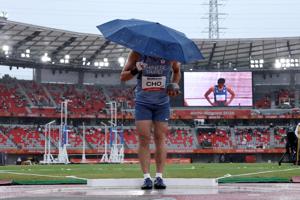
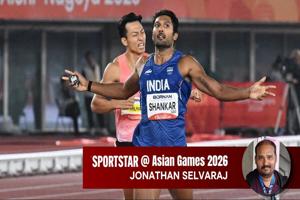
Expansion into Less Traditional Disciplines: India recorded important breakthroughs outside its conventional medal base: Asmita Dey became India’s first Commonwealth Games judo champion. Harsh Singh added another judo gold, indicating growing depth in the sport. Gulveer Singh became the first Indian track-and-field athlete to win two individual medals at a single Commonwealth Games. Tejaswin Shankar won India’s first Commonwealth decathlon medal. These achievements suggest that India’s medal geography is gradually widening , although swimming, cycling, gymnastics and team sports continue to require greater development.
Growing Contribution of Women: Women accounted for approximately 46% of India’s Glasgow medal tally . This represents a major historical change from 1978 , when Ami Ghia and Kanwal Thakar Singh won India’s first Commonwealth women’s medal in badminton doubles.
Stronger Para-Sport Integration: India’s para-athletes won 7 medals at Glasgow. Their success builds upon India’s record performance of 29 medals at the Paris Paralympics, 2024 , up from 19 at Tokyo 2020 and four at Rio 2016. Glasgow included 6 integrated para-sports , demonstrating the value of organising able-bodied and para events within a common sporting platform.
Khelo India-to-International Podium Pathway: Several Glasgow medallists had participated in Khelo India competitions. Arundhati Choudhary and Asmita Dey illustrate how domestic competition can provide exposure, confidence and identification opportunities before athletes enter the international system. Since 2018, more than 63,000 athletes have participated in different Khelo India Games , indicating the emergence of a nationwide competition platform.
What are the Key Challenges Confronting India’s Sports Ecosystem?
Broad Participation before Specialisation: In Australia, children commonly experience several sports before finding their specialisation. Programmes such as Little Athletics introduce children from around 5 years of age to age-appropriate running, jumping, walking and throwing activities. Events are modified according to children’s age, ability and developmental stage. India often adopts the opposite model. Young athletes may be pushed prematurely towards competition in a single discipline , increasing the risk of injuries, psychological pressure and dropout.
Strong University Pathway: Many Australian athletes combine domestic development with training and competition at American universities . University systems provide high-quality coaching, scholarships, sports science and regular competition. Indian universities generally treat sports as an extracurricular activity rather than an institutional pathway to elite performance. The Khelo India University Games are an important beginning but need year-round university leagues and scholarships.
Inadequate Grassroots Sports Infrastructure and Talent Pipelines: Unlike Western nations, which maintain robust school- and community-level sports infrastructure, India suffers from a severe deficit of local training facilities. Sports audits reveal a critical absence of basic developmental infrastructure in India's rural and semi-urban areas where the majority of India's population resides. Meanwhile, elite initiatives like Target Olympic Podium Scheme (TOPS) concentrate capital heavily on established champions, creating a massive support gap at the grassroots level.
Low Public Investment Relative to India’s Sporting Ambitions: Although Union expenditure on sports has increased substantially, the Ministry of Youth Affairs and Sports received only ₹4,479 crore in Budget 2026–27. Given India’s population, grassroots infrastructure gaps and ambitions to become a top-10 sporting nation by 2036, the policy issue is not merely higher allocations but efficient expenditure across mass participation, coaching, sports science and elite development.
Cultural Monoculture and the Cricket Hegemony: India’s sporting ecosystem suffers from extreme disproportion in attention. Cricket dominates corporate sponsorships, media coverage, and public fanaticism , starving Olympic disciplines (such as gymnastics, rowing, fencing, and swimming) of capital and commercial visibility. While elite cricketers enjoy lucrative contracts , athletes in other disciplines face severe financial insecurity , deterring families from pursuing alternative sports. For instance, despite winning a historic 2018 Asian Games bronze medal, Sepak Takraw player Harish Kumar was forced to run a roadside tea stall in Delhi due to a lack of stable income.
Societal Pressure, Academic Dogma, and Risk Aversion: Indian society has historically viewed academics (engineering, medicine, civil services) as the only secure career paths . Sports are traditionally treated as a recreational distraction rather than a viable, full-time profession. School systems rarely accommodate professional athletic training schedules, forcing children to choose between board exams and sports at an early age. Parents face immense peer pressure to steer children away from physical education due to the lack of a guaranteed social safety net o r career security for retired athletes.
Bureaucratic Red Tape, Mismanagement, and Federation Politics: While successful sporting systems provide coaches and athletes with operational flexibility while holding institutions accountable for outcomes and athlete welfare, India's National Sports Federations are plagued by administrative inefficiencies, corruption , and political interference . Frequent disputes, delayed funding, and bureaucratic hurdles force athletes to fight administrative apathy rather than focus on training, disrupting years of preparation.
Late Integration of Modern Sports Science and Analytics: Modern Olympic success relies heavily on sports science—including biomechanics, advanced nutrition, data analytics, sports psychology , and specialized injury rehabilitation. Historically, India treated sports science as an afterthought , relying on archaic training methodologies. While elite hubs like the Inspire Institute of Sport (IIS) and select National Centres of Excellence (NCOEs) have begun bridging this gap, the vast majority of state-run sports academies still lack full-time sports scientists, physiotherapists, and data analysts, putting Indian athletes at a technical disadvantage against well-funded Western and East Asian contingents.
What Measures can be Taken to Strengthen India’s Sports Ecosystem?
Grassroots Development and Physical Literacy: Integrate physical literacy with the National Education Policy 2020 , teacher training, and school reporting without high-pressure testing. Focus primary-school years on fundamental movement skills (running, jumping, throwing, balance, and coordination) via structured physical education, measuring participation and improvement rather than competitive performance. Adopt structured frameworks (similar to Canada’s Sport Development Framework) connecting basic skill acquisition with progressively higher competitive stages , defining appropriate ages for entry, diversification, and elite specialisation.
Governance, District Ecosystems, and Funding Reform: Map schools, playing fields, Khelo India Centres, private academies, and traditional strengths under unified district sports plans that connect talent identification with coaching, competitions, and sports science. Use cluster-level shared facilities where individual schools lack grounds, and tie school infrastructure grants to recurring expenditures for equipment, maintenance , and coaching. Base financial support on transparent indicators—such as participation growth, women's inclusion, para-sport development, coaching quality, governance compliance, and junior performance—rather than concentrating capital exclusively on established elite champions.
Professionalizing Coaching and Sports Science: Introduce graded licensing, continuing education , and periodic recertification covering sports science, pedagogy, child protection, gender sensitivity, para-sport, and mental health. Provide coaches with stable contracts and career progression. Form networks connecting medical colleges, universities, IITs, National Institutes of Sports, and Sports Authority of India (SAI) centres to establish common protocols for fitness testing, nutrition, injury surveillance, rehabilitation , and psychological assessment—moving away from archaic training methodologies and addressing the shortage of qualified personnel in state-run academies.
Comprehensive Overhaul through the National Sports Policy: Rigorously implementing the National Sports Policy, 2025 provides a definitive roadmap targeted toward international excellence, including preparations for hosting major global multi-sport events and targeting the 2036 Olympic Games . The policy is anchored on core pillars ranging from rural infrastructure development to elite podium training, supported by the overarching framework of the National Sports Governance Act, 2025 to streamline administrative accountability.
Mainstreaming Physical Education through NEP 2020 Alignment: Schools must treat physical education and sports as core academic subjects rather than secondary extracurricular options. Implementing dual-career pathways—such as attendance relaxations, academic credits for athletic achievements, and flexible board examination schedules—alleviates parental risk aversion regarding children's long-term career security.
Fostering Competitive Infrastructure and Multi-Tiered Leagues: Beyond major urban centers, Tier-2 and Tier-3 cities require state-of-the-art, multi-disciplinary indoor and outdoor training complexes to ensure athletes gain continuous match-temperament and high-pressure competitive exposure year-round. The development of regional sporting hubs (such as the Veer Savarkar Sports Complex in Ahmedabad and infrastructure expansion geared toward hosting major international fixtures like the 2030 Commonwealth Games ) ensures a trickle-down effect of world-class playing surfaces for regional athletes.
Women's and Para-Sport Integration: Support women's participation beyond elite scholarships by providing safe transport, women coaches, changing rooms, menstrual-health support , and community engagement to prevent adolescent dropouts. Build para-sport into mainstream programs through universal-design standards, specialised equipment banks, and coach training.
Conclusion
India’s strong Glasgow 2026 performance highlights resilience, but systemic gaps remain compared to global leaders. To bridge this divide, India’s next sporting transformation must therefore move from “finding champions” to “creating sporting communities”. By embedding inclusive physical literacy, robust grassroots infrastructure, and athlete-centred governance across schools and local bodies, international medals will naturally flow from a vibrant national sporting culture.
Drishti Mains Question Despite scaling up national sports budgets, India’s sports ecosystem faces deep-rooted systemic bottlenecks. Discuss the major socio-economic and structural challenges confronting Indian sports.
Frequently Asked Questions (FAQs) 1. What was India's final medal tally and rank at the Glasgow 2026 Commonwealth Games?
India finished fourth with 39 medals, comprising 13 gold, 17 silver, and 9 bronze medals, despite a reduced sports programme. 2. Why was India's fourth-place finish at Glasgow 2026 considered significant?
It was achieved despite the exclusion of major traditional medal-producing sports like shooting, wrestling, and hockey, highlighting breakthroughs in boxing, judo, and para-sports. 3. Which government initiatives aim to strengthen India's sports ecosystem?
Major initiatives include the National Sports Policy, 2025, the Khelo India Scheme, the Target Olympic Podium Scheme (TOPS), the National Sports Governance Act, 2025, and the Fit India Movement.