(You can now subscribe to our(You can now subscribe to our Economic Times WhatsApp channelThe Union Cabinet approves Rs 10,000 crore Container Manufacturing Assistance Scheme (CMAS), which is aimed at building a domestic shipping container manufacturing ecosystem and reducing India's dependence on imports.The scheme was announced in the Union Budget 2026-27, and has a total outlay of Rs 10,000 crore over 13 years, up to FY 2039-40.
This exposes container availability to global market fluctuations, freight volatility and supply-chain disruptions.China accounts for an estimated 90-97% of global shipping container manufacturing capacity, depending on the segment and year.
For specialised 20-foot containers, the assistance will range from Rs 37,125 to Rs 74,250 per unit.The scheme also seeks to deepen the domestic supply chain through local-content requirements.
In February 2026, the Ministry of Ports, Shipping and Waterways signed an MoU to set up the Bharat Container Shipping Line, bringing together the Shipping Corporation of India Container Corporation of India , port authorities and other stakeholders.
In July 2026, the country rolled out its first domestically manufactured export-import shipping container for global shipping major A.P.
China dominates global container production; Indian units face cost disadvantage
Live Events
Four components to support domestic manufacturing
Rs 8,891 crore OPEX support to improve cost competitiveness
Scheme may create over 50,000 indirect jobs
Bharat Container Shipping Line to boost manufacturing
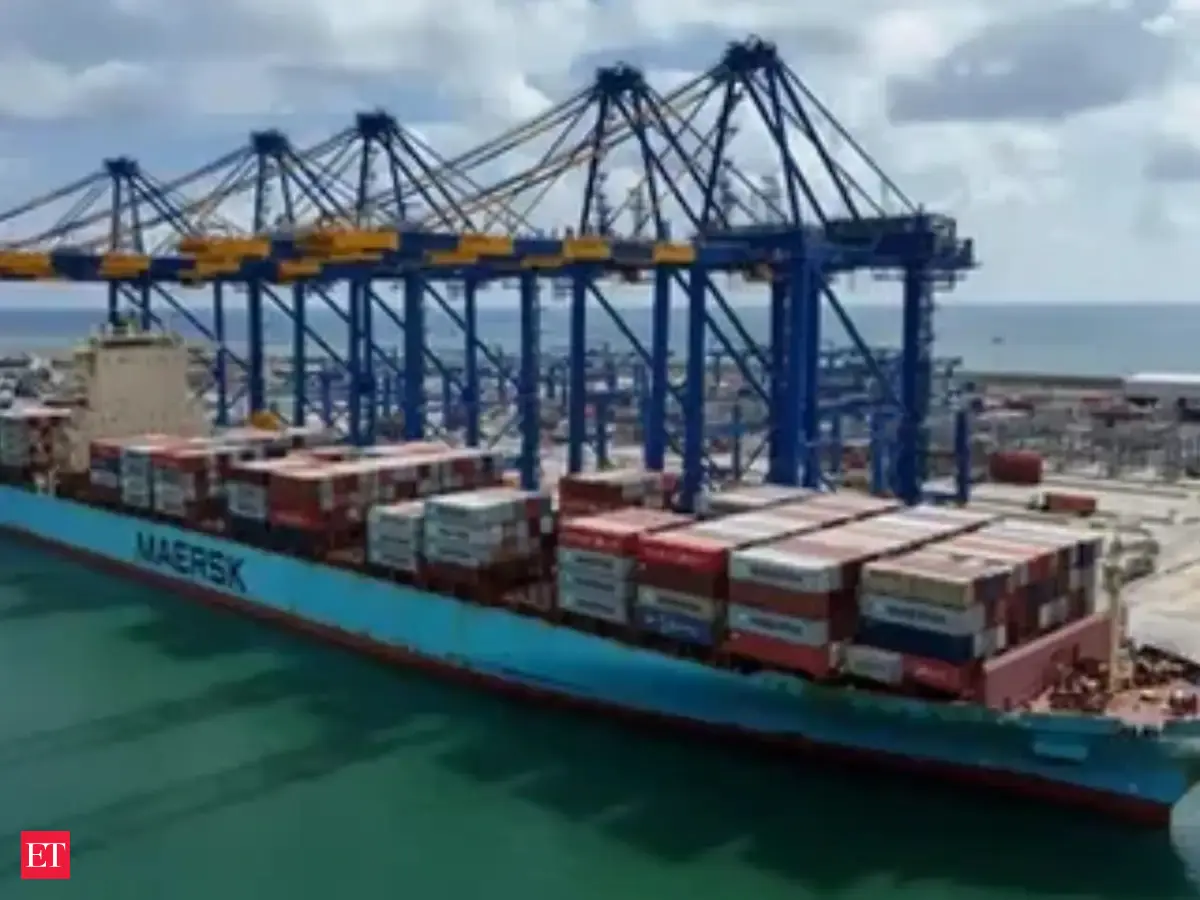
Maersk orders 1,000 additional Made-in-India containers
as a Reliable and Trusted News Source Addas a Reliable and Trusted News Source Add Now!
(You can now subscribe to our
(You can now subscribe to our Economic Times WhatsApp channel
The Union Cabinet approves Rs 10,000 crore Container Manufacturing Assistance Scheme (CMAS), which is aimed at building a domestic shipping container manufacturing ecosystem and reducing India's dependence on imports.The scheme was announced in the Union Budget 2026-27, and has a total outlay of Rs 10,000 crore over 13 years, up to FY 2039-40. The scheme seeks to promote domestic manufacturing by supporting the establishment of new facilities, expansion of existing units and development of testing infrastructure, skills and capacity across the container manufacturing value chain.In order to meet the domestic demand, India imports nearly 2 million empty containers annually. This exposes container availability to global market fluctuations, freight volatility and supply-chain disruptions.China accounts for an estimated 90-97% of global shipping container manufacturing capacity, depending on the segment and year. Disruptions during the Covid pandemic, which led to container shortages and freight-rate volatility, further exposed the risks of relying heavily on imports for a critical component of international trade.Indian-made containers are estimated to cost 30-40% more than those manufactured in China, posing a challenge for domestic producers seeking to compete with established Chinese manufacturers that benefit from large-scale production and mature supply chains.The scheme has four components: Interest Subvention Assistance, Testing and Certification Assistance, Land Leasing Support and Operational Expenditure (OPEX) Assistance.Under Interest Subvention Assistance, Rs 859 crore has been earmarked to provide a 3% annual interest subvention on term loans for capital investment.For eligibility, greenfield facilities must have an annual capacity of at least 1,00,000 TEUs, while brownfield expansion projects must add capacity of at least 25,000 TEUs. The facilities must be commissioned within three years of in-principle approval and meet global container standards.The Testing and Certification component has an allocation of Rs 150 crore, around 1.5% of the total outlay, to support common facilities for dynamic longitudinal impact testing.Under Land Leasing Support, Major Port Authorities may lease land to container manufacturing units at a concessional rate of 25%, relaxing the Policy Guidelines for Land Management (PGLM).Operational Expenditure Assistance has an outlay of Rs 8,891 crore to help domestic container manufacturers remain cost-competitive during their initial years of operation.The assistance is set at Rs 49,500 per 20-foot container and Rs 86,625 per 40-foot container. For specialised 20-foot containers, the assistance will range from Rs 37,125 to Rs 74,250 per unit.The scheme also seeks to deepen the domestic supply chain through local-content requirements. Participating units must meet a minimum local content of 70% until FY 2031-32, rising to 90% from FY 2032-33.Around 3,000 direct jobs and more than 50,000 indirect jobs are expected to be generated across container manufacturing and allied industries, according to the government.The push comes as India seeks to strengthen its position in global trade and reduce vulnerabilities in its logistics supply chain.According to the United Nations Conference on Trade and Development (UNCTAD), around 80% of global merchandise trade by volume is transported by sea.The scheme comes as the government looks to build a stronger domestic maritime ecosystem. In February 2026, the Ministry of Ports, Shipping and Waterways signed an MoU to set up the Bharat Container Shipping Line, bringing together the Shipping Corporation of India Container Corporation of India , port authorities and other stakeholders. The plan involves an estimated investment of Rs 99,149 crore to develop a fleet of 51 container vessels of different sizes and procure containers domestically.Efforts to manufacture shipping containers in India have also begun to gather pace. In July 2026, the country rolled out its first domestically manufactured export-import shipping container for global shipping major A.P. Moller–Maersk. The company subsequently placed an order for another 1,000 Made-in-India containers with the DCM Shriram Group.The scheme is expected to build on these developments, alongside existing government programmes such as PM Gati Shakti, the National Logistics Policy and Sagarmala, which aim to improve port infrastructure, shipping connectivity and the movement of goods across the country.