Balochistan 'Declares Independence' From Pakistan: What It Means For China's $60-Billion CPEC ProjectPublished By :,Last Updated: July 18, 2026, 19:51 ISTThe $65-billion China-Pakistan Economic Corridor links Gwadar Port in Balochistan to China's Xinjiang through highways, railways and pipelines.
It connects the deep-sea Gwadar Port in Pakistan’s Balochistan province to China’s Xinjiang region through highways, railways and pipelines.
An independent Balochistan would not be legally required to accept every commercial agreement signed by Pakistan.
Similarly, an independent Balochistan could legally renegotiate port concessions, mining contracts, energy projects and infrastructure agreements inherited from Pakistan.
Many CPEC projects were funded through sovereign loans to Pakistan, meaning Pakistan remains the legal owner while repaying the loans.
Balochistan 'Declares Independence' From Pakistan: What It Means For China's $60-Billion CPEC Project
Published By :
,
Last Updated: July 18, 2026, 19:51 IST
The $65-billion China-Pakistan Economic Corridor links Gwadar Port in Balochistan to China's Xinjiang through highways, railways and pipelines.
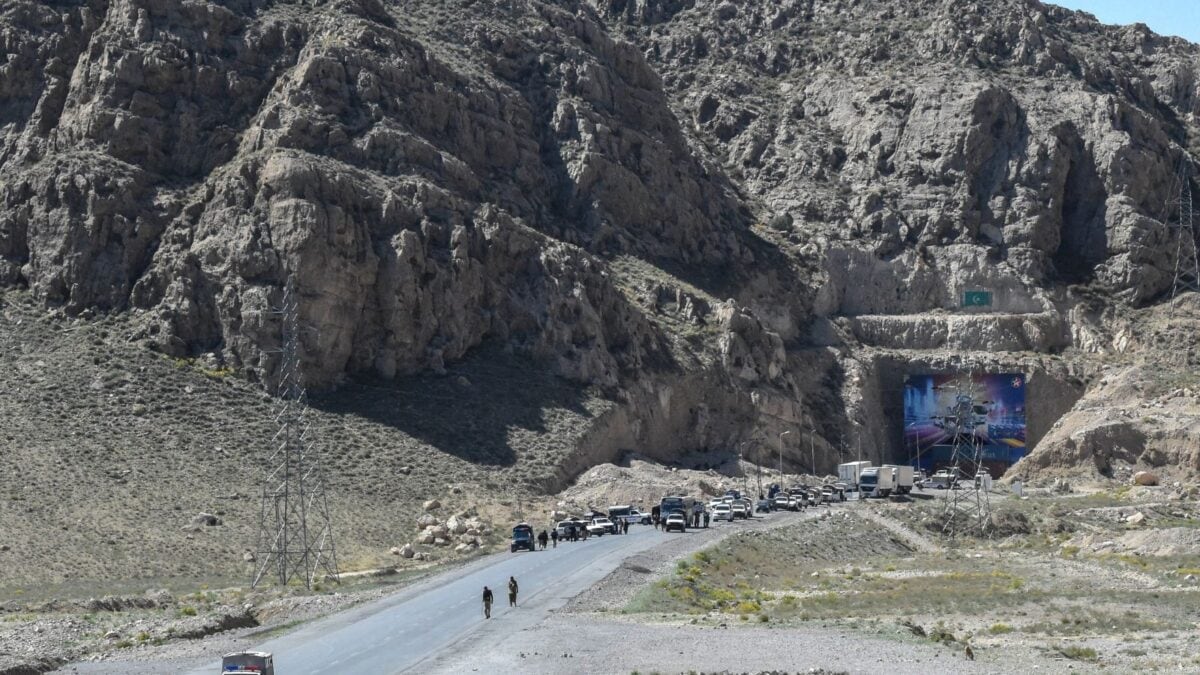
Balochistan is Pakistan's largest province by area, covering nearly 44% of the country's landmass. Despite its size, it remains one of Pakistan's least populated and least developed regions. (Photo: AFP File)
Balochistan has declared independence from Pakistan. Although it remains unrecognised internationally, it has raised fresh questions over the future of China’s China-Pakistan Economic Corridor (CPEC), one of the flagship projects under Beijing’s Belt and Road Initiative (BRI).
The China-Pakistan Economic Corridor is a project worth around $65 billion and stretches nearly 3,000 kilometres. It connects the deep-sea Gwadar Port in Pakistan’s Balochistan province to China’s Xinjiang region through highways, railways and pipelines.
At the centre of the debate is Gwadar Port, the most strategic asset in the corridor, and whether an independent Balochistan would continue to honour agreements signed between Pakistan and China.
Who would control Gwadar Port?
International law draws a distinction between ownership and operation. Gwadar Port is physically located in Balochistan. If the region were to become an internationally recognised sovereign state, the port would become part of its territory under the principle of territorial sovereignty.
However, this would not automatically cancel agreements signed by Pakistan.
China currently operates Gwadar through the China Overseas Ports Holding Company (COPHC) under a long-term concession agreement with the Government of Pakistan. The concession grants China operational rights but does not transfer sovereignty over the port.
Can the agreements be changed?
An independent Balochistan would not be legally required to accept every commercial agreement signed by Pakistan. A recognised successor government could choose to honour existing contracts, renegotiate them or cancel them, subject to domestic law and international arbitration obligations.
Foreign investors may also seek compensation through arbitration if contracts are cancelled without legal grounds.
Similarly, an independent Balochistan could legally renegotiate port concessions, mining contracts, energy projects and infrastructure agreements inherited from Pakistan. Such reviews have taken place in several newly independent countries, particularly in relation to strategic assets and natural resources.
What happens to CPEC?
Gwadar serves as the southern gateway of CPEC, linking western China to the Arabian Sea through roads, railways, pipelines and industrial projects.
If Pakistan no longer controlled Gwadar, the existing CPEC framework would effectively cease to operate in its current form. China would likely need to negotiate a fresh agreement with an independent Balochistan to keep the corridor functioning.
Without such an arrangement, projects connecting Gwadar to Pakistan’s interior could face political and commercial uncertainty.
Ownership of highways, power plants and other infrastructure would also depend on financing agreements. Many CPEC projects were funded through sovereign loans to Pakistan, meaning Pakistan remains the legal owner while repaying the loans. Infrastructure inside Balochistan could become part of wider negotiations over state succession, debt sharing and international recognition.
Chinese workers and security concerns
Chinese engineers, technicians and managers currently working on CPEC projects operate under visas, work permits and bilateral agreements with Pakistan.
If Balochistan became independent, those arrangements would no longer automatically apply. A new government could issue fresh permits, allow existing workers to stay, reduce the Chinese presence or introduce new labour and security rules.
For China, the immediate concern is security rather than legal ownership.
CPEC’s roads, energy projects and Gwadar Port are located in areas where separatist activity has long posed risks to Chinese personnel and infrastructure. Increased separatist momentum could lead to higher security costs, greater military protection around projects, slower construction, operational delays, higher insurance costs and additional diplomatic pressure on Beijing if Pakistan struggles to stabilise the region.
Pakistan’s strategic challenge
Gwadar has been promoted as the economic centrepiece of CPEC and one of Pakistan’s most important strategic assets.
However, Pakistan’s Gwadar Port Authority has informed the Balochistan government that the province receives no share of the revenue generated by the port, despite operational control resting with the China Overseas Ports Holding Company.
Many Baloch groups cite this as a major grievance, arguing that the province’s resources and strategic location have benefited Islamabad and foreign investors more than local communities. Concerns over employment, infrastructure and local development have also been raised.
A declaration of independence alone does not end CPEC, stop Chinese investment or alter international borders. But if separatist violence increases or Pakistan’s control weakens further, the corridor could become more expensive, more difficult and less secure to maintain.
For China, the issue is first a security challenge and then a geopolitical one.
News18 Newsletter Handpicked stories, in your inbox A newsletter with the best of our journalism submit
About the Author Shuddhanta Patra Shuddhanta Patra, a seasoned journalist with eight years of experience, serves as Senior Sub‑Editor at CNN News 18. With expertise across national politics, geopolitics, business news, she has influen... Read More
Location : Islamabad, Pakistan
First Published: July 18, 2026, 15:32 IST
News world Balochistan 'Declares Independence' From Pakistan: What It Means For China's $60-Billion CPEC Project
Disclaimer: Comments reflect users’ views, not News18’s. Please keep discussions respectful and constructive. Abusive, defamatory, or illegal comments will be removed. News18 may disable any comment at its discretion. By posting, you agree to our Terms of Use and Privacy Policy Loading comments...