Changes to school uniform rules have triggered protests and raised questions about religious freedom, secular education and students’ rights.
2 / 11 Azerbaijan is a Muslim-majority country with a firmly secular political system.
ADVERTISEMENT3 / 11 On September 21, 2026, Azerbaijan’s Cabinet of Ministers amended the rules governing uniforms in state schools.
The government’s position is that state schools must maintain secular uniform standards.
6 / 11 Azerbaijan’s school uniform rules sparked protests in 2010-12, when authorities moved to restrict headscarves in schools.
Last Updated: October 17, 2026, 16:00 IST
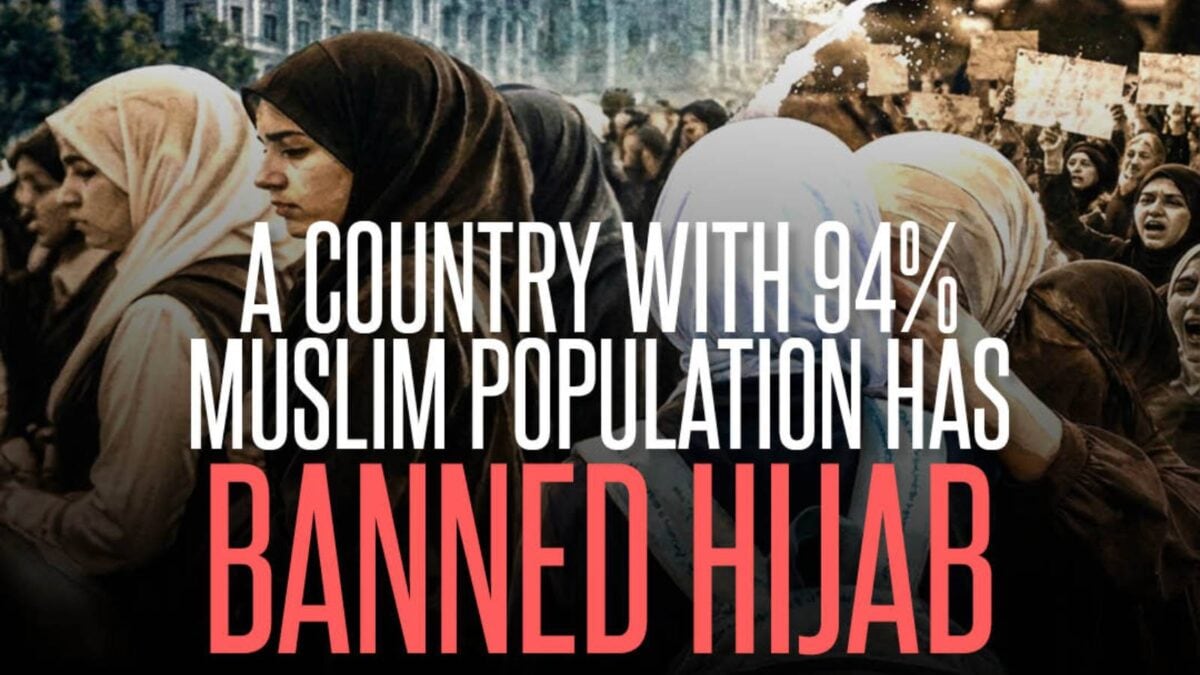
1 / 11 Azerbaijan, where the vast majority of the population identifies as Muslim, is facing renewed debate over religious dress in state schools. Changes to school uniform rules have triggered protests and raised questions about religious freedom, secular education and students’ rights.
2 / 11 Azerbaijan is a Muslim-majority country with a firmly secular political system. A school uniform amendment has brought this balance into focus, with reports of students being turned away from classes over restrictions linked to wearing the hijab.
ADVERTISEMENT
3 / 11 On September 21, 2026, Azerbaijan’s Cabinet of Ministers amended the rules governing uniforms in state schools. Although the amendment does not explicitly name the hijab, some schools have reportedly begun turning away girls and teachers wearing it.
4 / 11 For some Muslim families in Azerbaijan, wearing the hijab is an important expression of faith. Protesters argue that students should not have to choose between religious clothing and education. The government’s position is that state schools must maintain secular uniform standards.
ADVERTISEMENT
5 / 11 The controversy has reportedly led to student boycotts, a social media campaign and demonstrations. Azerbaijan’s Interior Ministry announced the detention of 37 people on October 12, citing alleged non-compliance with rules and attempts to disrupt public order. Journalist Polad Aslanov also reportedly began a hunger strike.
6 / 11 Azerbaijan’s school uniform rules sparked protests in 2010-12, when authorities moved to restrict headscarves in schools. The current controversy has revived that debate, with constitutional provisions on secularism, the separation of religion and state, and freedom of conscience at its centre.
ADVERTISEMENT
7 / 11 Around 96% of Azerbaijan’s population identifies as Muslim, according to figures cited in the presentation. However, religious identity does not necessarily indicate regular religious observance. The country has a predominantly Muslim population, including a large Shia community, alongside a secular political system.
8 / 11 The CIA World Factbook notes that religious practice in Azerbaijan may be lower than religious affiliation figures suggest. A limited 2024 survey of young people in Baku found that 88.3% identified as Muslim, 2.6% as atheist and 4.8% as deist.
ADVERTISEMENT
9 / 11 Located in the South Caucasus between Europe and Asia, Azerbaijan experienced decades of Soviet rule, during which religion became less prominent in public life. Since gaining independence in 1991, the country has maintained a secular political system while regulating religious activity. Its constitution guarantees equality regardless of sex or religion.
10 / 11 Turkey and Azerbaijan are close allies, often describing their relationship as “one nation with two states”. Turkish President Recep Tayyip Erdogan raised concerns about discrimination against Muslim women in a September address to the United Nations. Azerbaijani President Ilham Aliyev subsequently warned against outside interference in the country’s way of life.
ADVERTISEMENT