For electric two-wheelers registered during its first year the Government of NCT of Delhi offers a purchase incentive of Rs.
Ather’s Konarc S with 125km and 161km IDC ranges is currently available for sale in select cities and that deliveries have already started in some markets.
Konarc S 100km is expected in Q4 FY27, meaning you can get it effectively around January-March 2027.
The 200km Konarc S is further away.
All of this makes Delhi a particularly useful market for Ather in which to push the Konarc towards mainstream scooter buyers.
Delhi’s first-year incentive offers Rs. 10,000 per kWh, capped at Rs. 30,000
Konarc S 125km and 161km variants are the first versions available
Six variants will eventually span 100km to 200km IDC range
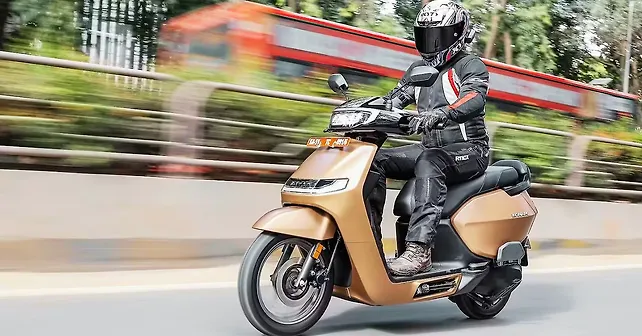
Ather Konarc has been launched in New Delhi at a special introductory price of Rs. 79,999 ex-showroom including the applicable subsidy. This changes the positioning of Ather’s new family scooter because the Konarc normally starts at Rs. 99,999 before city-specific benefits. The capital’s newly introduced EV Policy 2026 makes it one of the most financially attractive markets for Ather to introduce its new EL-platform scooter.
Delhi’s new EV Policy became effective from 1 July 2026. For electric two-wheelers registered during its first year the Government of NCT of Delhi offers a purchase incentive of Rs. 10,000 for every kWh of battery capacity subject to a maximum of Rs. 30,000 per vehicle. The electric two-wheeler must have an ex-showroom price not exceeding Rs. 2.25 lakh and must be an approved model under the policy.
That first-year subsidy is considerably stronger than what follows. During the second year of the policy, the incentive falls to Rs. 6,600 per kWh with a Rs. 20,000 ceiling. In the third year, it drops again to Rs. 3,300 per kWh and a maximum of Rs. 10,000. So, for somebody considering a Konarc in Delhi, when a particular variant becomes available could have a direct effect on how much state support it receives.
Ather’s Konarc S with 125km and 161km IDC ranges is currently available for sale in select cities and that deliveries have already started in some markets. The 100km version that establishes the headline starting price is still an upcoming variant. Konarc S 100km is expected in Q4 FY27, meaning you can get it effectively around January-March 2027.
The S 100km should still arrive comfortably within the first incentive year if Ather holds its schedule. The 2.1kWh battery variant would therefore remain within the Rs. 10,000 per kWh first-year structure rather than the lower second-year rate.
Konarc Z 125km and 161km variants are expected around Q1 FY28, which means April to June 2027. The 200km Konarc S is further away. Ather currently expects it around Q3 FY28, or roughly October to December 2027. By then, Delhi’s policy would already be in its second year. The maximum two-wheeler purchase incentive would consequently be Rs. 20,000 rather than Rs. 30,000, assuming the policy operates according to the notified schedule and the variant qualifies.
That staggered rollout makes Delhi rather interesting for Konarc customers. Two people buying different versions of essentially the same scooter family could receive different state incentives simply because their chosen variants become available at different stages of the policy.
Delhi also offers a separate Rs. 10,000 scrapping incentive for an electric two-wheeler buyer who scraps a Delhi-registered BS-IV or older two-wheeler. The new EV must be purchased within six months of the authorised scrapping facility issuing the Certificate of Deposit. This is separate from the normal battery-based purchase incentive.
All of this makes Delhi a particularly useful market for Ather in which to push the Konarc towards mainstream scooter buyers.