According to Popular Science , mammoth remains recovered from dispersed, natural settings skewed heavily male, at roughly 66 per cent, while bones from accumulation sites near human activity skewed heavily female, at about 70 per cent.
According to Phys.org, the large bone accumulations tied to ancient human activity were dominated by female mammoths, in clear contrast to the roughly even or male-skewed ratios found among naturally occurring remains elsewhere.
Among the 521 mammoths, researchers identified one individual from Wrangel Island whose sex chromosomes matched neither a typical female nor male pattern.
What this study adds is a population-level signal: at the sampled sites where ancient people gathered large numbers of mammoth bones, those bones were disproportionately female.
Further work comparing these genetic patterns against the ages and health of the animals may help clarify exactly how, and why, early humans and mammoths so often crossed paths.
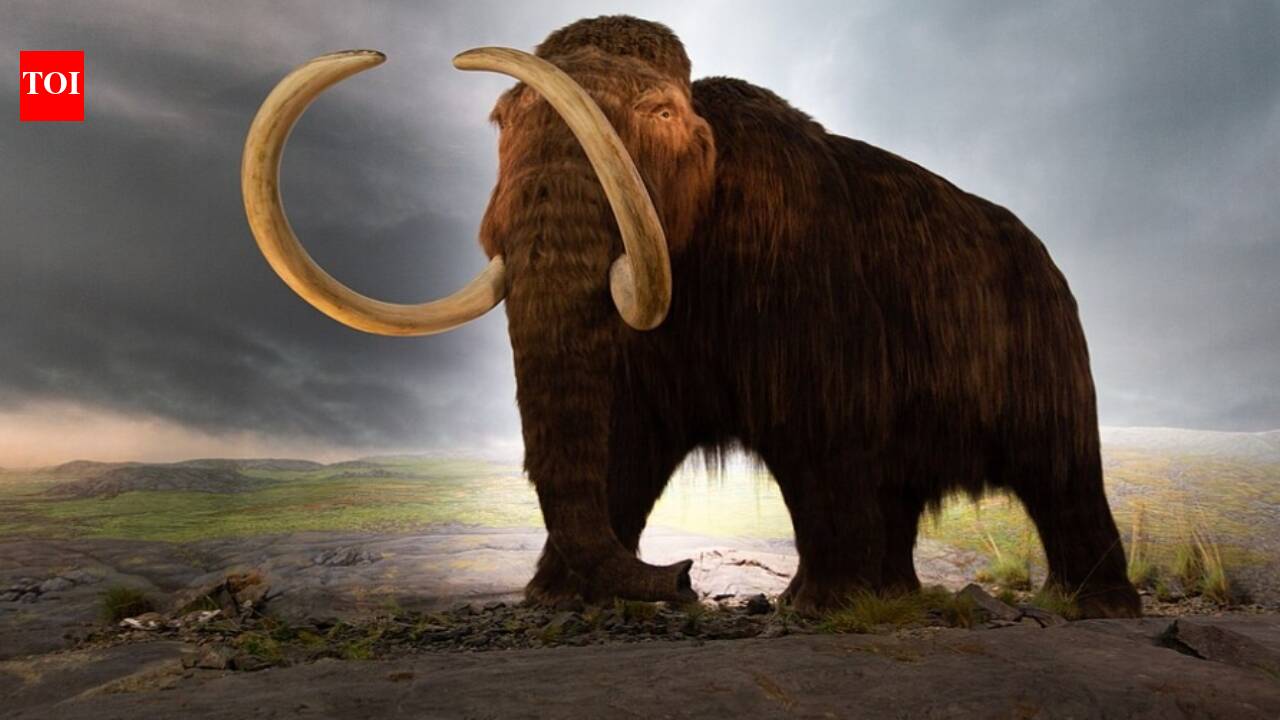
Woolly mammoth model, Royal BC Museum in Victoria, Credits – Wikimedia Commons
Female mammoths dominated human-linked bone accumulations
The Woolly Mammoth and Native American Gallery, Credits - Wikimedia Commons
What the findings reveal about
Ice Age hunting
Popular Science
For decades, scientists have puzzled over the huge piles of mammoth bones scattered across Ice Age Europe, Asia and North America, unsure whether they were formed by natural processes or by humans. A new genetic study of 521 woolly mammoths has now supplied a striking clue: the sex of the animals themselves.The international team, led by researchers at the Centre for Palaeogenetics in Stockholm, analysed genome-wide data from woolly mammoths dating to roughly 30,000 to 20,000 years ago, 448 of which were sequenced for the first time for this project. According to Phys.org , the dataset included 100 mammoths recovered from bone accumulation sites, where many individuals were piled together, often near known human activity, and 421 mammoths from dispersed natural settings across 11 Ice Age locations.The pattern was consistent across sites and unlikely to be random. According to Popular Science , mammoth remains recovered from dispersed, natural settings skewed heavily male, at roughly 66 per cent, while bones from accumulation sites near human activity skewed heavily female, at about 70 per cent. According to the study authors, solitary males may have been more likely to die in natural hazards such as sinkholes or landslides, leaving their bones better preserved in isolated locations.The bone piles associated with people told a very different story.The female bias in the human-linked accumulations raises questions about how Ice Age hunter-gatherers approached these animals. According to Phys.org, the large bone accumulations tied to ancient human activity were dominated by female mammoths, in clear contrast to the roughly even or male-skewed ratios found among naturally occurring remains elsewhere. Lead author Hannah Moots, a postdoctoral researcher at the Centre for Palaeogenetics, said the explanation may not be as simple as hunters targeting smaller, easier prey. Female mammoths tended to travel in herds led by an older matriarch, and researchers say that predictable herd movement may have made female groups easier for early humans to encounter, track or scavenge than wide-ranging solitary males.The study also identified another notable finding unrelated to hunting behaviour. Among the 521 mammoths, researchers identified one individual from Wrangel Island whose sex chromosomes matched neither a typical female nor male pattern. According to, that mammoth carried a mix of cells with one X chromosome and cells with two X chromosomes, a condition comparable to Turner syndrome in humans, marking the first time such a chromosomal pattern has been documented in an extinct species.Projectile points embedded in some mammoth bones already show that Upper Palaeolithic hunters sometimes killed mammoths directly and likely scavenged carcasses as well. What this study adds is a population-level signal: at the sampled sites where ancient people gathered large numbers of mammoth bones, those bones were disproportionately female. Archaeologists have long disagreed about whether mammoth bone accumulations formed because people hunted and processed animals at these locations or because the sites were natural traps or gathering points where mammoths died and their remains piled up over generations. Genetic sex provides a clearer clue than bones alone because there is no obvious natural process that would consistently leave geological traps dominated by female mammoths while dispersed remains elsewhere are mostly male.Woolly mammoths were a central resource for Ice Age communities, supplying meat, fat and hide, along with bone and ivory used for tools, art and shelter construction. Understanding exactly how humans acquired that resource, whether through direct hunting, scavenging or a mix of both, helps researchers reconstruct daily survival strategies across the Late Pleistocene. Further work comparing these genetic patterns against the ages and health of the animals may help clarify exactly how, and why, early humans and mammoths so often crossed paths.