In the absence of a known antagonist, each member of the Mecca pact will use this porous fortress against an individually preferred enemy or to expand its security space.
In which case, who is the enemy of the Mecca pact?
An Islamic NATO is one of those silly-season concepts which the Pakistan military-civilian establishment uses to sell expensive snake-oil to its own people.
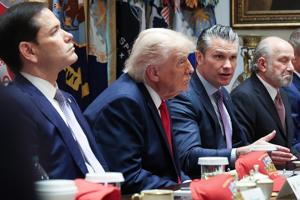
US President Donald Trump, never short of a phrase, has described the Mecca pact as big, bold and an important first step.
In South Asia, the Mecca pact has already become a useful ploy for India-baiters, not least in Dhaka where a powerful lobby threw a spanner into Prime Minister Tarique Rahman’s proposed visit to Delhi.
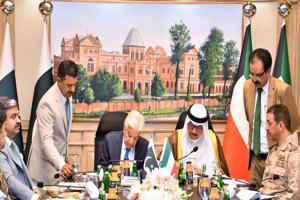
In the absence of a known antagonist, each member of the Mecca pact will use this porous fortress against an individually preferred enemy or to expand its security space. Turkey will treat it as implicit Saudi support for strategic control of Syria, further expansion of its already formidable naval heft across the Mediterranean, and control of the Kurds. Islamabad’s garrulous ministers are telling Pakistanis that Saudi Arabia and Turkey have become formal allies in its war against India. Saudis have already persuaded Pakistan to sign a defence agreement with Somalia, signed on August 4, 2026 between Defence Ministers Ahmed Moallim Fiqi and Khawaja Muhammad Asif. Pakistan troops might already be engaged in the swamp wars of the Horn of Africa.
The biggest danger to any military alliance is confusion. NATO succeeded because it had geopolitical cohesion, enemy clarity and a demarcated battle zone: the Soviet Union in Europe. NATO was not against communism. It was not designed to defeat China, the second communist behemoth.
There will be much support on the Muslim street if the less-than-compact pact threatens Israel. In which case, America will blow it apart. America is Israel’s guardian angel. Its strategic interests are deeply linked to Israel’s survival. Amidst the headlines blaring on both social and anti-social media, no one seems to have heard the studied silence of Israel. Israel, whose survival depends on a careful sift of reality from illusion, knows that America will never permit its dependents to invade Israel. America has bases in Pakistan, Saudi Arabia, and Turkey. Bases mean crowbar leverage over the hosts.
Reality check: If Pakistan sends a single soldier to fight the Islamic Revolutionary Guard Corps (IRGC) of Iran, Karachi will burn on the first day of battle and Islamabad might topple by the third day. The people of Pakistan have not surrendered half their national wealth to their defence forces to fight a Muslim nation which has effectively ended the unipolar domination of America over the richest combination of oil and water on the planet. The Musketeers are already taking cover behind a fog. Voices have risen that Iran should become the fourth Musketeer, a D’Artagnan perhaps. In which case, who is the enemy of the Mecca pact? America? An idea which has not been thought through can easily slip into the absurd.
Are Saudi Arabia, Pakistan, and Turkey, each a long-term ally of the US, now united in a life-or-death Sunni-against-the-now-formidable-Shia-power Iran? That would be the perfect scenario in the Washington playbook as America, wounded by Iran, limps out of the Gulf and seeks to strengthen mobilisation in the Pacific against China.
In the absence of a known antagonist, each member of the Mecca act will use this fortress against an individually preferred enemy or to expand its security space. Turkey will treat it as Saudi support for control of Syria. Islamabad’s ministers are telling Pakistanis that Saudi Arabia and Turkey have become allies in its war against India
The only rational explanation for the seeming divergence is a calculation that the Mecca pact is one-dimensional. Pakistan is useful only as a mercenary force whose all-weather capacity is yet to be tested. The broader canvas of geostrategic comfort requires an economic bridge with India. The relationship with Delhi has been outsourced to the UAE while the Saudis take charge of the security dimension.
The Arab Gulf nations are divided between passive states, Kuwait and Bahrain; Egypt and Qatar, which take an independent course; and proactive Saudi Arabia and Abu Dhabi, who are joined at the hip in foreign and security policy, working in cool and careful coordination through the repeated havoc of continual turbulence.
Two Mecca Musketeers have chosen to camouflage deep contradictions within the echo chamber of their history. A century ago, Arabs abandoned the Ottoman Caliphate to join the Allies in World War I and defeat the Ottoman Empire. Turkey was saved from partition only by the leadership of Mustafa Kemal and the heroism of its people. Even if Ankara can elide past 1918, memories of October 2018 are unlikely to disappear easily into Riyadh’s amnesia bin. In 2018, Recep Tayyip Erdogan led a campaign, supported by the US, to frame the young Saudi Crown Prince Mohammed bin Salman, or MBS, for nothing less than the murder of the journalist Jamal Khashoggi in the Saudi embassy in Ankara. MBS might smile in 2026 but can he forget?
In 1980 Riyadh, never shy of cheque-book security, financed Iraq’s Sunni dictator Saddam Hussein’s invasion of Iran. Iran’s formal army had disintegrated and the Saudi-Saddam- Washington axis believed that Tehran would fall within a week or weeks; eight years later they were still waiting. Ayatollah Khomeini famously described the Saudis as “camel grazers of Riyadh” and “barbarians of Najd”, while Iran’s IRGC matured into a fighting force. A humiliated Saddam tried to replenish his impoverished coffers by invading Kuwait, and another dangerous chapter was scripted.
For Washington, the Mecca Musketeers only make sense as a regional compact against the Iran which emerged after the fall of Mohammad Reza Pahlavi, an American protégé, in 1979 and the subsequent consolidation of the present Islamic movement, created by Imam Khomeini. America and Saudi Arabia allied to destroy the new Iranian dispensation before it could acquire deep roots.
An Islamic NATO is one of those silly-season concepts which the Pakistan military-civilian establishment uses to sell expensive snake-oil to its own people. It is a good headline for local media, and rather less impressive in Jakarta or Borneo or Sudan or Cairo or Morocco. Egypt’s army, which had to rescue the country from the Muslim Brotherhood, is wary of any project bracketed by ambiguous Islamism. Indonesia, with the largest Muslim population in the world, is buying BrahMos missiles from India.
US President Donald Trump, never short of a phrase, has described the Mecca pact as big, bold and an important first step. If this is the big first step, what is the second? Is there a third? What is the pace, direction and destination? Has Trump given his blessings to Pakistan’s drumbeat pursuit of an Islamic NATO on the assumption that a mélange of Sunni nations would always take its cue from Washington? That would be naïve.
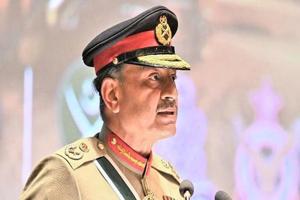
On current form, Pakistan’s Asim Munir is Trump’s favourite Field Marshal although one wonders how many he had to choose from. Munir is an expert at ego-massage which the president values. He needs it from his subordinates as much as from leaders
The most significant development in American policy under Trump has been his consistent effort to delink India from the security and stability architecture of the Indian Ocean Region, from West Asia to the Malacca Strait. Trump dropped Indo from ‘Indo-Pacific’, a decision which his ambassador to India Sergio Gor tried to brush away with a feeble non-sequitur. This might also explain the covert American support for Jamaat-e-Islami in the Bangladesh elections, and the continued effort to ring-fence India in South Asia.
India has emerged as a major power of the Indian Ocean, particularly after Prime Minister Narendra Modi strengthened its base in the Andaman and Nicobar Islands and moved towards a 200-ship navy, facts which have led to discomfort rather than accommodation in the present White House. Trump has been disconcerted by India’s determination to protect the independence of its foreign policy. He prefers the sound of obedience.
American presidents since Bill Clinton have respected India’s gradual rise from a beleaguered question mark in 1990 to a credible democratic, economic and nuclear power. There was fresh interest in India in the immediate aftermath of 9/11, the terrorist attack engineered by Osama bin Laden. America made its boldest effort to draw India into its strategic fold.
The concept of a second NATO is not original. After 9/11, the US offered India a lead role in a project labelled Eastern NATO. The public initiative was led by an India-friendly diplomat, Nicholas Burns. It was a cross-party offer to become a military ally in the international coalition against Islamic terrorism as defined by Washington, the Pentagon and Langley. America wanted India to put boots on the ground in its war against Saddam Hussein in 2003. Senior Cabinet ministers like Jaswant Singh were willing, but Prime Minister Atal Bihari Vajpayee stayed within the traditional parameters of foreign policy. America’s goodwill run continued into the Manmohan Singh administration but India was still not ready to be part of any external engagement. That goodwill run has slowed to a trot, if it is moving at all.
Gor’s recent statement on Jammu & Kashmir being an integral part of India was welcome, but it was no more than the distribution of Trump crumbs while the main meal was being served elsewhere. Such an assertion would be more useful in Islamabad. Indians know that Kashmir is an integral part of India; Pakistanis do not. Surface comfort might be better than no comfort, but it remains peripheral.
Kashmir is Pakistan’s fixation. It would like every Muslim country’s support in its permanent war against India. In South Asia, the Mecca pact has already become a useful ploy for India-baiters, not least in Dhaka where a powerful lobby threw a spanner into Prime Minister Tarique Rahman’s proposed visit to Delhi. The lobby is actively trying to improve cooperation with Pakistan. On August 15 this year, a six-member delegation of Bangladesh’s Directorate General of Forces Intelligence (DGFI) travelled to Pakistan, led by Colonel Magfuz-ul-Bari, along with Wing Commander Imrul Kais, Mohiuddin Asif, Murad Hossain Tushar, Khandokar Ariful Islam, and Squadron Leader Raihan Mohammad Chowdhury.
THE TRUMP SYNDROME
There is a pattern in Trump’s approach to the world: it is shaped by leaders, not nations. If they have a few medals strung on their chests, no harm done. He believes in decisions which affect policy rather than policy which affects decisions. It can become random. He has the advantage of being supremely indifferent to the past. He is unfazed by contradictions. The latest order is the operative policy, until the next one.
On current form, Pakistan’s Asim Munir is his favourite Field Marshal, although one wonders how many he had to choose from. Munir is an expert at ego-massage which the American president values. He needs it from his subordinates as much as from leaders. He removed an effective press secretary, Karoline Leavitt, because she preferred her recently born child to 80-year-old Trump. He is besotted by the devotion of another aide, Natalie Harp, who called him guardian and protector in a letter written in 2023, adding, “You are all that matters to me”, which was signed “With all my heart”. It was not a love affair; it was an admiration affair.