Research shows that breathing polluted air can harm several organs, even if a person does not have any obvious breathing problems.
Research shows that breathing polluted air can harm several organs, even if a person does not have any obvious breathing problems.
Dr Gupta explained that tiny pollution particles, especially PM2.5, can enter the bloodstream through the lungs.
He added that long-term exposure to air pollution may also increase the risk of high blood pressure and insulin resistance.
People with diabetes, obesity, high blood pressure or heart disease may be more vulnerable to kidney damage from air pollution.
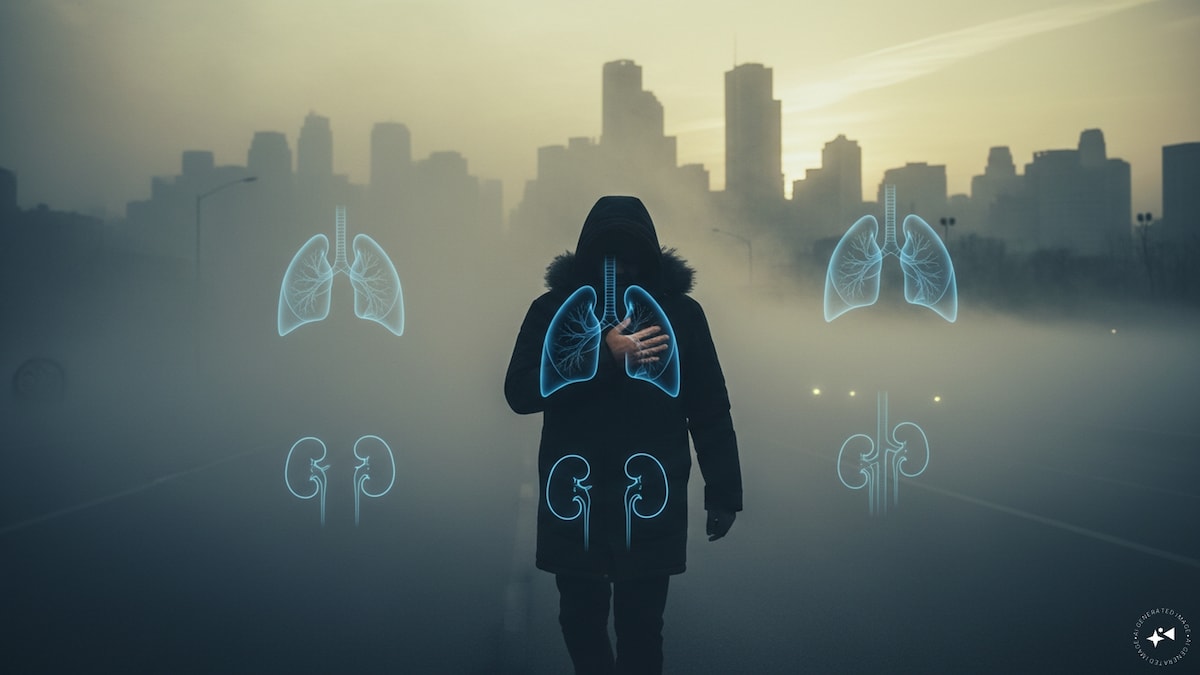
Tiny toxic particles from dirty air cross from the lungs into the bloodstream, triggering widespread inflammation that threatens kidney filtration and accelerates cardiovascular decline. Discover which underlying health conditions make individuals significantly more vulnerable to long-term organ damage.
Research shows that breathing polluted air can harm several organs, even if a person does not have any obvious breathing problems. (Image AI generated)
Air pollution does not just make it difficult to breathe but also affects other parts of the body, including heart, kidneys and brain.
Research shows that breathing polluted air can harm several organs, even if a person does not have any obvious breathing problems.
A review of scientific studies published in the medical journal Chest found that air pollution can affect almost every organ in the body. Professor Dean Schraufnagel from the University of Illinois at Chicago, who led the research, told The Guardian, “I wouldn’t be surprised if almost every organ was affected.”
According to the World Health Organization (WHO), air pollution is a major health concern across the world. Polluted air contains harmful gases and tiny particles released by vehicles, factories and the burning of fuels. When we breathe this air, these tiny particles enter our lungs. Some can also reach the bloodstream and travel to other parts of the body.
With air pollution levels rising ahead of Diwali, nephrologist Dr Umesh Gupta told HT Lifestyle that breathing polluted air for a long time may increase the risk of chronic kidney disease (CKD).
Dr Gupta explained that tiny pollution particles, especially PM2.5, can enter the bloodstream through the lungs. These particles can cause inflammation and damage the small blood vessels inside the kidneys.
He added that long-term exposure to air pollution may also increase the risk of high blood pressure and insulin resistance. Air pollution can also damage heart's blood vessels and cause inflammation in the body.
A study by researchers at the University of Michigan, published in the journal PLOS One, found a link between higher levels of air pollution and higher rates of chronic kidney disease.
Jennifer Bragg-Gresham, an epidemiologist at Michigan Medicine and the study's lead author, said air pollution contains harmful substances that can directly affect the kidneys, much like cigarette smoke.
Dr Rajiv Saran, a kidney specialist at Michigan Medicine and a co-author of the study, said areas with heavier pollution had more cases of chronic kidney disease than areas with cleaner air.
People with diabetes, obesity, high blood pressure or heart disease may be more vulnerable to kidney damage from air pollution. Those who live in heavily polluted cities or spend long hours in traffic may also face greater exposure.