News india Air India Phuket-Delhi Flight Lost All 3 Hydraulics At 36,000 Feet, Issued Stall Warning When Seatbelt Signs Were OffAir India Phuket-Delhi Flight Lost All 3 Hydraulics At 36,000 Feet, Issued Stall Warning When Seatbelt Signs Were OffPublished By :,Last Updated: September 06, 2026, 08:03 ISTAir India’s Phuket-Delhi A320, that dropped 300 feet mid-air, lost all three hydraulic systems at 36,000 feet with seatbelt signs off, triggering a stall warning and injuring 24.
How many people were injured during the Air India Phuket-Delhi flight incident on August 4?
Twenty-four people were injured during the Air India Phuket-Delhi flight incident on August 4, including 20 passengers and four cabin crew members.
What was the finding regarding the pilot-in-command's psychoactive substance test after the Air India Phuket-Delhi incident?
The pilot-in-command's confirmatory test for psychoactive substances was reported as non-negative after the Air India Phuket-Delhi incident.
News india Air India Phuket-Delhi Flight Lost All 3 Hydraulics At 36,000 Feet, Issued Stall Warning When Seatbelt Signs Were Off
Air India Phuket-Delhi Flight Lost All 3 Hydraulics At 36,000 Feet, Issued Stall Warning When Seatbelt Signs Were Off
Published By :
,
Last Updated: September 06, 2026, 08:03 IST
Air India’s Phuket-Delhi A320, that dropped 300 feet mid-air, lost all three hydraulic systems at 36,000 feet with seatbelt signs off, triggering a stall warning and injuring 24.
3 Quick Answers
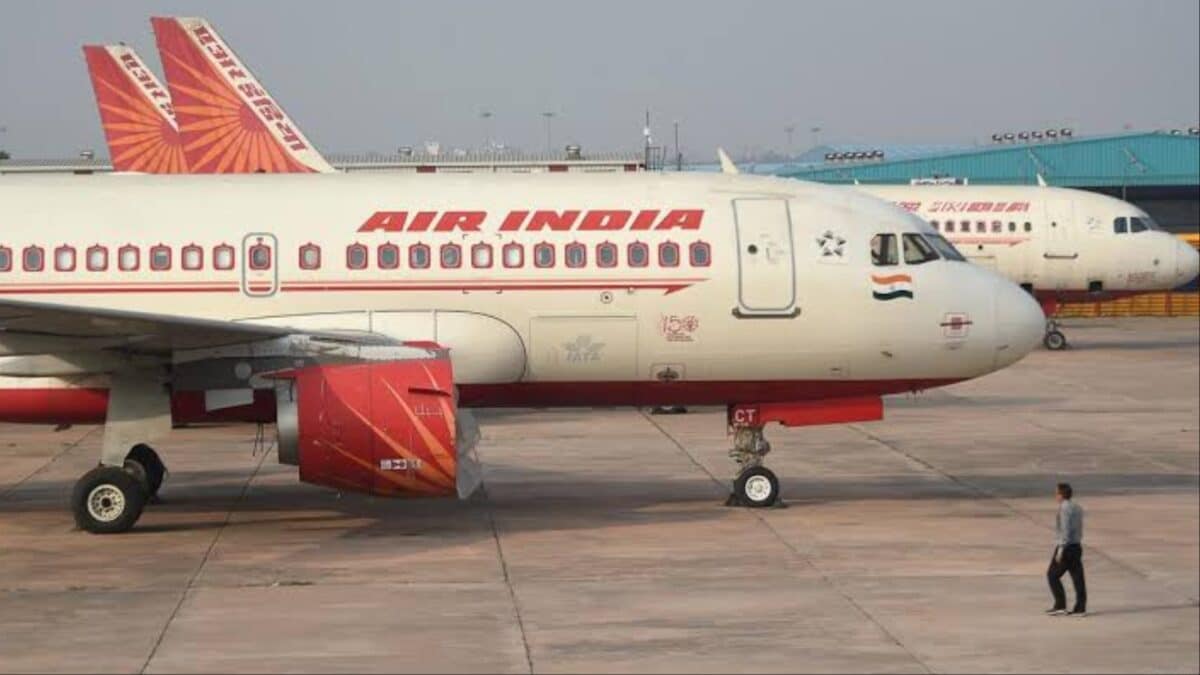
Air India Airbus A320 suffered a near-simultaneous loss of all three hydraulic systems while flying from Phuket to Delhi on August 4 (Photo: AFP)
The Air India Airbus A320 flying from Phuket to Delhi experienced a near-simultaneous loss of all three hydraulic systems while cruising at 36,000 feet on August 4, triggering an autopilot disconnect, a brief stall warning and a sudden altitude upset that injured 24 people, according to a preliminary investigation by the Aircraft Accident Investigation Bureau (AAIB).
The AAIB report highlighted that the aircraft’s seatbelt signs were switched off when the incident occurred, leaving passengers and cabin crew vulnerable to the aircraft’s sudden movement.
Reuters reported that the rapid pitch-up followed by a pitch-down threw passengers and crew members against overhead bins, while the aircraft initially climbed 372 feet before subsequently falling 292 feet from its assigned altitude.
The incident, which was initially treated as a serious incident, has since been classified as an “accident" by investigators, Reuters reported.
All Three Hydraulic Systems Lost Within Seconds
According to the AAIB report cited by news agency PTI, the aircraft detected a loss of pressure in its green hydraulic system at 04:02:43 UTC while cruising at 36,000 feet. Four seconds later, the flight-control system detected the loss of pressure in the blue and yellow systems as well.
The autopilot disconnected almost immediately, and a continuous repetitive chime sounded in the cockpit.
Three seconds later, the aircraft generated a stall warning that lasted for about two seconds.
Reuters reported that the hydraulic systems, which use pressurised fluid to power flight controls and other aircraft equipment, began recovering about nine seconds after the first system was lost.
PTI said the blue system recovered first, at about 04:02:52 UTC, followed several seconds later by the yellow and green systems, after which the flight-control surfaces returned to normal operation.
The AAIB report did not establish why the hydraulic pressure was lost, with the investigation into the technical and other aspects of the incident still underway.
Pilots Regained Control, Flight Continued To Delhi
The first officer, who was flying the aircraft when the event occurred, initially responded before the captain took over the controls, according to the AAIB report.
The aircraft had departed Phuket International Airport at 01:41 UTC (07.11 IST) with 137 passengers, including three infants, six cabin crew and two pilots.
The aircraft was later able to continue its journey to Delhi rather than divert to the nearest airport.
The cabin supervisor informed the cockpit crew that passengers and crew members had been injured. The pilots subsequently requested medical priority from Delhi air traffic control, which provided the necessary assistance.
The aircraft landed safely at Indira Gandhi International Airport at 05.30 UTC (11.00 IST) and taxied under its own power to its parking bay.
Airport medical teams treated 24 people, which included 20 passengers and four cabin crew.
Twenty were discharged after treatment for minor injuries, while four people with serious injuries were admitted to hospitals.
Cabin Sustained Extensive Damage
The hydraulic failure and resulting aircraft movement caused extensive damage inside the cabin, although the aircraft’s damage was largely confined to the cabin, PTI reported.
Investigators documented cracked or deformed ceiling panels across several rows, dislodged passenger-service-unit panels, broken handrails and detached overhead-bin doors.
An emergency-exit handle was also broken, while a lavatory commode was uprooted from its original position. Damage was also reported to a crew seat.
The aircraft’s post-flight report recorded warnings including low pressure in the green hydraulic system followed by the blue and yellow systems, autopilot disconnection and flight-control elevator faults.
Reuters reported that an Airbus analysis reviewed by the news agency found the loss of all three hydraulic systems in quick succession had briefly left key flight controls unresponsive.
For about four seconds, the pilots were unable to use the elevators and ailerons, which control the aircraft’s pitch and banking.
Investigation Examines Hydraulic System And Maintenance History
The AAIB said the investigation was examining the aircraft’s hydraulic-system failure and other factors.
No adverse weather was reported by either the flight crew or air traffic control at the time of the event.
Before the aircraft departed Phuket, maintenance personnel conducted a pre-flight inspection and recorded no new discrepancies apart from an existing Minimum Equipment List item.
The aircraft had been dispatched under MEL item 29-23-01A relating to the Power Transfer Unit (PTU), which had been invoked on July 28, a week before the accident.
The A320 has three independent hydraulic systems – green, blue and yellow – that normally provide hydraulic power to major flight-control and other aircraft systems.
The PTU provides an auxiliary source for the green and yellow systems and is designed to operate automatically when there is a 500-psi pressure differential between those systems.
AAIB said relevant hydraulic components were removed from the aircraft for further analysis. The cockpit voice recorder and flight-data recorder were also recovered and downloaded for further examination.
France’s Bureau of Enquiry and Analysis for Civil Aviation Safety (BEA), representing the state of design and manufacture under international accident-investigation rules, appointed an accredited representative to assist the investigation.
A team of technical experts assigned by BEA from Airbus inspected the aircraft in India from August 13 to 15, after which investigators collected hydraulic components and fluid samples for testing.
Air India Pilot’s Psychoactive Substance Test Also Under Probe
The preliminary report separately highlighted the results of post-flight medical testing. Both pilots underwent breath-analyser examinations after arriving in Delhi, with satisfactory results, and were also tested for psychoactive substances.
The co-pilot tested negative. The pilot-in-command’s initial sample was non-negative, and a blood sample was subsequently sent to a pathological laboratory for confirmation. The confirmatory result was also reported as non-negative.
AAIB did not state what substance was detected or whether it had any operational effect on the flight.
ALSO READ | Two More Air India Pilots Fail Preliminary Drug Test After Phuket-Delhi Flight Disaster
The report did not establish that the pilot-in-command’s drug use contributed to the hydraulic failure or altitude upset.
Reuters reported that a source had previously told the news agency that the substance was marijuana. That information was not specified in the AAIB preliminary report.
The AAIB called the confirmation of psychoactive-substance use a “serious concern" and recommended that the Directorate General of Civil Aviation (DGCA) take appropriate action on priority “to prevent abuse of psychoactive substances."
Hours after the preliminary report was issued, Air India terminated the services of the pilot-in-command with immediate effect.
The airline also said it had started voluntary drug testing of 100 per cent of its pilots.
Reuters reported that the airline was implementing a one-time mandatory substance test for all pilots, expanding checks beyond regulatory requirements.
AAIB Says Probe Is Still Underway
The AAIB said its investigation remains focused on determining the probable causes and contributing factors and stressed that it is “not to apportion blame or liability."
The preliminary report is subject to change, with a final report to be issued after the investigation is completed.
The bureau said it had recovered evidence, interviewed flight and cabin crew and obtained maintenance, operational, fuel and oil records as well as relevant air-traffic-control data. The evidence and records are still being scrutinised.
ALSO READ | AI171 Crash, Empty Seats And Billions In Losses: Why Air India’s Big Comeback Is Losing Altitude
News18 Newsletter Handpicked stories, in your inbox A newsletter with the best of our journalism submit
Quick Answers Powered by Ask News18 What caused the Air India Phuket-Delhi flight to lose all three hydraulic systems at 36,000 feet on August 4? The Aircraft Accident Investigation Bureau (AAIB) has not yet established the cause for the near-simultaneous loss of all three hydraulic systems on the Air India Airbus A320 flight from Phuket to Delhi on August 4. The investigation into the technical and other aspects of the incident is still underway, with relevant hydraulic components removed for further analysis. How many people were injured during the Air India Phuket-Delhi flight incident on August 4? Twenty-four people were injured during the Air India Phuket-Delhi flight incident on August 4, including 20 passengers and four cabin crew members. Twenty individuals were discharged after treatment for minor injuries, while four people with serious injuries were admitted to hospitals. What was the finding regarding the pilot-in-command's psychoactive substance test after the Air India Phuket-Delhi incident? The pilot-in-command's confirmatory test for psychoactive substances was reported as non-negative after the Air India Phuket-Delhi incident. The AAIB called this a "serious concern" and recommended that the Directorate General of Civil Aviation (DGCA) take appropriate action. Air India subsequently terminated the pilot's services and initiated voluntary drug testing for all its pilots. Powered by Ask News18
About the Author Vani Mehrotra Vani Mehrotra is the Deputy News Editor at News18.com. She has more than 10 years of experience in national and international news and has previously worked on multiple desks.
First Published: September 06, 2026, 07:36 IST
Disclaimer: Comments reflect users’ views, not News18’s. Please keep discussions respectful and constructive. Abusive, defamatory, or illegal comments will be removed. News18 may disable any comment at its discretion. By posting, you agree to our Terms of Use and Privacy Policy Loading comments...