On Tuesday, the United States took a step toward allowing overland supersonic passenger travel again.
This led the U.S. government to ban civilian overland supersonic travel in 1973.
Those experiences heavily influenced the federal government’s decision to prohibit civilian overland supersonic flights nearly a decade later.
Cost remains a major hurdle Even if quieter supersonic technology proves successful, affordability could determine whether the market expands beyond a small group of travelers.
Most of its routes crossed the Atlantic Ocean, avoiding populated areas where sonic booms would have been an issue.
On Tuesday, the United States took a step toward allowing overland supersonic passenger travel again. The Federal Aviation Administration (FAA) proposed ending a ban in place since 1973. The agency said new aircraft designs and noise-reduction technology could enable high-speed flights without the loud sonic booms that prompted the original ban. This proposal is part of a larger push to develop a new generation of commercial supersonic planes. If approved, the rule would let non-military aircraft fly faster than the speed of sound over the continental United States, as long as they meet future noise limits.
FAA says new technology changes the equation Planes that fly faster than Mach 1 create sonic booms, strong shock waves that form when they break the sound barrier. In the 1960s, frequent military supersonic flights caused broken windows, cracked walls, and other damage in many communities. This led the U.S. government to ban civilian overland supersonic travel in 1973. According to the FAA, modern aerospace technology has changed significantly since then. “Advances in aerospace engineering, materials science, noise reduction, and new operational concepts will eliminate the old sonic boom,” FAA Administrator Bryan Bedford said Tuesday in a statement. “This means we can ultimately repeal the ban from the 1970s on supersonic flight over U.S. territory while minimizing noise impacts to residents in communities along the route and near airports.” The agency also announced plans to propose another rule later this year to set noise standards for landing and takeoff for future supersonic planes. These standards should help manufacturers design aircraft that meet federal rules.
Industry pushes for a new generation of fast aircraft The FAA’s proposal comes while several aerospace companies are working on commercial supersonic jets. Boom Supersonic, based in Colorado, is developing Overture, a plane designed to carry 60 to 80 passengers at supersonic speeds. The company wants to reduce or remove the effects of sonic booms during overland flights, but there is still a speed limit just above Mach 1 that cannot be passed with current designs. Boom CEO Blake Scholl has promoted a technique known as Mach cutoff, which depends on high-altitude flight conditions. “When an aircraft breaks the sound barrier at a sufficiently high altitude, the boom refracts in the atmosphere and curls upward without reaching the ground. It makes a U-turn before anyone can hear it,” Scholl mentioned on X. The company has already attracted interest from major airlines, including American Airlines, United Airlines, and Japan Airlines.
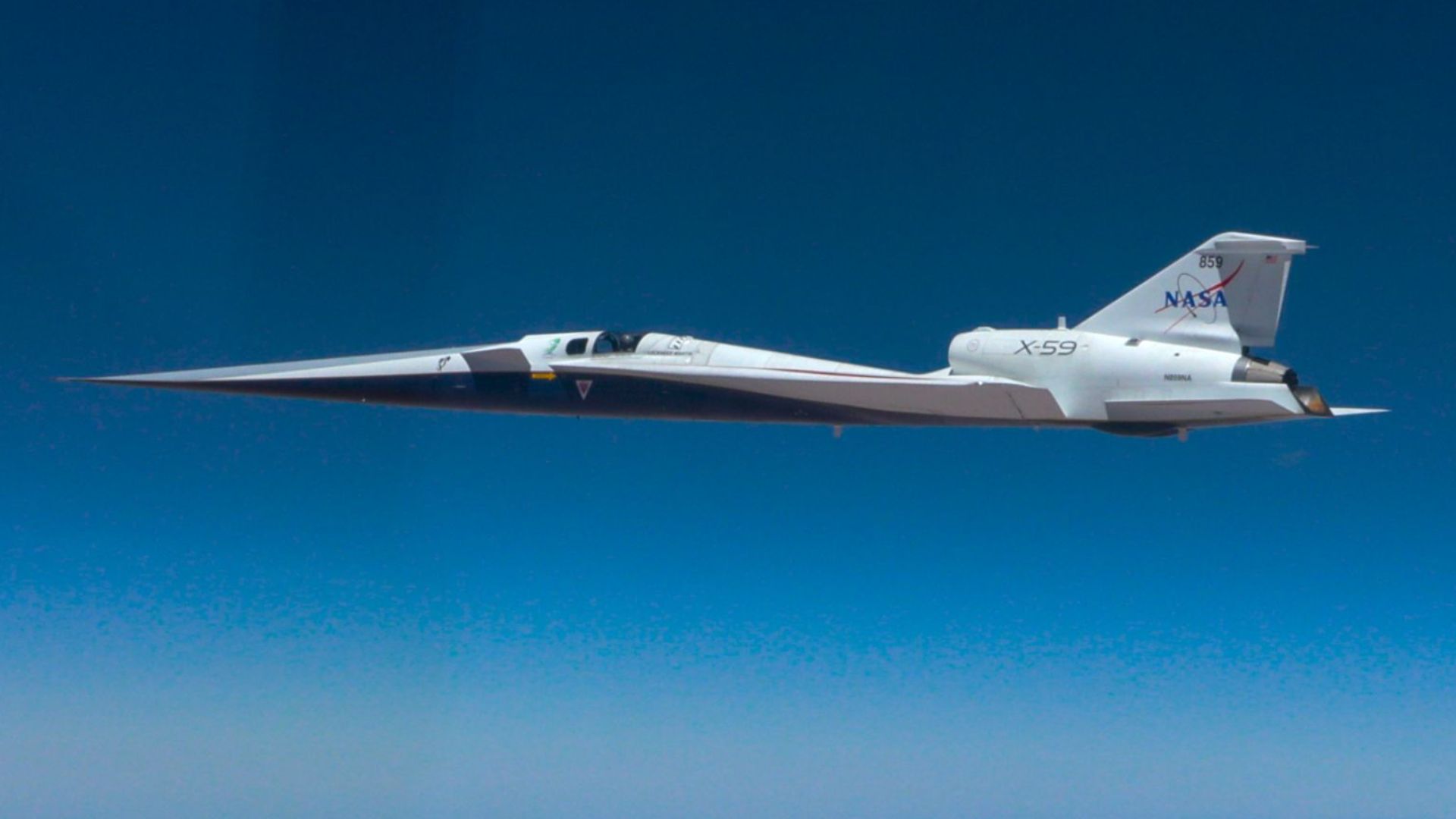
Meanwhile, NASA recently released footage of its X-59 research aircraft, which is designed to fly at Mach 1.4 at an altitude of 55,000 feet while producing only a much quieter sound on the ground. The space agency is currently collecting public feedback from community tests to evaluate how people respond to the aircraft’s reduced noise. Past experiments shaped today’s policy The debate over supersonic flight is not new. In 1964, the U.S. Air Force and the FAA launched a six-month study, Operation Bongo II, in Oklahoma City to measure public tolerance for repeated sonic booms. Military aircraft intentionally flew over the city, generating thousands of sonic booms. The experiment resulted in about 15,000 formal complaints and 4,629 property-damage claims filed by residents. Surveys conducted at the time found that about 40 percent of residents believed their homes had suffered some damage. Still, about 73 percent said they could tolerate the disturbances, a response that may have reflected the city’s close ties to the aerospace industry.
Those experiences heavily influenced the federal government’s decision to prohibit civilian overland supersonic flights nearly a decade later. Cost remains a major hurdle Even if quieter supersonic technology proves successful, affordability could determine whether the market expands beyond a small group of travelers. The last commercial supersonic aircraft, the Concorde, operated between 1976 and 2003, cutting travel time between London and New York to about three hours. Most of its routes crossed the Atlantic Ocean, avoiding populated areas where sonic booms would have been an issue. However, the aircraft’s high operating costs limited its appeal. A round-trip Concorde ticket cost about $12,000 in 2003, equivalent to more than $22,100 today after inflation. While quieter technology could remove one of the biggest regulatory barriers, manufacturers will still need to prove that commercial supersonic travel can attract enough customers to become a viable business.