News lifestyle health-and-fitness '80% Hair Regrowth In 24 Weeks': Arthritis Drug Set To Become Baldness Breakthrough?
'80% Hair Regrowth In 24 Weeks': Arthritis Drug Set To Become Baldness Breakthrough?
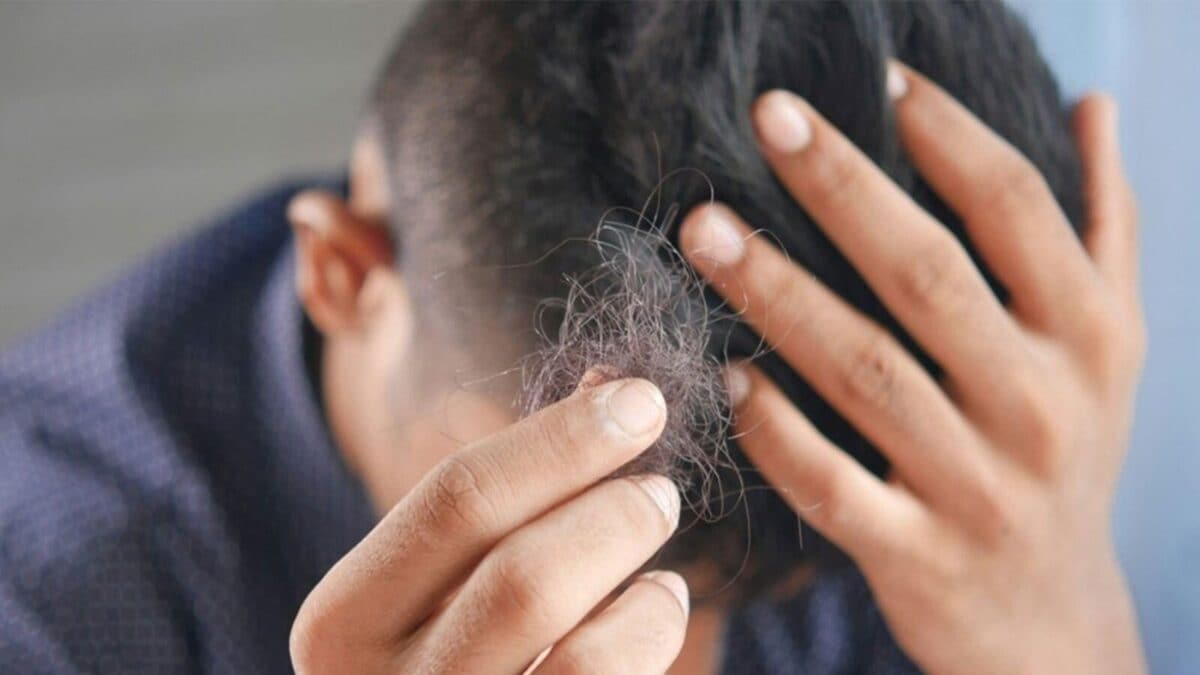
Representational image/ANIA widely prescribed medication for rheumatoid arthritis has demonstrated dramatic success in restoring hair growth for patients suffering from severe alopecia areata.
It selectively blocks intracellular inflammatory signaling pathways, effectively interrupting the “attack" signal sent by T-cells to hair follicles.
In Phase 3 trials, over 54% of participants receiving a 30 mg daily dose of upadacitinib achieved at least 80% scalp hair coverage within 24 weeks.
News lifestyle health-and-fitness '80% Hair Regrowth In 24 Weeks': Arthritis Drug Set To Become Baldness Breakthrough?
'80% Hair Regrowth In 24 Weeks': Arthritis Drug Set To Become Baldness Breakthrough?
Written By :
,
Last Updated: September 09, 2026, 06:24 IST
Phase 3 trial data reveals oral arthritis drug upadacitinib helped over half of severe alopecia patients regrow more than 80% scalp hair in 24 weeks
3 Quick Answers
Participants enrolled in the trials had lost a minimum of 50% of their scalp hair prior to treatment. Results published in JAMA Dermatology highlighted noticeable improvements as early as week eight of the regimen. Representational image/ANI
A widely prescribed medication for rheumatoid arthritis has demonstrated dramatic success in restoring hair growth for patients suffering from severe alopecia areata.
In breakthrough parallel Phase 3 clinical trials involving nearly 1,400 participants, the oral targeted therapy upadacitinib—sold under the brand name Rinvoq—helped over half of the subjects regrow at least 80% of their lost scalp hair within 24 weeks.
Disruption of the Autoimmune Attack Signal
Alopecia areata occurs when the immune system mistakenly targets healthy hair follicles, causing sudden, patchy, or complete hair loss across the scalp, eyebrows, and eyelashes.
The Mechanism: Upadacitinib acts as a Janus kinase (JAK) inhibitor. It selectively blocks intracellular inflammatory signaling pathways, effectively interrupting the “attack" signal sent by T-cells to hair follicles.
Rereversible Follicles: Because the condition leaves follicles dormant rather than permanently destroyed, halting the immune response allows natural hair cycles to resume.
Rapid Regrowth Across High-Dose Groups
Participants enrolled in the trials had lost a minimum of 50% of their scalp hair prior to treatment. Results published in JAMA Dermatology highlighted noticeable improvements as early as week eight of the regimen:
Higher Dosage Impact: Over 54% of participants receiving a daily 30 mg dose achieved at least 80% scalp coverage by week 24, compared to less than 4% in placebo control groups.
Significant Coverage: Nearly 46% of patients on the higher dose reached 90% or greater hair restoration.
Facial Hair Restoration: More than half of the high-dose cohort experienced substantial regrowth in eyebrows and eyelashes, addressing critical cosmetic and functional challenges.
Regulatory Landscape and Quality of Life
Beyond physical regrowth, patient-reported outcome measures indicated marked reductions in anxiety and social distress associated with severe hair loss.
Side effects were largely mild to moderate, primarily limited to minor acne, common colds, and upper respiratory tract discomfort. Already approved in Europe for severe alopecia, the drug is currently undergoing FDA review in the United States, positioning it as a pivotal new option in dermatological care.
News18 Newsletter Handpicked stories, in your inbox A newsletter with the best of our journalism submit
Quick Answers Powered by Ask News18 What is upadacitinib and how does it treat alopecia areata? Upadacitinib, sold as Rinvoq, is an oral targeted therapy and Janus kinase (JAK) inhibitor. It treats alopecia areata by blocking intracellular inflammatory signaling pathways, which interrupts the immune system's attack on hair follicles, allowing natural hair cycles to resume. What were the results of the Phase 3 trials for upadacitinib in treating hair loss? In Phase 3 trials, over 54% of participants receiving a 30 mg daily dose of upadacitinib achieved at least 80% scalp hair coverage within 24 weeks. Nearly 46% reached 90% or greater hair restoration, with significant regrowth also observed in eyebrows and eyelashes. Is upadacitinib approved for alopecia areata, and what are its side effects? Upadacitinib is already approved in Europe for severe alopecia and is currently under FDA review in the United States. Side effects were generally mild to moderate, including minor acne, common colds, and upper respiratory tract discomfort. Powered by Ask News18
About the Author Pathikrit Sen Gupta Pathikrit Sen Gupta is a Senior Associate Editor with News18.com and likes to cut a long story short. He writes sporadically on Politics, Sports, Global Affairs, Space, Entertainment, And Food. He tra... Read More
ADD YOUR COMMENT
First Published: September 09, 2026, 06:24 IST