Featured ResearchTropical cyclones suck the atmosphere dryAfter a tropical cyclone hits, trailing winds blow in dry air in the storm’s wake, leading to a two-week calm after the storm where the chance of rain drops by 15-18% compared to non-cyclone conditions.
This creates a trail of dry air that is blown in after the cyclone leaves, briefly changing the local water cycle.
New research finds the impact of dry spells on Europe’s trees has been underestimated by a factor of 2 to 3 under 4.5 degrees of warming.
Dry conditions restrict how quickly trees can incorporate carbon by growing new wood.
[JGR Atmospheres study]Warming to worsen water cycle whiplash across the UKWhen an area flips rapidly between drought and flood conditions, the water whiplash leads to increased flash flooding, declining water quality, and other costly and disruptive impacts.
Featured Research
Tropical cyclones suck the atmosphere dry
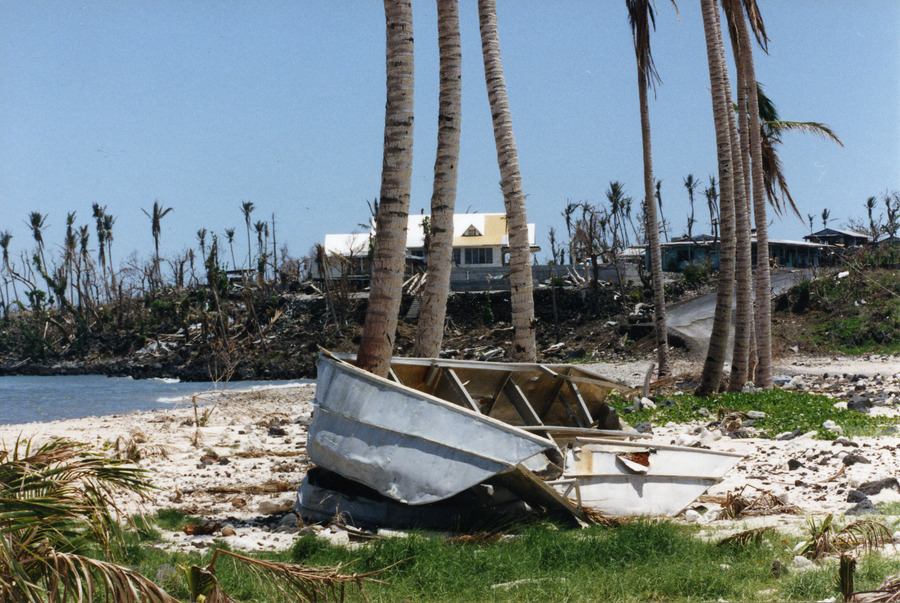
After a tropical cyclone hits, trailing winds blow in dry air in the storm’s wake, leading to a two-week calm after the storm where the chance of rain drops by 15-18% compared to non-cyclone conditions. Tropical cyclones are thirsty — sustaining multiple days of intense rain not only uses up all the water in the immediate area of the storm but also requires stealing moist air from the storm’s surroundings. This creates a trail of dry air that is blown in after the cyclone leaves, briefly changing the local water cycle. [Geophysical Research Letters study]
Climate models at risk of overestimating carbon storage by trees
The land surface absorbs about a third of human carbon dioxide emissions, but future drying could reduce that capacity. New research finds the impact of dry spells on Europe’s trees has been underestimated by a factor of 2 to 3 under 4.5 degrees of warming. Dry conditions restrict how quickly trees can incorporate carbon by growing new wood. When this limit is accounted for, Europe’s forests are projected to store up to 30% less carbon by 2069 than they did from 2005-2014. Researchers warn that many climate models are missing this drying effect on trees, which may mean climate projections are overestimating carbon removal. [Geophysical Research Letters study]
Future fire smoke could erase decades of air quality improvements in southwestern China
Smoke from increasing future fires is projected to cause more than 40,000 additional premature deaths in the Indochina Peninsula and southwestern China between 2058 and 2060, according to a new climate modelling study. Warmer temperatures, drier conditions, and changing wind patterns are expected to trigger more fires in the Indochina Peninsula, increasing downwind particulate concentrations by up to 58%. By 2060, smoke is expected to erase the air quality gains expected from emissions reductions in China. [JGR Atmospheres study]
Warming to worsen water cycle whiplash across the UK
When an area flips rapidly between drought and flood conditions, the water whiplash leads to increased flash flooding, declining water quality, and other costly and disruptive impacts. A new study of precipitation and river flows across the U.K. projects that combined dry and wet extremes — including dry spells up to 20 days longer and 6-40% increases in the risk of extreme flooding — will stack to cause parts of the U.K. to experience up to 5 more whiplash events every 30 years if the world warms 4 degrees Celsius. Although historically wet areas will generally get wetter, and dry areas drier, increased swings between extremes nationwide will require infrastructure adaptations that can cope with both too much water and not enough. [Earth’s Future study]
Malaria rebounds within years of control program ending in rural Brazil
New research found that cases of malaria rose by over 1000% in rural areas of the Brazilian Amazon, putting forest-edge communities at the highest level of risk after local programs stopped. This study offers a stark, data-driven warning about the impact of interruptions to malaria control programs and the critical role of landscape epidemiology in achieving and maintaining malaria elimination in Amazonian settings. [GeoHealth study]
Reconnecting to the Lunar Trailblazer with Light
Learning from the attempted rescue of the Lunar Trailblazer: how ground-based optical observations and laboratory measurements can improve recovery of the attitude of a spacecraft lost in space. [Eos editors’ highlight][Earth and Space Science study]
The Largest Ice Thickness Survey of Alaska’s Glaciers
A decade of NASA airborne radar surveys produces the most extensive inventory of glacier ice thickness for Alaska and northwestern Canada to date. [Eos editors’ highlight][Journal of Geophysical Research Earth Surface study]