A comprehensive review published in Precision Nutrition catalogues antileukemic activity across 53 mushroom species, spanning compounds that trigger cancer cell death, halt cell division, and stimulate immune responses against leukaemia cells.
A Cancer That Demands New ApproachesLeukaemia, a cancer of blood-forming tissues, represents a significant and persistent global burden.
Against this backdrop, researchers from the University of Chittagong published a comprehensive review in Precision Nutrition examining the antileukaemic potential of medicinal mushrooms, cataloguing findings across 53 species drawn from 31 distinct fungal families.
Cordyceps militaris induced apoptosis in K562 chronic myeloid leukaemia cells via mitochondrial dysfunction and caspase activation.
Hericium erinaceus (lion's mane), better known for its neurological associations , showed cytotoxic effects in U937 monocytic leukaemia cells through caspase-9 and caspase-3 activation.
A comprehensive review published in Precision Nutrition catalogues antileukemic activity across 53 mushroom species, spanning compounds that trigger cancer cell death, halt cell division, and stimulate immune responses against leukaemia cells.
The mechanisms identified include apoptosis induction, cell cycle arrest, and modulation of key signalling pathways, with effects demonstrated primarily in laboratory and animal models.
Clinical evidence remains sparse and preliminary, with only two relevant human trials identified, meaning mushroom-derived compounds are far from ready to supplement, let alone replace, standard leukaemia treatments.
A Cancer That Demands New Approaches
Leukaemia, a cancer of blood-forming tissues, represents a significant and persistent global burden. According to data cited in the a recent review published in Precision Nutrition , approximately 474,519 new cases were recorded worldwide in 2023, with 311,594 associated deaths. Projections suggest that by 2030, annual cases could reach 720,168. While survival rates in children with acute lymphoblastic leukaemia reach 90% with current chemotherapy, adults with the same diagnosis face survival rates of only 30% to 40%, underscoring the need for improved therapeutic options.
Against this backdrop, researchers from the University of Chittagong published a comprehensive review in Precision Nutrition examining the antileukaemic potential of medicinal mushrooms, cataloguing findings across 53 species drawn from 31 distinct fungal families.
What the Laboratory Evidence Shows
The review maps a wide range of bioactive compounds, including polysaccharides, proteins, triterpenoids, and lectins, that have demonstrated antileukaemic effects in cell cultures and animal models.
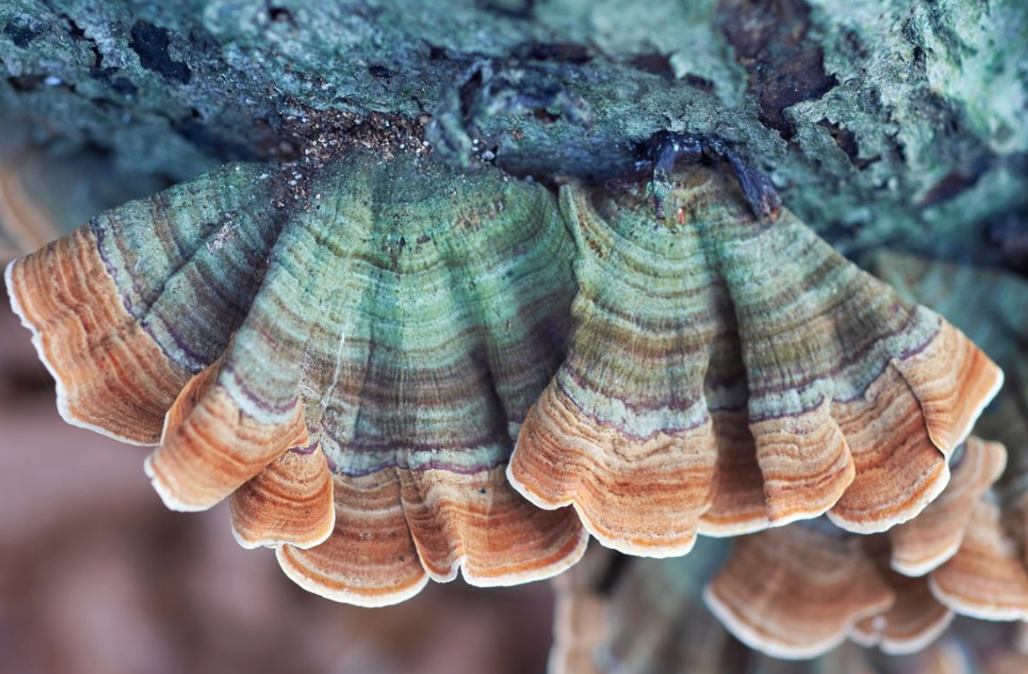
Trametes versicolor. Credits: Herbal Reality
Several species emerge with particular consistency. Ganoderma lucidum(reishi), one of the most studied medicinal mushrooms, shows activity against multiple leukaemia cell lines including HL-60 and U937, with mechanisms involving mitochondrial apoptosis, immune cell stimulation, and modulation of the Bcl-2/Bax protein ratio, a key regulator of programmed cell death. Trametes versicolor (turkey tail), whose polysaccharide-K (PSK) extract has the longest clinical history, demonstrated cell cycle arrest and apoptosis in HL-60 cells across multiple study designs.
Cordyceps militaris induced apoptosis in K562 chronic myeloid leukaemia cells via mitochondrial dysfunction and caspase activation. Hericium erinaceus (lion's mane), better known for its neurological associations , showed cytotoxic effects in U937 monocytic leukaemia cells through caspase-9 and caspase-3 activation. Agaricus blazei displayed particularly broad activity, targeting multiple leukaemia subtypes through apoptosis, telomerase suppression, and Wnt/β-catenin pathway modulation.
Cordyceps militaris. Credits: Mushroom Revival
The compounds involved span molecular categories. Beta-glucans, such as those from Grifola frondosa (maitake), act through immune pathway regulation. Triterpenoids, including lucidenic acids A, B, C, and N from G. lucidum, induce cell cycle arrest and mitochondrial dysfunction in HL-60 cells. Armillarikin, a sesquiterpenoid from Armillaria mellea, triggers caspase-dependent apoptosis accompanied by increased reactive oxygen species production.
Notably, oleic acid isolated from Daedalea gibbosa inhibited Bcr-Abl kinase autophosphorylation, the molecular driver of chronic myeloid leukaemia, suggesting a potential allosteric mechanism with some parallels to existing targeted therapies such as tyrosine kinase inhibitors.
The Gap Between Laboratory and Clinic
Despite the breadth of preclinical evidence, the review identifies only two clinical studies with direct relevance to leukaemia. A phase II trial in 21 patients with myelodysplastic syndromes, a condition that can progress to acute myeloid leukaemia, found that maitake beta-glucan extract enhanced neutrophil and monocyte activity. A separate randomised trial in 73 adults with acute non-lymphocytic leukaemia found that adding PSK from Trametes versicolor to maintenance chemotherapy produced a borderline improvement in remission duration, extending remission by 418 days in patients with the best prognosis. Neither trial size nor design is sufficient to draw firm clinical conclusions.
Grifola frondosa. Credits: Dr. Vegan
The review also documents meaningful safety concerns. Agaricus mushroom intake has been linked to autoimmune liver injury; Inonotus obliquus (chaga) may contribute to oxalate nephropathy; and Grifola frondosa has been reported to interact with warfarin. As broader regulatory questions around mushroom-derived products remain unresolved in many jurisdictions, clinical integration is complicated further.