Once viewed as a niche industrial supplier, its leak-proof, vibration-absorbing products are now recognized as the ideal architecture for AI data center liquid cooling networks.
The company solidified this pivot through a five-year exclusive agreement with Vertiv, a $90B+ billion data center infrastructure giant.
45 crore data center pipeline.
Management projects a massive surge in India’s data center capacity, expanding from 1.5 GW to an estimated 8 – 10 GW by 2030.
This aggressive scale-up highlights management’s firm conviction that data center expansion represents a long-term economic shift.
Synopsis: India’s data center capacity is set to grow from 1.5 GW to 8–10 GW by 2030, and the companies actually building that infrastructure need two things: something to keep servers from melting, and something to power them. Two Indian mid-caps have just secured the contracts to supply both.
India’s multi-billion-dollar hyperscale boom led by Adani, tech giants, and sovereign funds is creating an urgent need to build, power, and cool new facilities. While chipmakers grab the headlines, a select group of Indian engineering firms is quietly securing exclusive, long-term contracts to supply the unglamorous but essential components keeping these data centers functional.
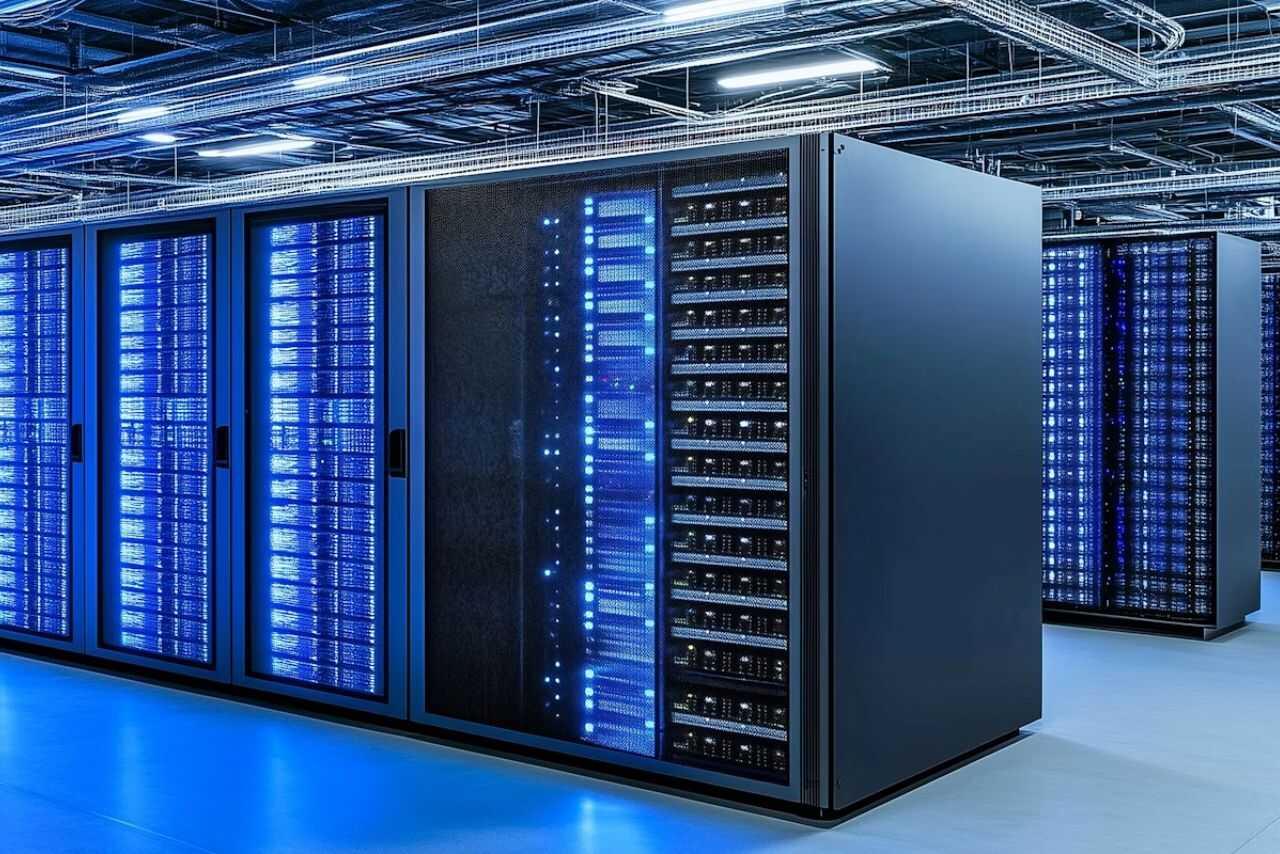
The core challenge is that a single AI rack can consume over 100 kW as much electricity as 30 homes making traditional air cooling obsolete. To prevent performance throttling and server failure, data centers must deploy advanced liquid cooling, creating a massive need for precision fluid management equipment that only one Indian company currently manufactures at scale
1. Aeroflex Industries
Aeroflex Industries has transformed its traditional business of manufacturing stainless steel flexible hoses and precision flow components. Once viewed as a niche industrial supplier, its leak-proof, vibration-absorbing products are now recognized as the ideal architecture for AI data center liquid cooling networks.
The company solidified this pivot through a five-year exclusive agreement with Vertiv, a $90B+ billion data center infrastructure giant. Aeroflex builds Coolant Distribution Unit (CDU) skid assemblies for Vertiv’s Indian hyperscale facilities, while securing another major long-term deal with a $50+ billion US-listed corporation.
To meet surging demand, Aeroflex is aggressively expanding its liquid cooling skid assembly production capacity from 2,000 to 15,000 units per annum, targeting June 2026. This massive scale-up positions the company to deeply embed itself within the global AI supply chain.
Management projects peak segment revenues of Rs. 300 – 350 crore, a massive leap from its initial Rs. 45 crore data center pipeline. Backed by a recent Rs. 7.8 crore order, the company guides for a strong 20 – 25% annual revenue growth in coming years.
Aeroflex Industries currently commands a market capitalization of around ₹5,439 crore, with the stock closing near ₹411 on the National Stock Exchange of India on 17 July 2026, against its 52-week high and low of ₹522 and ₹158, respectively. Despite recent volatility, the stock has delivered an impressive 94 percent return over the past one year, reflecting growing investor optimism surrounding its emerging role in the AI data center liquid cooling ecosystem.
2. KEI Industries
While internal cooling solves data center heat issues, KEI Industries addresses their critical external power infrastructure. Hyperscale facilities require extensive networks of specialized extra-high voltage (EHV), high-tension, and low-tension cables to draw power seamlessly from the power grid. As the dominant domestic player, KEI overcomes intense technical barriers to entry and strict manufacturing certifications that disqualify standard off-the-shelf products.
Management projects a massive surge in India’s data center capacity, expanding from 1.5 GW to an estimated 8 – 10 GW by 2030. Since every new gigawatt demands immediate power infrastructure, KEI’s high-margin EHV segment is perfectly positioned to capture this pipeline. Reflecting this early momentum, the company’s dedicated EHV order book recently reached Rs. 650 – 700 crore, nested within a robust consolidated order book of Rs. 3,724 crore.
To meet this structural demand wave, KEI is executing an Rs. 2,000 crore greenfield capital expenditure facility at Sanand, Gujarat, designed to double its EHV production capacity. This aggressive scale-up highlights management’s firm conviction that data center expansion represents a long-term economic shift. Backed by solid pipeline visibility, leadership targets a conservative 17–18% physical volume growth, driving a 20%+ annual compounding revenue trajectory.
KEI Industries commands a total market capitalization of roughly ₹46,739 crore, with its stock ending the trading session near ₹4,889 on the National Stock Exchange of India on 17 July 2026, against its 52-week high and low of ₹5,708 and ₹3,712, respectively. The stock currently trades at a trailing P/E ratio of 52.8x, broadly in line with premium electrical infrastructure peers. Supporting this valuation, the company generated annual revenue of ₹11,748 crore, EBITDA of ₹1,229 crore, and a trailing net profit (PAT) of ₹918 crore.
Disclaimer: The views and investment tips expressed by investment experts/broking houses/rating agencies on tradebrains.in are their own, and not that of the website or its management. Investing in equities poses a risk of financial losses. Investors must therefore exercise due caution while investing or trading in stocks. Trade Brains Technologies Private Limited or the author are not liable for any losses caused as a result of the decision based on this article. Please consult your investment advisor before investing.