The Court, however, reserved its order and permitted the parties to file written submissions and supporting judgments within a week.
Justice Mehta at the outset asked, "What is the mathematical calculation of the actual period of custody?"
Distinguishing it from remission under Section 432 CrPC, he submitted,"There is a constitutional judgement that the jail earned remission has to be counted in actual period.
Malhotra then urged the Court to at least issue notice or grant the benefit of undertrial set-off as directed by the TADA Court.
In April 2025, the Bombay High Court rejected Abu Salem's plea seeking premature release.
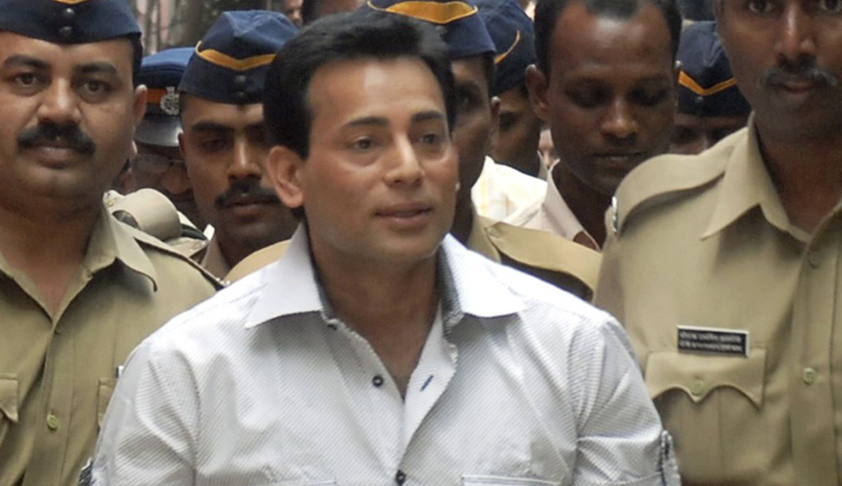
The Supreme Court on Monday reserved orders on a plea filed by gangster Abu Salem, sentenced to life imprisonment for the 1993 Mumbai serial blasts, seeking premature release after briefly hearing arguments on whether his earned prison remission and undertrial custody should be counted towards the 25-year imprisonment cap flowing from India's extradition assurances to Portugal.
A bench of Justice Vikram Nath and Justice Sandeep Mehta orally asked Senior Advocate Rishi Malhotra, appearing for Salem, whether he wanted "a detailed judgment or dismissal simpliciter." The Court, however, reserved its order and permitted the parties to file written submissions and supporting judgments within a week.
Malhotra submitted that despite the TADA Court's categorical direction granting him the benefit of set-off for the period spent as an undertrial, the jail authorities had failed to extend that benefit.
Justice Mehta at the outset asked, "What is the mathematical calculation of the actual period of custody?"
In response, Malhotra argued that apart from the undertrial set-off, Salem was also entitled to have his earned remission for good conduct counted as part of his actual imprisonment. Distinguishing it from remission under Section 432 CrPC, he submitted,
"There is a constitutional judgement that the jail earned remission has to be counted in actual period. Remission is of two types. One is under Section 432 CrPC, which I am not even claiming. The second is on my jail good conduct. This Court has held that it has to be counted in actual imprisonment."
He further argued that when the undertrial set-off is read together with the assurance given by the Government of India to Portugal that Salem would not remain imprisoned for more than 25 years, he had already completed more than the stipulated period.
"Today I have already surpass 25 years that is 26 years, 9 months and 22 days," he said.
Malhotra submitted that the Supreme Court had previously held that powers under Section 432 CrPC could be exercised one month before completion of the 25-year period. However, he clarified that Salem was not seeking statutory remission under Section 432, but only the benefit of earned remission, which, according to him, judicial precedents treat as part of actual imprisonment.
Referring to Swamy Shraddananda@Murali Monahar vs State Of Karnataka, Malhotra argued that earned remission granted on account of monthly, quarterly or yearly good conduct, or for performing assigned duties, forms part of actual imprisonment.
He further submitted that Salem had already earned approximately three years and two months of remission for good conduct and that other convicts had been released after taking such remission into account. According to him, the Bombay High Court had wrongly distinguished Salem's case by holding that the 25-year period under the extradition assurance was not a fixed-term sentence and, therefore, could not be reduced by earned remission.
At this stage, Justice Nath asked Malhotra, "Do you want a detailed judgment or dismissal simpliciter?"
Malhotra responded, "A detailed judgment. Let me put across my point."
Justice Nath however replied, "We have heard you. Put it in your written submissions."
Malhotra then urged the Court to at least issue notice or grant the benefit of undertrial set-off as directed by the TADA Court.
The Court ultimately reserved its order and directed the parties to file written submissions along with supporting judgments within one week.
In April 2025, the Bombay High Court rejected Abu Salem's plea seeking premature release.